
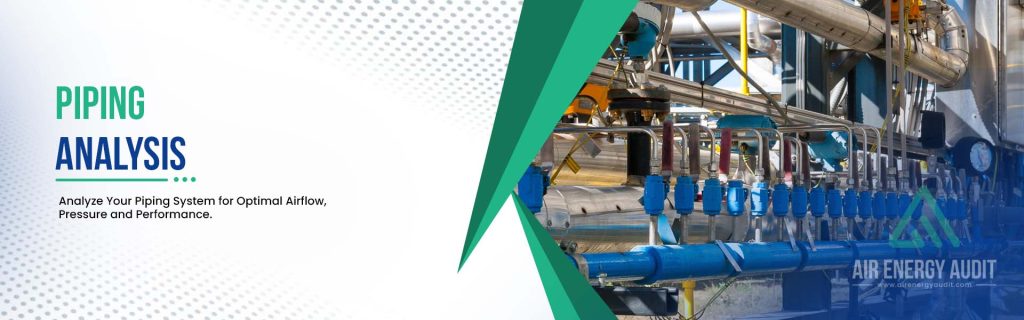
Piping Analysis
Evaluate compressed air piping systems to identify pressure losses, flow restrictions and distribution inefficiencies. Our piping analysis helps ensure compressed air reaches production equipment reliably and efficiently.
Optimize the Path of Compressed Air
An inefficient piping network can create unnecessary pressure drops, restrict air flow and increase compressor energy requirements. We assess the distribution system to identify restrictions and improve compressed air delivery.
Pressure Drop Analysis
Identify excessive pressure losses throughout the piping network and determine areas where system performance can be improved.
Pipe Size Evaluation
Review pipe diameters in relation to compressed air flow, operating pressure and demand requirements.
Flow Distribution
Assess how effectively compressed air is distributed across production areas and connected equipment.
System Improvement
Identify practical opportunities to improve piping layout, reduce restrictions and maintain stable pressure at points of use.
Key Parameters We Evaluate
Our piping assessment considers the physical design and operating conditions that influence compressed air distribution efficiency.
Evaluation of pipe sizing in relation to required compressed air flow.
Identification of pressure losses between the compressor and points of use.
Review of air movement through main headers, branches and distribution lines.
Assessment of routing, bends, branches and overall network configuration.
Review of valves, elbows, filters, regulators and other flow restrictions.
Consideration of system expansion and future compressed air demand requirements.
Improve Your Compressed Air Distribution
Reduce unnecessary pressure losses and improve air delivery with a piping system designed around your actual flow, pressure and production requirements.
Piping Analysis
Manufacturing compressed air comes at a significant cost, and the compressed air piping system’s primary objective is to efficiently distribute this valuable resource to various points of use, ensuring that it arrives in the right quantity, quality, and pressure to effectively operate the associated components.