
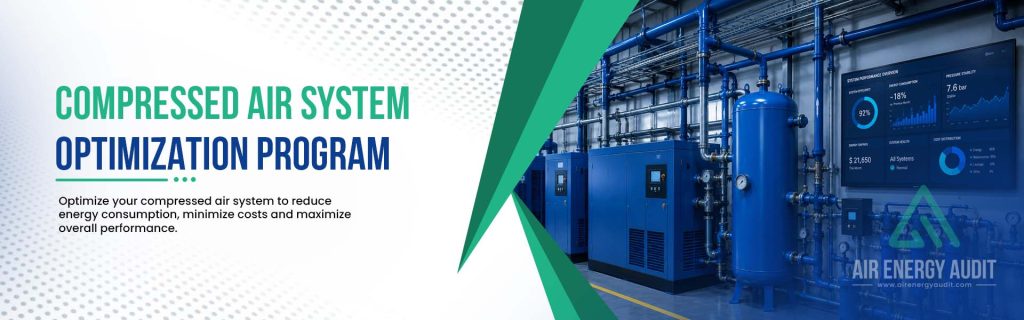
Compressed Air System Optimization Program
A structured approach to improve compressed air system efficiency, reduce energy consumption, control operating costs and maintain reliable air supply across industrial operations.
Improve Performance Without Compromising Production
Our optimization program evaluates the complete compressed air system rather than focusing only on individual compressors. We identify inefficiencies throughout generation, treatment, storage and distribution.
- Compressor Sequencing & Control
- Air Demand Management
- Leak Reduction
- Pressure Optimization
- Storage & Receiver Optimization
- Distribution System Improvement
- Dryer & Filter Efficiency
- Energy Saving Opportunities
A Complete Approach to Compressed Air Optimization
The program combines system assessment, improvement actions and performance monitoring to achieve sustainable efficiency gains.
System Assessment
Review compressors, controls, air treatment, storage, distribution and operating conditions.
Optimization Actions
Identify and prioritize practical measures for reducing energy waste and improving system performance.
Performance Monitoring
Track pressure, flow, compressor loading and energy performance to support continual improvement.
Leak Management
Locate, quantify and prioritize compressed air leaks to reduce unnecessary air generation.
Energy Reduction
Target high-impact opportunities that can lower compressor energy consumption and operating costs.
Continual Improvement
Establish practical recommendations for maintaining optimized performance over time.
Optimize Your Compressed Air System
Improve system efficiency, reduce avoidable energy costs and build a more reliable compressed air network with a structured optimization program from Air Energy Audit.
Scenario
Metrics
Installed Capacity (KWS)
Air Consumption of the plant
Current
800
120 m3/min
Current
800
120 m3/min
Future Target
750
110 m3/min
Future Target
750
110 m3/min
Anticipated Saving
5 million/annum
6.7 million / annum
Other Benefits
- Accurate data on critical parameters.
- Overview of compressed air: production, consumption, and losses.
- Enhanced decision-making for the procurement of compressed air system equipment.
- Knowledge acquisition through training.
- Establishing a culture of compressed air conservation within the plant.