
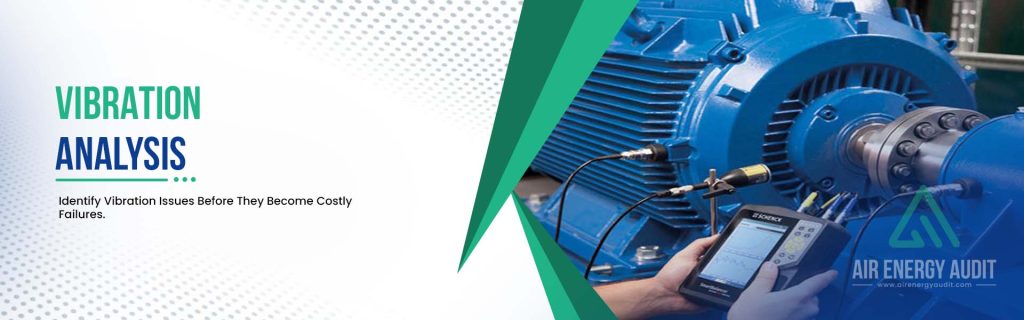
Vibration Analysis
Identify abnormal vibration, mechanical imbalance and developing equipment faults before they lead to unexpected failures. Our vibration analysis helps assess rotating machinery condition, improve reliability and support predictive maintenance decisions.
Detect Mechanical Problems Before Failure
Vibration analysis provides valuable insight into the operating condition of rotating equipment. By analyzing vibration patterns, frequency and amplitude, potential mechanical problems can be identified at an early stage.
Imbalance Detection
Identify excessive vibration associated with rotating components that may be out of balance.
Misalignment Assessment
Detect vibration characteristics that can indicate shaft, coupling or equipment alignment problems.
Bearing Condition
Evaluate vibration signatures that may indicate bearing wear, deterioration or developing mechanical defects.
Predictive Maintenance
Use condition-based information to prioritize maintenance activities and reduce the risk of unexpected equipment failure.
Key Parameters We Evaluate
Our assessment focuses on measurable vibration characteristics and operating conditions that help determine machinery health.
Measurement of vibration severity to identify abnormal operating conditions.
Analysis of vibration frequencies to help identify specific mechanical fault patterns.
Assessment of bearing-related vibration and indications of developing defects.
Evaluation of motors, pumps, compressors, fans and other rotating machinery.
Identification of vibration associated with misalignment, imbalance and mechanical looseness.
Findings are used to support maintenance planning and equipment reliability improvements.
Know the Condition of Your Equipment
Detect developing mechanical problems early with vibration analysis designed to improve equipment reliability, maintenance planning and operational performance.
Vibration Monitoring
Over the years, vibration monitoring and trend analysis have emerged as crucial tools for condition monitoring and fault diagnosis in the industrial sector. Upon the initial commissioning of rotating and reciprocating machinery, baseline acceptable vibration limits are established, and subsequent monitoring involves tracking deviations measured during scheduled data acquisition.
This shift in plant maintenance practices transitions from a preventive approach to a proactive one, as timely attention to vibration diagnostics allows for the reliable operation of equipment.
Book a Service
Identified Problems
Unbalance
Resonance
Misalignment
Turbulence Problems
Looseness
Foundation Issues
Bearing Fault
Line Frequency Interference problems
Gear Box Fault
Belt Related Faults
Motor’s Faults
Journal Bearing Faults
Cavitation Faults
Rotor Dynamics
Reliability Plus Software
Our Reliability Plus Software is employed for conducting vibration analysis on rotary machines. This software solution is designed to not only collect vibration data but also record observations, perform in-depth analysis, and provide recommendations for each rotary machine installed on-site. Included in the following slides are snapshots of the inspections conducted using the Reliability Plus Software.