
Compressed air is one of the most critical utilities in textile manufacturing facilities where it is extensively used for pneumatic looms, spinning machines, dyeing equipment, and automated material handling systems. A large-scale textile manufacturing unit was experiencing continuous compressor overloading, unstable air pressure at production lines, and an unusual increase in monthly electricity costs. Despite installing high-capacity compressors, the management observed that production processes were still facing performance inconsistencies due to insufficient air supply at the point of use.
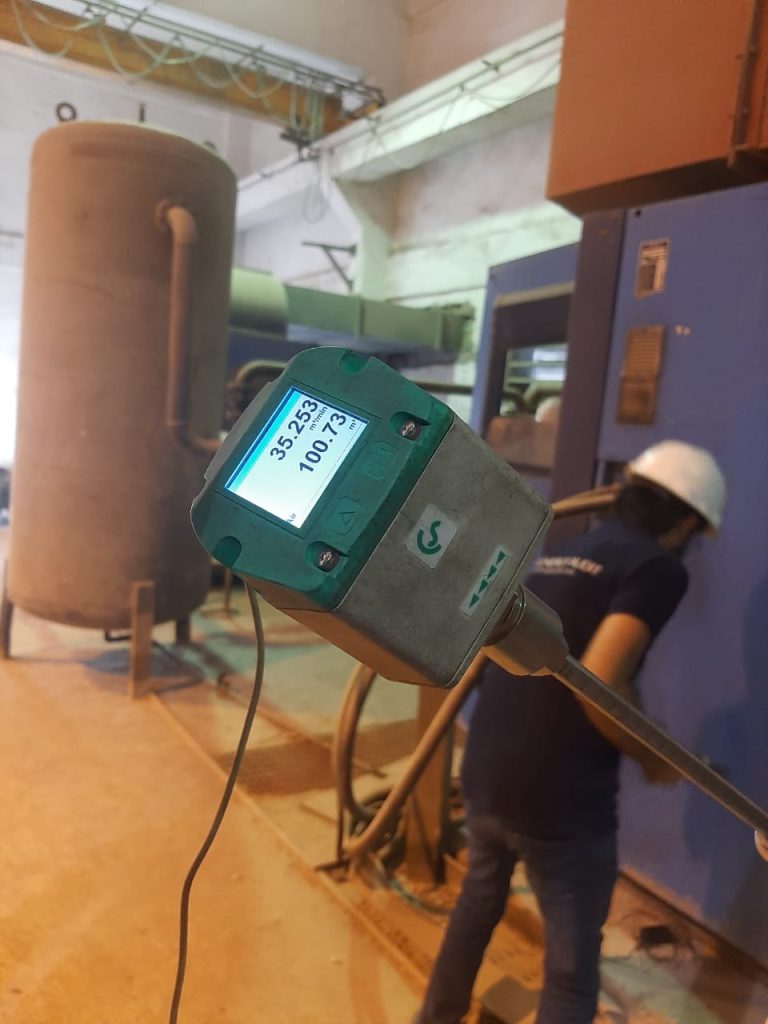
To identify the root cause of the issue, a comprehensive compressed air energy audit was conducted by the technical team at Air Audit Pvt Ltd. The audit began with installation of advanced monitoring equipment to measure flow rate, pressure levels, power consumption, and compressor load patterns across different operational shifts. Data logging was performed over several days to analyze demand fluctuations during peak and non-peak production hours.
Audit findings revealed that nearly 30% of the compressed air produced by the system was being lost due to undetected pipeline leakages, faulty pneumatic fittings, and worn-out hose connections. In addition to leakage losses, pressure drops of more than 1 bar were recorded across long distribution pipelines, which forced compressors to operate at higher discharge pressures in order to maintain adequate air supply at production endpoints.
Operating compressors at elevated pressure levels significantly increased energy consumption since even a 1 bar increase in pressure can raise energy costs by approximately 7–10%. Furthermore, improper compressor sequencing caused multiple compressors to run simultaneously under partial load conditions, leading to inefficient load-unload cycling and unnecessary power consumption.
Based on the audit results, a set of corrective measures was recommended. These included leakage rectification, pipeline layout optimization, pressure setpoint adjustment, and implementation of a centralized compressor control strategy to match supply with actual demand. Maintenance personnel were also trained to conduct periodic leakage inspections using ultrasonic detection tools.
After implementing the recommended solutions, the facility reported a substantial improvement in system performance. Compressor running hours were reduced, pressure stability across production lines improved, and electricity consumption associated with compressed air generation decreased by approximately 28%. The audit not only enhanced energy efficiency but also improved the overall reliability of pneumatic operations within the plant.