
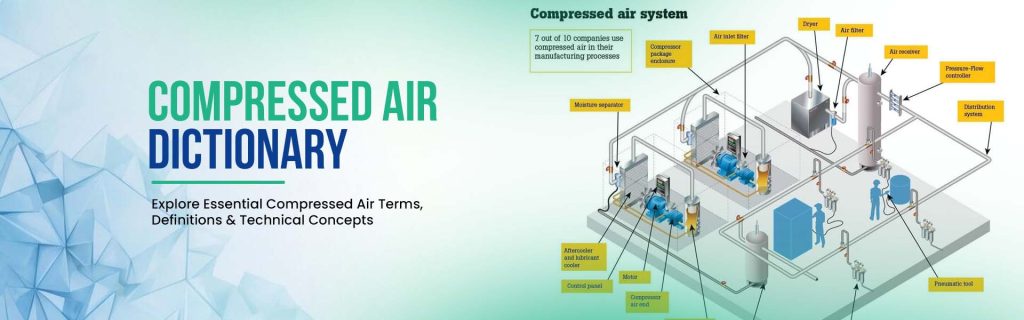
Understanding Your Compressed Air System
A compressed air system is more than just a compressor. It includes air generation, treatment, storage, distribution and end-use equipment. Understanding how these areas work together makes it easier to identify performance issues and energy losses.
Air Generation
Compressors generate the air required for industrial operations. Compressor selection, loading and operating conditions directly influence system efficiency.
Air Treatment
Dryers, filters and separators help maintain the required quality of compressed air while protecting equipment and production processes.
Storage & Distribution
Receivers and piping distribute compressed air throughout the facility. Pressure drops, restrictions and poor piping design can increase energy use.
End-Use & Demand
Production equipment determines how much air is actually required. Understanding demand helps avoid excessive pressure and unnecessary air use.
Audit Perspective: Every part of a compressed air system can affect energy performance. The right measurements help connect technical terms with real operating conditions.
Audit
Dictionary
Compressed Air Energy Audit Dictionary
Compressor Types
| Term | Definition |
|---|---|
| Rotary Screw Compressor | Uses two intermeshing helical rotors to continuously compress air; ideal for industrial continuous-duty operation. |
| Reciprocating Compressor | Uses piston-cylinder mechanism; suitable for intermittent or small-scale applications. |
| Oil-Injected Compressor | Oil is injected into compression chamber for cooling, sealing, and lubrication. |
| Oil-Free Compressor | Compresses air without oil contamination; essential for food, pharma, and electronics industries. |
| Two-Stage Compressor | Compresses air in two stages for improved efficiency at higher pressures. |
| Variable Speed Drive (VSD) | Adjusts motor speed based on air demand to reduce energy consumption. |
| Fixed Speed Compressor | Operates at constant motor speed; less flexible under variable load conditions. |
Key Compressor Components
| Component | Function |
|---|---|
| Air End | Core compression unit in rotary screw compressor. |
| Electric Motor | Drives the compressor air end. |
| Inlet Valve | Controls air intake. |
| Oil Separator | Removes oil from compressed air before discharge. |
| Oil Filter | Filters contaminants from lubricating oil. |
| Air Filter | Prevents dust and debris from entering system. |
| Aftercooler | Reduces compressed air temperature and moisture. |
| Cooling Fan | Maintains safe operating temperature. |
| Thermostatic Valve | Regulates oil temperature. |
| Check Valve | Prevents reverse airflow. |
| Minimum Pressure Valve (MPV) | Maintains internal system pressure stability. |
| Drain Valve | Removes condensate from system. |
| PLC / HMI | Control and monitoring interface. |
| Safety Valve | Protects system from overpressure damage. |
Performance & Energy Terms (Important for Audit)
| Term | Meaning |
|---|---|
| Free Air Delivery (FAD) | Actual air output under standardized conditions. |
| Specific Power | kW consumed per m³/min (or CFM) produced; key efficiency indicator. |
| kW Demand | Electrical power consumed by compressor. |
| Duty Cycle | Percentage of time compressor operates under load. |
| Pressure Drop | Loss of pressure due to friction or restriction in piping. |
| Leakage Rate | Percentage of air lost due to leaks. |
| Artificial Demand | Extra air usage caused by excessive system pressure. |
| Energy Intensity | Energy consumed per unit of air delivered. |
| ROI (Return on Investment) | Financial return from energy-saving improvements. |
| Payback Period | Time required to recover investment cost. |
Compressed Air Audit Terms
| Term | Definition |
|---|---|
| Air Audit | Systematic assessment of compressed air system performance and energy losses. |
| Data Logging | Recording pressure, flow, and power over time. |
| Baseline Profile | Standard operating performance benchmark. |
| Demand Profile | Air consumption pattern over time. |
| Peak Demand | Highest recorded air usage during audit period. |
| Load Profile | Compressor loading behavior over defined intervals. |
Compressed Air Quality Terms
| Term | Definition |
|---|---|
| ISO 8573-1 | International standard defining compressed air purity classes. |
| Dew Point | Temperature at which moisture condenses. |
| Pressure Dew Point (PDP) | Dew point measured at operating pressure. |
| Refrigerated Dryer | Removes moisture using cooling method. |
| Desiccant Dryer | Removes moisture using adsorption material. |
| Coalescing Filter | Removes oil aerosols and fine mist. |
| Activated Carbon Filter | Removes oil vapors and odors. |
| Water Separator | Separates bulk liquid water from air. |
System & Distribution Components
| Term | Function |
|---|---|
| Air Receiver (Tank) | Stores compressed air and stabilizes pressure. |
| Ring Main | Closed-loop piping system for balanced air delivery. |
| Distribution Piping | Network delivering air to end-use equipment. |
| Flow Controller | Regulates downstream air volume. |
| Pressure Regulator | Maintains consistent outlet pressure. |
| Drop Leg | Vertical pipe section for moisture drainage. |
Safety & Compliance
| Term | Meaning |
|---|---|
| Pressure Relief Valve (PRV) | Releases air when pressure exceeds safe limit. |
| Emergency Stop (E-Stop) | Immediate shutdown mechanism. |
| Lockout-Tagout (LOTO) | Safety procedure for maintenance isolation. |
| ATEX Certification | Certification for equipment in explosive environments. |
| Overheat Shutdown | Automatic shutdown due to high temperature. |
Typical Maintenance Intervals
| Service Item | Typical Interval |
|---|---|
| Air Filter | 2,000 – 4,000 hours |
| Oil Filter | 2,000 – 4,000 hours |
| Oil Separator | 4,000 – 8,000 hours |
| Lubricant (Mineral) | 2,000 – 4,000 hours |
| Lubricant (Synthetic) | 4,000 – 8,000+ hours |
| Leak Survey | Annually or quarterly |
Why Compressed Air Terms Matter in an Energy Audit
Knowing the terminology is the first step. During an energy audit, these concepts help engineers understand system performance, identify losses and develop practical opportunities for improvement.
Measure Performance
Technical measurements provide a clear picture of compressor performance, pressure, flow and electrical demand.
Identify Energy Losses
Understanding leakage, pressure drop, artificial demand and inefficient operation helps reveal avoidable energy consumption.
Improve System Reliability
Proper knowledge of components, air quality and operating conditions supports more reliable compressed air system operation.
Make Better Decisions
Clear technical information helps turn audit findings into practical actions for improving efficiency and system performance.
From Measurement to Improvement
Better Understanding Leads to Better Energy Decisions
Use the dictionary as a quick reference when reviewing compressed air system performance, audit measurements and improvement opportunities.