Compressed Air Efficiency in Paper & Pulp Manufacturing
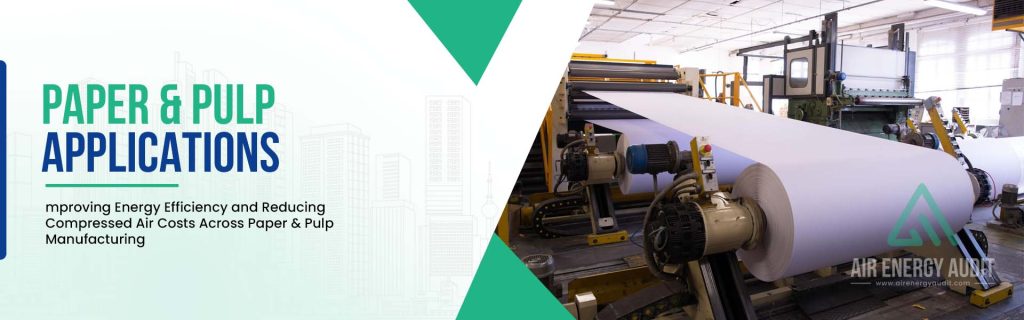
Paper and pulp manufacturing facilities rely on compressed air for process automation, instrumentation, pneumatic equipment, material handling, cleaning and production support. Continuous production processes can create significant compressed air demand when systems are not properly maintained and optimized.
A professional compressed air audit identifies leakage, excessive pressure, pressure losses, inefficient compressor operation and unnecessary air consumption across paper and pulp manufacturing facilities.
Why Compressed Air Efficiency Matters
Efficient compressed air systems help paper and pulp plants maintain reliable production while reducing unnecessary energy consumption and operating costs.
Where Compressed Air Is Used in Paper & Pulp Plants
Compressed air supports production, automation, instrumentation, material handling and maintenance operations throughout paper and pulp facilities.
Pulp Processing
Compressed air supports pneumatic equipment and control systems used during pulp processing.
Process EquipmentPaper Machines
Pneumatic systems support paper machine controls, actuators and production equipment.
ProductionProcess Automation
Instrument and control air supports automated production and process control systems.
AutomationInstrumentation & Controls
Clean compressed air is used for pneumatic instruments, control valves and actuators.
InstrumentationPneumatic Conveying
Compressed air can support the movement and handling of materials across plant operations.
Material HandlingCleaning & Blow-Off
Air is used for cleaning machinery, production areas and selected process components.
CleaningCoating & Finishing
Pneumatic systems support coating, finishing and related production applications.
FinishingPaper Cutting & Converting
Compressed air supports cutting, converting and automated handling equipment.
ConvertingPackaging Systems
Pneumatic equipment supports packaging, wrapping and product handling operations.
PackagingMaintenance Workshops
Pneumatic tools and compressed air support equipment servicing and plant maintenance.
MaintenanceCommon Compressed Air Wastage Areas
Continuous production and high compressed air demand can make system losses difficult to identify without detailed assessment.
Air Leakage
Leaks in piping, fittings, hoses and equipment can create continuous air losses.
Excessive Pressure
Operating systems at unnecessarily high pressure can increase compressor energy use.
Open Blow-Off
Uncontrolled air use for cleaning and blow-off applications can create avoidable demand.
Equipment Leaks
Leaks from pneumatic equipment and production machinery can increase air consumption.
Pressure Drop
Undersized piping and restrictions can cause pressure losses across the system.
Idle Equipment
Unused equipment may continue consuming compressed air during production periods.
Inefficient Controls
Poor compressor and system controls can lead to unnecessary energy consumption.
Artificial Demand
Unnecessary high pressure and inefficient end uses can increase overall air demand.
Efficiency Opportunities
A detailed compressed air audit can identify system losses, operating issues and opportunities to improve paper and pulp plant efficiency.
- Compressor operating performance
- Plant-wide leakage detection
- Pressure and flow measurement
- Pneumatic equipment assessment
- Paper and pulp process air review
- Distribution piping analysis
- Demand and control optimization
- Energy-saving opportunities
Improving Paper & Pulp Energy Efficiency
Optimizing compressed air generation, distribution and end uses can reduce energy waste while supporting reliable continuous production.
Reduce Unnecessary Compressed Air Consumption
Paper and pulp plants can reduce energy waste by controlling air demand, improving system pressure and addressing leakage across production and support equipment.
A professional audit provides measured information about compressor performance, air demand, pressure losses and end-use applications.
Leakage Reduction
Identify and reduce compressed air leaks across the plant.
Pressure Optimization
Maintain suitable operating pressure without unnecessary energy use.
Compressor Control
Improve compressor operation according to actual plant demand.
Demand Management
Match compressed air supply with actual production requirements.
Blow-Off Optimization
Reduce unnecessary compressed air use in cleaning and blow-off applications.
Distribution Improvement
Reduce pressure losses through better piping and distribution practices.
11011 Certified Expertise
ISO 11011 Certified Compressed Air Audit
Air Energy Audit follows ISO 11011 principles for assessing compressed air systems, including generation, distribution, storage and end-use applications.
ISO 11011 Standard
The assessment focuses on measured system performance, air demand, losses and opportunities for improving overall compressed air efficiency.
Improving Compressed Air Efficiency in Paper & Pulp Manufacturing
A professional compressed air audit provides a clear understanding of compressor performance, system pressure, air demand, leakage and end-use efficiency across paper and pulp manufacturing facilities.
The assessment helps identify practical opportunities to reduce energy waste, improve system performance and support reliable continuous production.
Paper & Pulp Audit Assessment
- Compressor operating performance
- Compressed air pressure and flow
- Air leakage assessment
- Paper and pulp production air demand
- Pneumatic equipment performance
- Process and blow-off applications
- Distribution piping and pressure losses
- Air treatment equipment
- Energy-saving opportunities
A Smarter Approach to Paper & Pulp Energy Efficiency
Identify compressed air losses, optimize system performance and improve energy efficiency with a professional compressed air audit.
Our Customers in Paper & Pulp Industry



































Air Energy Audit is reducing Energy Bills for big players in Pakistan's Paper & Pulp Industry