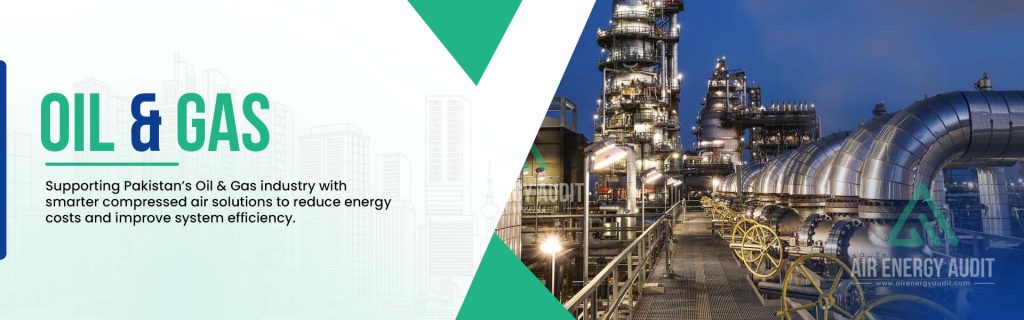
Compressed Air in the Oil & Gas Industry
The oil and gas industry includes exploration, production, processing, refining, storage, transportation and distribution operations. These facilities use complex equipment and control systems to maintain reliable and safe industrial processes.
Compressed air is an important utility in many oil and gas facilities. It can support pneumatic instrumentation, control valves, process equipment, maintenance tools and other plant applications.
A well managed compressed air system helps facilities understand their air demand, operating pressure, equipment performance and opportunities for reducing unnecessary energy consumption.
Air Energy Audit provides professional compressed air system assessment to help industrial facilities identify performance improvement opportunities through measurement and analysis.
Why Compressed Air Matters in Oil & Gas
Compressed air can support essential plant operations, including instrumentation, pneumatic control and maintenance. System reliability and energy efficiency depend on correct design, operation, maintenance and demand management.
Where Is Compressed Air Used in Oil & Gas?
Compressed air applications differ between facilities. The following areas represent common applications and should be confirmed against the actual plant design and process requirements.
Process Control & Instrumentation
Instrument air supports pneumatic instruments and control devices used to monitor and regulate industrial processes.
Working: Air is treated, dried and regulated before reaching instruments and pneumatic control equipment.
Control DepartmentControl Valves & Actuators
Pneumatic actuators use compressed air to move control valves that regulate process flow, pressure or other operating conditions.
Working: Air pressure produces movement in the actuator according to the control signal.
Process ControlRefinery & Processing Units
Refinery and processing areas may use compressed air for pneumatic control, instruments and approved auxiliary equipment.
Working: The distribution network supplies air to equipment according to required pressure and air quality.
Processing DepartmentGas Processing Facilities
Gas processing plants may use compressed air for instrumentation, pneumatic actuators and selected process support applications.
Working: Air is delivered through the plant distribution system to designated pneumatic equipment.
Gas ProcessingMaintenance Workshops
Maintenance teams may use pneumatic tools such as impact tools, grinders and drills during equipment servicing.
Working: Air supplied through hoses powers pneumatic tools for specific maintenance tasks.
MaintenanceEquipment Cleaning & Blow Off
Compressed air may be used for selected cleaning, drying and blow off activities where the application is suitable.
Working: Air exits through a nozzle or outlet to remove loose material or support the task.
Plant OperationsStorage & Terminal Operations
Storage terminals and related facilities may use compressed air for instrumentation, pneumatic equipment and control functions.
Working: Air is distributed to the required equipment through designated plant piping.
Terminal OperationsUtility & Auxiliary Systems
Compressed air can support selected auxiliary machinery and pneumatic components across industrial facilities.
Working: Air pressure is converted into mechanical movement or used for approved utility applications.
UtilitiesCommon Compressed Air Wastage Areas
Compressed air losses can occur in generation, treatment, distribution and end use applications. Actual losses require site inspection and measurement.
Air Leakage
Leaks in piping, fittings, hoses, valves and connections can create continuous compressed air demand.
Excessive Pressure
Operating pressure above application requirements can increase energy consumption and air losses.
Unnecessary Blow Off
Open blowing and unsuitable air nozzles may consume more air than required for the task.
Pressure Drop
Restrictions, undersized piping and clogged filters can create pressure losses across the system.
Inefficient Controls
Poor compressor sequencing and inappropriate operating controls may increase unloaded or inefficient running.
Artificial Demand
Excessive pressure can increase air consumption from some applications and leakage points.
Air Treatment Losses
Dryers, filters and treatment equipment may contribute to energy use and pressure drop.
Unmanaged Demand
Unnecessary or poorly controlled air use can increase the load on the compressed air system.
Why Identify Compressed Air Wastage?
A compressed air audit evaluates the complete system to understand where energy is consumed and where improvement opportunities may exist.
- Review compressor operating conditions
- Identify potential leakage points
- Assess pressure and flow requirements
- Review distribution system performance
- Evaluate air treatment and pressure losses
- Analyze end use demand patterns
- Develop practical improvement opportunities
Compressed Air Saving Potential
The saving potential of an oil and gas compressed air system depends on its actual operating condition, leakage, demand, equipment performance and electricity consumption.
How Savings Opportunities Are Identified
Air Energy Audit can assess the compressed air system through site observations, operating information and appropriate measurements to identify areas for improvement.
The assessment may examine compressor power, system pressure, flow, operating schedules, leakage, air treatment and demand.
Potential savings should be calculated from measured conditions, relevant operating hours and applicable electricity costs rather than assumed percentages.
Leakage Reduction
Reduce unnecessary demand by identifying and addressing compressed air leaks.
Pressure Optimization
Review whether operating pressure can be adjusted while meeting application requirements.
Compressor Controls
Evaluate sequencing and operating practices for improved compressor system performance.
Demand Management
Review air consumption and reduce unnecessary or uncontrolled end use demand.
Distribution Improvement
Identify avoidable restrictions and pressure losses in the compressed air network.
System Monitoring
Use relevant measurements and operating information to support better energy management.
11011 Certified
Expertise
Certified Under ISO 11011
Air Energy Audit is an ISO 11011 certified industrial energy audit firm in Pakistan, providing professional assessment of compressed air system energy efficiency.
Our assessment approach focuses on understanding the operating condition of compressed air systems and identifying opportunities for improved energy performance.
Certification Standard
Certified under ISO 11011, the international standard for measuring and assessing energy efficiency in compressed air systems.
Improving Compressed Air System Efficiency
A complete compressed air assessment should consider the entire system, from air generation to distribution and end use applications.
For oil and gas facilities, the assessment can help establish how compressed air is used across different plant areas, identify potential sources of wastage and evaluate improvement opportunities based on actual operating conditions.
The objective is to support informed decisions about energy performance, system reliability and practical optimization.
Audit Assessment Areas
- Compressed air generation
- Compressor operating performance
- Air treatment and drying
- System pressure and flow
- Leakage assessment
- Distribution piping and restrictions
- End use demand analysis
- Energy saving opportunities
A Smarter Approach to Compressed Air Efficiency
Air Energy Audit supports industrial facilities in evaluating compressed air system performance through professional assessment and energy efficiency analysis. Contact our team to discuss your compressed air system requirements.
Our Customers in Oil & Gas


































Air Energy Audit is reducing Energy Bills for big players in Pakistan's Oil & Gas