A Proven
Methodology
Methodology
Designed for Real-World Industrial Environments
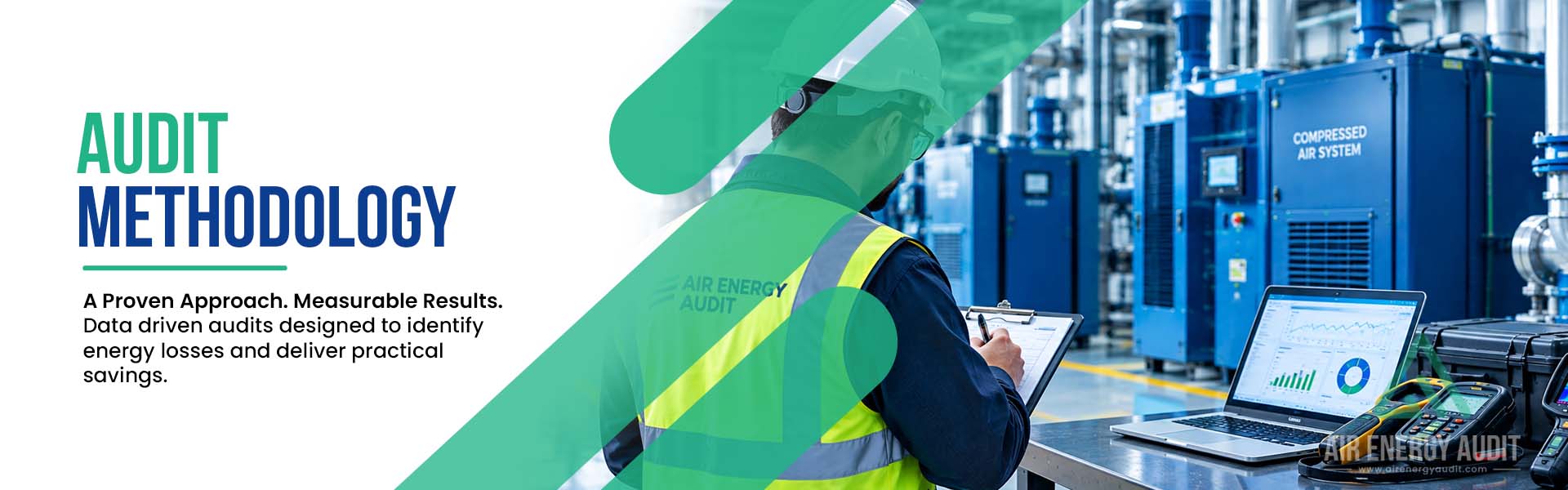
Our proven energy audit methodology is built for real industrial environments, helping businesses identify energy-saving opportunities, reduce operating costs and improve system performance through practical, data-driven recommendations.
Energy Audit Framework
Advanced Tools
Reliable Measurements
Reliable Measurements
| Instrument | What It Measures | Why It Matters |
|---|---|---|
| Ultrasonic Leak Detector | Detects compressed air leaks and estimates their relative size throughout the distribution system. | Identifies hidden leaks that cannot be seen or heard, reducing unnecessary compressed air losses and lowering energy costs. |
| Thermal Mass Flow Meter | Measures the actual compressed air flow rate (m³/min or CFM) at selected locations. | Verifies whether system supply matches operational demand and identifies flow losses across the network. |
| Power Quality Analyser | Monitors electrical consumption, power factor, voltage, current and compressor performance. | Highlights electrical inefficiencies and converts wasted energy into measurable annual operating costs. |
| Dew Point Meter | Measures the moisture content within the compressed air system. | Detects excess moisture that can damage equipment, contaminate products and accelerate pipe corrosion. |
| Calibrated Pressure Gauges | Records system pressure at multiple locations throughout the compressed air network. | Pinpoints pressure drops, restrictions and unnecessary over-pressurisation that increase energy consumption. |
| Infrared Thermometer / Thermocouple | Measures compressor inlet temperature, discharge temperature and surrounding ambient conditions. | Identifies temperature-related efficiency losses and supports improved compressor performance. |
| Data Logger | Continuously records pressure, temperature, flow and operating data over complete production cycles. | Captures long-term performance trends, demand fluctuations and intermittent issues that spot measurements often miss. |
Our Quality Approach
One Methodology
Multiple Audit Levels
Multiple Audit Levels
Foundation Assessment
A structured visual inspection and operational review that identifies quick-win energy-saving opportunities and determines whether a detailed system audit is required.
Performance Analysis
A complete compressed air assessment using leak detection, flow measurement, pressure mapping and power analysis to produce prioritised recommendations and estimated savings.
Strategic Evaluation
An investment-grade assessment with extended monitoring, lifecycle cost modelling and demand profiling for capital planning, ESG reporting and multi-site operations.
Data to Decision
A Structured Six-Step Process
for Improvement
for Improvement
Pre-Audit Data Review & System Familiarisation
Before testing begins, the audit team studies compressor records, maintenance history, energy bills, production patterns and system drawings to understand current performance and identify investigation priorities.
- Compressor inventory baseline
- Energy demand profile
- Risk area identification
- Site preparation planning
Compressor Performance Measurement
Field instruments measure real compressor output, power consumption and efficiency. Performance is compared with rated specifications to locate operational losses.
- Actual vs rated output
- Specific energy analysis
- Machine health review
- Control system evaluation
Demand Side Application Survey
Every compressed air application is reviewed to determine efficiency, pressure needs and opportunities where alternative solutions may reduce energy costs.
- Usage point mapping
- Application efficiency rating
- Wasteful usage detection
- Pressure requirement study
Leak Detection & Loss Assessment
Ultrasonic detection equipment identifies leakage points throughout the distribution network and calculates financial impact with repair priorities.
- Leak location mapping
- Total leakage calculation
- Annual loss evaluation
- Repair planning
Distribution Network Analysis
The complete piping network is analysed for pressure losses, restrictions and design issues affecting overall compressed air efficiency.
- Pressure drop measurement
- Flow balance review
- Piping assessment
- Improvement options
Final Analysis & Improvement Plan
All collected data is analysed and converted into a practical action plan containing savings opportunities, ROI calculations and future improvement strategies.
- ISO 11011 audit report
- ROI action roadmap
- Cost saving analysis
- ESG reporting support