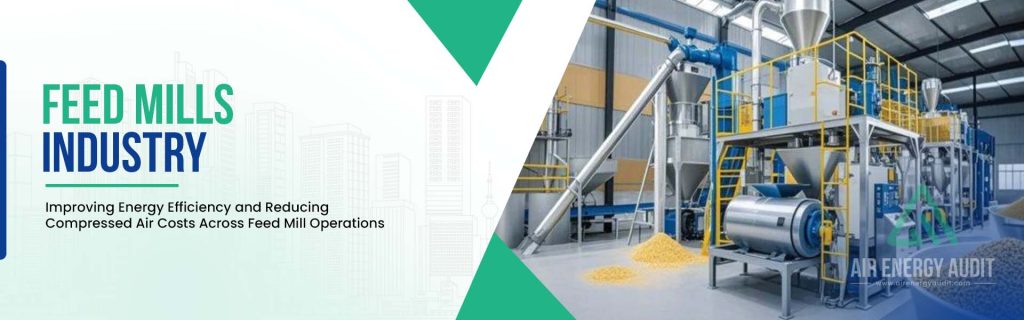
Compressed Air Efficiency in Feed Mills
Feed mills rely on compressed air for process automation, pneumatic conveying, pellet production, packaging, instrumentation, cleaning and material handling. Continuous feed production can create significant compressed air demand when systems are not properly maintained and optimized.
A professional compressed air audit identifies leakage, excessive pressure, pressure losses, inefficient compressor operation and unnecessary air consumption across feed milling facilities.
Why Compressed Air Efficiency Matters
Efficient compressed air systems help feed mills maintain reliable production while reducing avoidable energy losses and improving the performance of pneumatic equipment.
Where Compressed Air Is Used in Feed Mills
Compressed air supports several processing, production, packaging and maintenance operations throughout a feed mill.
Pneumatic Conveying
Compressed air supports the movement of feed ingredients, finished feed and other materials through pneumatic conveying systems.
Material HandlingProcess Automation
Pneumatic systems operate valves, actuators and automated equipment used throughout feed production processes.
AutomationPellet Production
Compressed air supports selected pneumatic controls and equipment used in feed pelletizing operations.
PelletizingFeed Packaging
Pneumatic systems support bag filling, weighing, sealing and automated packaging equipment.
PackagingIngredient Handling
Compressed air can support pneumatic handling and transfer of feed ingredients within production areas.
Production SupportInstrumentation & Controls
Instrument air supports control valves, pneumatic instruments and process monitoring systems.
InstrumentationCleaning & Blow-Off
Compressed air may be used for equipment cleaning, surface cleaning and selected production applications.
CleaningDust Collection Systems
Compressed air can support pulse cleaning and other pneumatic functions in dust collection equipment.
Dust ControlQuality & Testing Equipment
Pneumatic systems may be used in testing, inspection and quality control applications.
Quality ControlMaintenance Workshops
Compressed air supports pneumatic tools, maintenance equipment and workshop cleaning activities.
MaintenanceCommon Compressed Air Wastage Areas
Feed mills can experience avoidable compressed air losses when equipment, controls and distribution systems are not regularly assessed.
Air Leakage
Leaks in piping, hoses, fittings and connections can create continuous air losses.
Excessive Pressure
Operating at higher pressure than required can increase compressor energy consumption.
Open Blow-Off
Uncontrolled compressed air use for cleaning can create unnecessary demand.
Equipment Leaks
Pneumatic machinery and production equipment may lose air through worn components and connections.
Pressure Drop
Undersized or poorly designed distribution systems can create pressure losses.
Idle Equipment
Equipment operating without production demand can consume compressed air unnecessarily.
Inefficient Controls
Poor compressor sequencing and control settings can increase energy consumption.
Artificial Demand
Unnecessary pressure requirements and inappropriate applications can increase system demand.
What We Assess
Our compressed air audit evaluates the complete system from compressor operation to end-use applications.
- Compressor operating performance
- Mill-wide leakage detection
- Pressure and flow measurement
- Pneumatic equipment assessment
- Pelletizing and packaging air applications
- Distribution piping analysis
- Demand and control optimization
- Energy-saving opportunities
Improving Compressed Air Efficiency in Feed Mills
A detailed audit can identify practical opportunities to reduce compressed air demand and improve overall system efficiency.
From Compressor Room to Production Floor
Feed mill compressed air systems should be assessed as complete systems rather than individual components. Compressor performance, distribution piping, storage, controls and end-use applications all influence total energy consumption.
Identifying the actual air demand of processing, pelletizing and packaging operations helps determine where pressure reduction, leakage control and equipment optimization may be applied.
Leakage Reduction
Locate and address compressed air leaks across the mill and distribution network.
Pressure Optimization
Match operating pressure with actual equipment requirements.
Compressor Control
Improve compressor sequencing and operating efficiency according to demand.
Demand Management
Reduce unnecessary compressed air consumption across production areas.
Blow-Off Optimization
Review cleaning and blow-off applications for unnecessary air use.
Distribution Improvement
Identify pressure losses and opportunities to improve compressed air distribution.
11011 Compressed Air Assessment
ISO 11011 Certified Compressed Air Assessment
Air Energy Audit follows the principles of ISO 11011 for evaluating compressed air systems, including supply, distribution and demand-side performance.
Systematic Energy Assessment
Our audit approach focuses on measured system performance, operating conditions, compressed air demand and opportunities for energy improvement.
Improving Compressed Air Efficiency in Feed Mills
A professional compressed air audit provides feed mills with a clear understanding of system performance, compressed air demand and avoidable energy losses.
Our assessment covers compressor operation, distribution systems and production applications to identify practical opportunities for improving efficiency and reducing unnecessary compressed air consumption.
Feed Mill Audit Assessment
- Compressor operating performance
- Compressed air pressure and flow
- Air leakage assessment
- Feed mill air demand
- Pneumatic equipment performance
- Pelletizing and packaging applications
- Distribution piping and pressure losses
- Air treatment equipment
- Energy-saving opportunities
A Smarter Approach to Feed Mill Energy Efficiency
Identify compressed air losses, understand system performance and uncover practical efficiency opportunities through a professional compressed air audit.
Our Customers in Feed Mill Industry

































Air Energy Audit is reducing Energy Bills for big players in Pakistan's Feed Mill Industry