
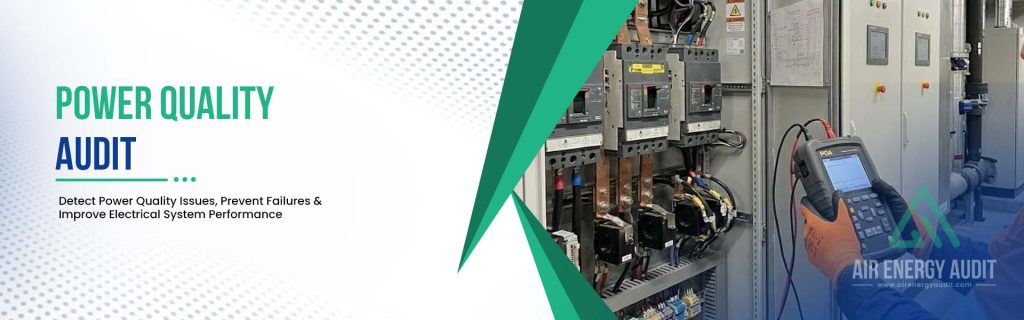
Protect Your Equipment With Better Power Quality
Poor power quality can increase energy losses, affect equipment performance, cause unexpected shutdowns and shorten the operating life of electrical systems. Air Energy Audit evaluates electrical power quality to identify disturbances and develop practical corrective solutions.
Electrical Power Can Be Available Without Being Reliable
Modern industrial equipment depends on a stable and reliable electrical supply. Voltage variations, harmonics, phase imbalance, transients and other disturbances can negatively affect motors, drives, control systems, transformers and sensitive electronic equipment.
A Power Quality Audit uses electrical measurements and engineering analysis to identify the characteristics of the electrical supply and determine whether power quality issues may be contributing to equipment problems, energy losses or operational interruptions.
- Identify voltage variations and electrical disturbances.
- Evaluate current and voltage harmonic distortion.
- Assess phase voltage and current imbalance.
- Review power factor and reactive power performance.
- Identify conditions that may affect sensitive equipment.
What a Power Quality Audit Can Improve
Understanding electrical disturbances allows industries to address root causes instead of repeatedly responding to equipment failures and interruptions.
Voltage Stability
Identify voltage variations and abnormal operating conditions that can affect electrical equipment.
Harmonic Analysis
Evaluate harmonic distortion and its potential impact on transformers, motors, drives and electronic systems.
Power Factor
Assess power factor performance and reactive power behavior within the electrical system.
Phase Balance
Identify voltage and current imbalance that can create additional stress and losses in three-phase systems.
Transient Detection
Investigate short-duration electrical disturbances that may contribute to equipment malfunction.
Equipment Protection
Improve understanding of electrical conditions that may reduce equipment reliability and operating life.
What We Analyze During a Power Quality Audit
Air Energy Audit evaluates the electrical parameters and disturbances that can influence equipment performance, reliability and energy efficiency.
Voltage Variation
Measure voltage conditions and identify deviations that may affect connected electrical equipment.
Current Analysis
Evaluate current levels, loading patterns and unusual current behavior across major electrical systems.
Harmonic Distortion
Analyze voltage and current harmonics and determine potential effects on electrical equipment and networks.
Power Factor
Assess power factor performance and reactive power characteristics under different operating conditions.
Phase Imbalance
Examine phase voltage and current balance in three-phase electrical systems.
Transients & Disturbances
Investigate transient events, interruptions and other disturbances that may affect equipment operation.
Frequency Monitoring
Review system frequency behavior and identify unusual variations during plant operation.
Electrical Load Behavior
Analyze load profiles and operating conditions to understand how electrical demand changes over time.
Sensitive Equipment
Evaluate power quality concerns affecting drives, automation, control systems and electronic equipment.
Corrective Opportunities
Develop practical recommendations based on measured power quality conditions and identified root causes.
How Air Energy Audit Performs a Power Quality Audit
Our approach combines electrical measurements, event analysis and engineering evaluation to identify the source and impact of power quality problems.
Measure
Record voltage, current, frequency, power factor, harmonics and other relevant electrical parameters.
Monitor
Observe electrical behavior over representative operating periods and identify abnormal events.
Diagnose
Analyze measured data to determine the nature, frequency and possible causes of disturbances.
Recommend
Develop practical corrective and improvement measures based on the audit findings.
Key Power Quality Parameters We Evaluate
A detailed power quality assessment considers multiple electrical characteristics rather than relying on a single measurement. This helps provide a more complete picture of system performance.
The Value of Better Power Quality
Improved power quality can support reliable equipment operation, reduce avoidable losses and help minimize production interruptions.
More Reliable Operation
Better understanding of electrical disturbances can support more stable operation of critical equipment.
Lower Electrical Losses
Identifying poor power quality conditions can help address avoidable electrical losses and inefficiencies.
Fewer Disturbance-Related Problems
Root-cause analysis can help identify conditions that contribute to trips, interruptions and equipment issues.
A Clear Picture of Your Power Quality
Following the assessment, Air Energy Audit provides a structured analysis of measured electrical parameters, identified disturbances and their potential impact on equipment and plant operation.
Recommendations can be prioritized according to technical significance, operational impact, feasibility and expected improvement.
- Power quality measurement and monitoring results.
- Voltage and current analysis.
- Harmonic distortion assessment.
- Power factor evaluation.
- Phase imbalance analysis.
- Identified corrective and improvement opportunities.
Is Poor Power Quality Affecting Your Plant?
Let Air Energy Audit assess your electrical power quality, identify disturbances and provide practical recommendations for improving equipment reliability and system performance.
Power Quality Audit
A Power Quality Audit helps identify hidden electrical issues caused by voltage fluctuations, harmonics, power factor problems, voltage imbalance and other power quality disturbances. During an audit, these issues can be assessed to determine their impact on production, equipment performance, reliability and operating costs.
Undetected power quality issues can:
Cause voltage fluctuations and disturbances, affecting the performance and reliability of electrical and production equipment.
Reduce the efficiency of motors, transformers, drives and other electrical systems by increasing losses and unnecessary energy consumption.
Shorten equipment lifespan due to overheating, electrical stress, harmonics, voltage imbalance and repeated disturbances