Compressed Air for Special Applications
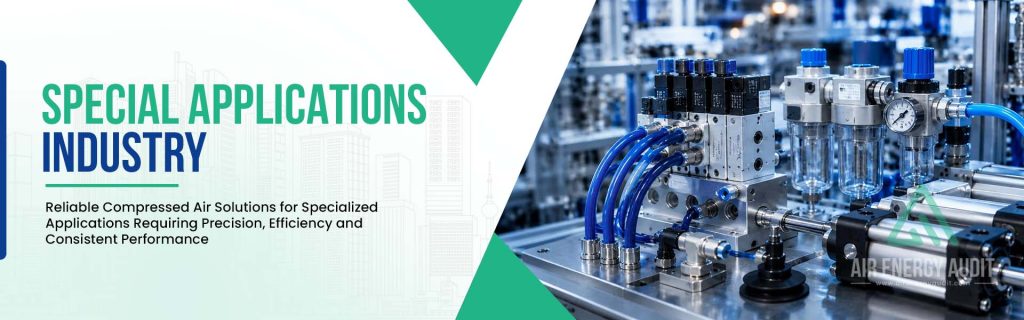
Special applications often require compressed air for unique, highly controlled and demanding processes. From specialized machinery and testing systems to laboratory operations, pneumatic equipment and custom industrial applications, compressed air can be an essential utility.
A detailed compressed air audit helps identify actual demand, operating losses, pressure requirements and opportunities to improve system efficiency.
Specialized Applications Need Specialized Air Management
Unique applications can have different pressure, flow, quality and operating requirements. Understanding these requirements is essential for maintaining reliable performance while controlling compressed air energy costs.
Where Compressed Air Is Used in Special Applications
Compressed air supports many specialized operations where controlled pressure, reliable flow and clean air are required.
Specialized Machinery
Compressed air can operate pneumatic components and specialized machinery used in custom industrial processes.
Machine OperationTesting & Inspection
Air is used in testing, inspection and controlled applications where stable pressure and flow are important.
Testing SystemsLaboratory Applications
Specialized facilities may use compressed air for instruments, equipment and controlled process requirements.
Laboratory AirPneumatic Equipment
Special purpose pneumatic equipment depends on reliable compressed air for consistent operation.
Pneumatic SystemsControl Systems
Compressed air can support pneumatic control systems, actuators and specialized automation equipment.
Process ControlPrecision Applications
Controlled air pressure and flow can be important in applications requiring accurate and repeatable performance.
Precision AirCleaning & Blow Off
Compressed air may be used for cleaning, drying and removing dust or particles from specialized equipment.
Cleaning AirCustom Industrial Processes
Special industrial processes may require customized compressed air solutions based on application demand.
Custom DemandResearch & Development
R&D environments can use compressed air for experimental equipment, testing systems and prototype processes.
R&D SystemsSpecialized Automation
Pneumatic automation can provide controlled movement, handling and operation in specialized production environments.
AutomationCommon Compressed Air Wastage
Special applications can experience significant compressed air losses when pressure, demand and equipment performance are not properly controlled.
Air Leakage
Leaks in piping, fittings, hoses and equipment can create continuous air losses.
Excessive Pressure
Operating equipment at unnecessarily high pressure increases compressor energy use.
Open Blow Off
Uncontrolled blow off applications can consume large amounts of compressed air.
Equipment Losses
Faulty valves, actuators and pneumatic components can increase air consumption.
Pressure Drop
Undersized piping and restrictions can create pressure losses across the system.
Idle Equipment
Equipment left pressurized during downtime can continue consuming compressed air.
Inefficient Controls
Poor control strategies can cause compressors and air systems to operate inefficiently.
Artificial Demand
Unnecessary pressure requirements and poor applications can increase system demand.
Why Audit Special Applications?
Because specialized systems can have unique air requirements, auditing the complete system helps identify where energy is being consumed and where improvements can be made.
- Measure actual compressed air demand
- Identify system leakage
- Check pressure and flow requirements
- Evaluate specialized equipment
- Identify inefficient applications
- Find practical energy saving opportunities
Improve Efficiency in Special Applications
A properly conducted compressed air audit can identify opportunities to reduce energy consumption, stabilize pressure and improve the performance of specialized applications.
The focus is on matching compressed air supply with actual application demand while reducing avoidable losses throughout the system.
Leakage Reduction
Detect and repair compressed air leaks throughout the system.
Pressure Optimization
Set operating pressure according to actual application requirements.
Compressor Controls
Improve compressor operation according to changing system demand.
Application Optimization
Reduce unnecessary compressed air consumption at specialized equipment.
Blow Off Optimization
Improve cleaning and blow off applications using efficient air solutions.
Distribution Improvement
Reduce pressure losses through better piping and air distribution.
11011 Compressed Air
Energy Assessment
ISO 11011 Compressed Air Assessment
Air Energy Audit applies the principles of ISO 11011 when evaluating compressed air systems. The assessment considers supply, distribution and demand side performance to identify efficiency improvement opportunities.
ISO 11011 Standard
The assessment approach considers the complete compressed air system rather than focusing only on individual compressors or equipment.
Evaluate Your Special Applications
Our compressed air audit evaluates the complete system to understand actual demand, operating conditions, losses and potential energy saving opportunities.
The assessment helps businesses make informed improvements while maintaining reliable compressed air performance for specialized applications.
Audit Checklist
- Compressor operating performance
- Compressed air pressure and flow
- Air leakage assessment
- Specialized equipment air demand
- Pneumatic tools and equipment
- Cleaning and blow off applications
- Distribution piping and pressure losses
- Air treatment equipment
- Energy saving opportunities
Optimize Your Compressed Air System
A detailed compressed air audit can reveal hidden losses and practical opportunities to improve efficiency, reliability and system performance in special applications.
Our Customers in Special Application





























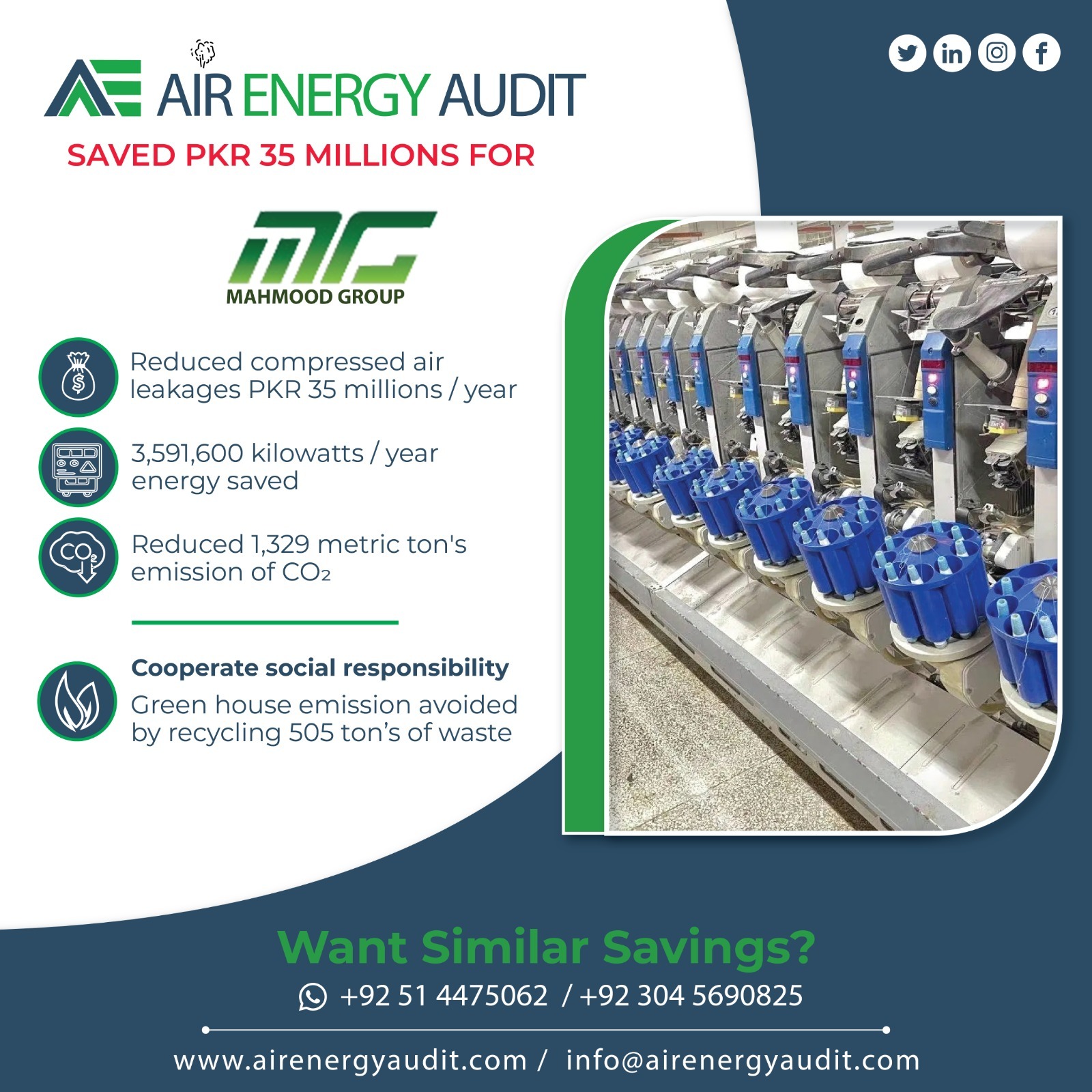
Air Energy Audit is reducing Energy Bills for big players in Pakistan's Special Application