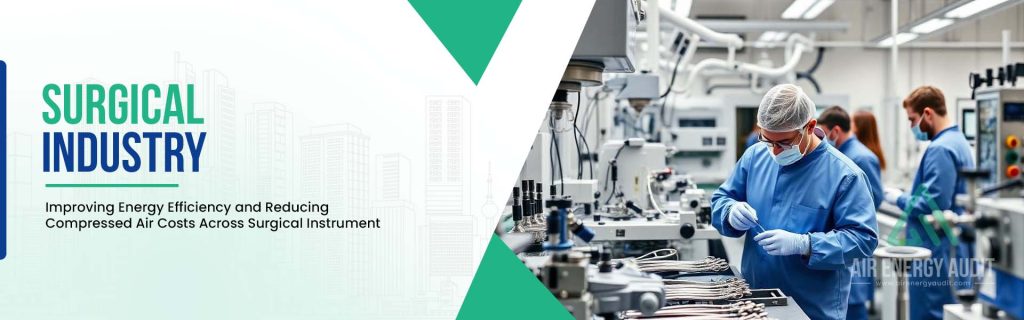
Compressed Air Efficiency in Surgical Facilities
Surgical facilities rely on dependable compressed air systems for medical equipment, surgical instruments, sterilization systems, laboratory applications, pneumatic devices and facility support operations.
A professional compressed air audit helps identify leakage, pressure losses, inefficient compressor operation and unnecessary air consumption that can affect energy performance and system reliability.
Air Energy Audit evaluates the complete compressed air system to identify practical opportunities for improved efficiency, reliable air delivery and better overall energy management.
Why Compressed Air Efficiency Matters
Surgical facilities require reliable utility systems that support continuous clinical and support operations. Efficient compressed air management can help reduce avoidable energy consumption while maintaining dependable pneumatic equipment performance.
Where Compressed Air Is Used in Surgical Facilities
Compressed air supports surgical equipment, medical systems, sterilization, laboratory operations and facility maintenance.
Surgical Instruments
Working: Pneumatic surgical instruments can use compressed air for specific medical procedures and equipment.
Reliable pressure and suitable air quality support consistent instrument performance.
Surgical EquipmentOperating Room Equipment
Working: Selected operating room equipment may use compressed air for pneumatic functions and control.
Stable air delivery supports reliable equipment operation.
Operating RoomsMedical Air Systems
Working: Medical air systems provide compressed air for approved clinical and medical applications.
Air quality, pressure and system reliability are important for appropriate performance.
Medical AirSterilization Equipment
Working: Compressed air can support pneumatic components and control systems associated with sterilization.
Efficient air supply helps maintain reliable equipment operation.
SterilizationDental & Pneumatic Devices
Working: Dental and specialized pneumatic medical devices can require compressed air during operation.
Stable pressure helps maintain consistent equipment performance.
Pneumatic DevicesLaboratory Equipment
Working: Laboratory instruments and testing equipment may use compressed air for specific applications.
Proper air quality and pressure support dependable laboratory operations.
LaboratoryCleaning & Blow-Off
Working: Compressed air may be used for cleaning selected equipment and facility applications.
Uncontrolled blow-off can create unnecessary compressed air consumption.
CleaningHospital Automation
Working: Pneumatic control and automation equipment can use compressed air in surgical and support areas.
Efficient system operation helps maintain stable utility demand.
AutomationMedical Testing Systems
Working: Testing and diagnostic support equipment may require compressed air for selected pneumatic applications.
Reliable pressure and flow support dependable equipment performance.
TestingMaintenance Workshops
Working: Pneumatic tools and maintenance equipment require compressed air for servicing facility systems.
Managing workshop demand helps prevent unnecessary compressor operation.
MaintenanceCommon Compressed Air Wastage Areas
Surgical facilities can experience avoidable compressed air losses through leakage, pressure issues, inefficient equipment and unnecessary demand.
Air Leakage
Leaks in piping, fittings, valves and connections can create continuous compressed air demand.
Excessive Pressure
Operating at higher pressure than required can increase compressor energy consumption.
Open Blow-Off
Uncontrolled compressed air cleaning applications can consume large volumes of air.
Equipment Leaks
Pneumatic medical equipment and connections can develop leaks that remain unnoticed.
Pressure Drop
Undersized piping, filters and restrictions can create pressure losses throughout the system.
Idle Equipment
Air supplied to inactive equipment can create unnecessary compressed air demand.
Inefficient Controls
Poor compressor sequencing and control can increase energy consumption during changing facility demand.
Artificial Demand
High-pressure applications can consume more air than necessary when suitable alternatives are not evaluated.
Where Efficiency Improvements Begin
A detailed compressed air audit helps identify the actual causes of energy loss and excessive air consumption across surgical facilities.
- Compressor operating performance
- Compressed air leakage detection
- Pressure and flow measurement
- Medical and pneumatic equipment assessment
- Blow-off application review
- Distribution system analysis
- Demand and control optimization
- Energy-saving opportunities
How Surgical Facilities Can Improve Air Efficiency
A structured compressed air assessment can identify opportunities to reduce unnecessary energy consumption while supporting reliable system performance.
A System-Level Approach
Compressed air efficiency depends on the interaction between compressors, controls, dryers, filters, piping, storage and end-use equipment.
Air Energy Audit evaluates these elements together to identify practical improvement opportunities based on actual operating conditions.
Leakage Reduction
Finding and repairing leaks reduces unnecessary compressor load.
Pressure Optimization
Maintaining required pressure without excessive setpoints can reduce energy demand.
Compressor Control
Improved sequencing can match compressor operation with actual facility demand.
Demand Management
Managing unnecessary air consumption can improve overall system efficiency.
Blow-Off Optimization
Efficient blow-off methods can reduce unnecessary compressed air consumption.
Distribution Improvement
Reducing pressure losses can improve air delivery to critical surgical applications.
11011 Compressed Air
Assessment
ISO 11011 Certified Expertise
Air Energy Audit follows the principles of ISO 11011 for compressed air system assessment, helping industries evaluate energy performance, system demand and efficiency opportunities.
ISO 11011 Compressed Air Assessment
The assessment considers compressed air generation, distribution, storage and end-use applications to identify system-level improvement opportunities.
Improving Compressed Air Efficiency in Surgical Facilities
A professional compressed air audit provides a clear picture of how a surgical facility generates, distributes and consumes compressed air.
The assessment focuses on compressor performance, pressure stability, air leakage, medical and pneumatic equipment, distribution losses and opportunities to improve overall energy efficiency.
The objective is to identify measurable opportunities that can support reliable system performance and more efficient facility operation.
Surgical Facility Audit Assessment
- Compressor operating performance
- Compressed air pressure and flow
- Air leakage assessment
- Surgical facility air demand
- Pneumatic equipment performance
- Blow-off applications
- Distribution piping and pressure losses
- Air treatment equipment
- Energy-saving opportunities
A Smarter Approach to Surgical Facility Energy Efficiency
Evaluate your compressed air system with a structured, data-driven audit designed to identify energy losses, performance issues and practical efficiency opportunities.
Our Customers in Surgical Industry
































Air Energy Audit is reducing Energy Bills for big players in Pakistan's Surgical Industry