
A multinational manufacturing corporation operating five production plants across different regions launched a centralized energy benchmarking initiative to evaluate and standardize the performance of its compressed air systems. Although all plants produced similar industrial packaging materials, utility costs varied significantly. Specific energy consumption (SEC) ranged from 0.095 kW/CFM at the most efficient site to 0.142 kW/CFM at the least efficient one. Through structured benchmarking, cross-plant comparison, and implementation of standardized performance protocols, the company reduced total compressed air energy consumption by 16%, generating annual savings exceeding $1.2 million.
Each plant had independently developed its compressed air infrastructure over time, resulting in variations in compressor brands, control strategies, storage capacities, operating pressures, and maintenance practices. Corporate energy reviews revealed inconsistent energy intensity across sites, yet no unified framework existed to objectively measure performance. Management recognized inefficiencies but lacked standardized KPIs to quantify and compare them.
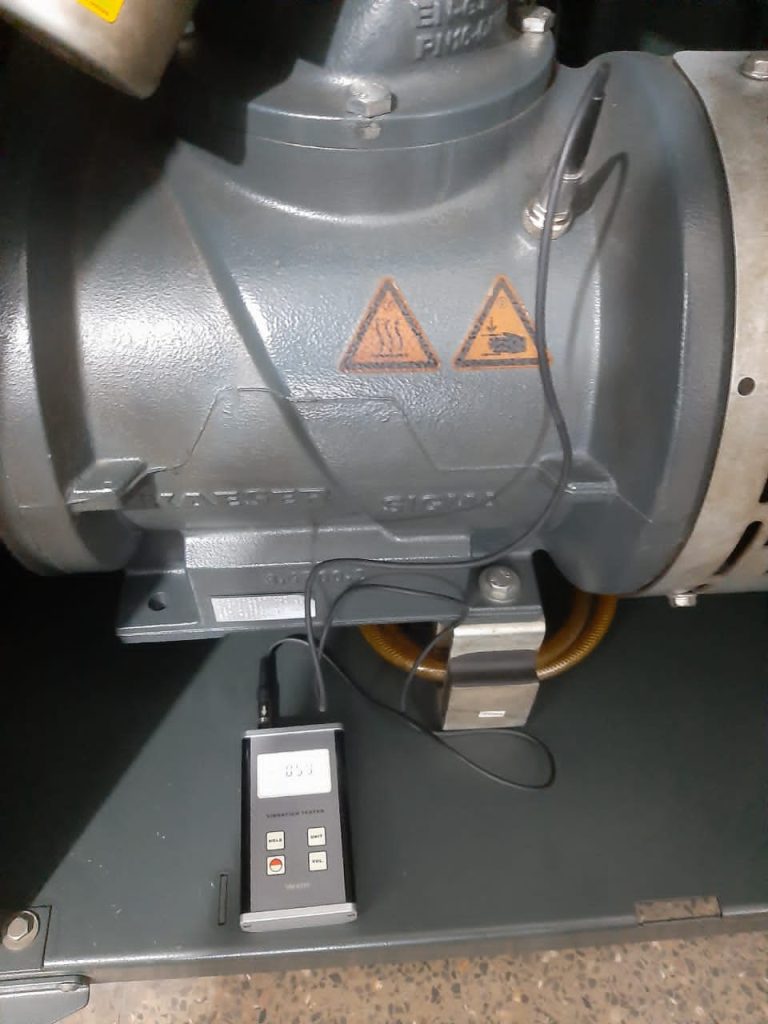
A nine-month benchmarking program was initiated. Each plant was equipped with calibrated flow meters, power analyzers, pressure loggers, dew point monitors, and runtime counters. Data was recorded for 30 consecutive operational days under full production conditions to ensure consistency. Standardized KPIs were introduced, including specific energy consumption (kW/CFM), kWh per unit of production, leak percentage, artificial demand factor, compressor loading efficiency, and system pressure stability. These indicators enabled direct, comparable analysis across all locations.
Initial results revealed significant disparities. Plant A operated at 0.095 kW/CFM with 6.5 bar pressure and 7% leakage under centralized VFD control, while Plant C operated at 0.142 kW/CFM with 8.2 bar pressure and 21% leakage under manual sequencing. Plant C consumed nearly 49% more energy per CFM than Plant A despite comparable production output. The variance was attributed not to equipment age but to operational practices, pressure management, control philosophy, and maintenance discipline.
Root cause analysis identified four major drivers of inefficiency: excessive operating pressure leading to artificial demand, outdated control strategies causing unload losses, high leakage rates, and poorly distributed storage systems resulting in pressure instability. Plants using centralized Variable Frequency Drive (VFD) control demonstrated superior load matching and stable pressure bands, while manual sequencing systems experienced excessive cycling and energy waste. Leakage ranged from 7% to 21%, with plants lacking structured leak management programs performing worst. Facilities with distributed air receivers near high-demand zones maintained better stability than those relying solely on central storage.
Based on these findings, corporate compressed air standards were introduced. Target SEC was set at ≤0.105 kW/CFM, operating pressure limited to ≤7.0 bar unless process-critical, leak rates capped at ≤8%, mandatory VFD lead compressors required, and annual third-party air audits institutionalized.
The worst-performing plant implemented corrective actions including reducing pressure from 8.2 bar to 7.0 bar, installing a master controller, repairing 380 leak points, adding two 3,000-liter receivers, and replacing one fixed-speed compressor with a VFD unit. Within six months, its SEC improved from 0.142 to 0.107 kW/CFM. Other underperforming plants conducted leak reduction campaigns, corrected artificial demand, standardized regulators, and tightened pressure bands, achieving average efficiency improvements of 12%. Best practices from the top-performing plant were documented and deployed company-wide, including preventive leak SOPs, sequencing protocols, storage sizing methodologies, and pressure rationalization checklists.
Before benchmarking, the five plants collectively consumed 38.4 million kWh annually for compressed air generation. Post-optimization consumption decreased to 32.3 million kWh, yielding annual savings of 6.1 million kWh. At an electricity rate of $0.20 per kWh, this translated to approximately $1.22 million in annual savings. Carbon emissions were reduced by an estimated 3,850 metric tons annually. The corporate average SEC improved from 0.121 to 0.102 kW/CFM, representing a 16% efficiency gain across the organization.
Total project investment amounted to $1.85 million, covering instrumentation, master controllers, VFD compressor upgrades, leak repair programs, and engineering consultancy. With annual savings of $1.22 million, the payback period was approximately 18 months, and five-year net financial benefit exceeded $4.2 million.
Beyond financial outcomes, the initiative delivered strategic advantages including a unified corporate energy KPI dashboard, improved ESG reporting, standardized maintenance practices, enhanced production reliability, and reduced reliance on emergency compressor rentals. Most importantly, management gained real-time visibility into system performance metrics that were previously unavailable, enabling proactive energy governance.
This case demonstrates that benchmarking across geographically distributed facilities transforms compressed air optimization from a localized engineering task into a strategic management discipline. By measuring, comparing, and standardizing performance, the corporation achieved significant energy savings, strengthened sustainability metrics, and established a culture of continuous improvement across all production sites.