
Introduction
Compressed air is often called the “fourth utility” in modern industries, after electricity, water, and gas. Almost every manufacturing facility depends on compressed air for daily operations. It powers pneumatic tools, packaging lines, automation systems, cleaning processes, and much more.
However, what many industries don’t realize is that compressed air is also one of the most expensive forms of energy. A poorly managed compressed air system can waste a huge amount of electricity and money. This is where a compressed air energy audit becomes extremely important.
In today’s competitive industrial environment, controlling energy cost is not optional. It is necessary. Compressed air energy audits help industries identify waste, improve efficiency, and reduce operational expenses.
What Is a Compressed Air Energy Audit?
A compressed air energy audit is a detailed inspection and analysis of a plant’s compressed air system. The goal is to check how efficiently the system is operating and where energy is being wasted.
During an audit, experts examine:
- Air compressors
- Distribution piping
- Air leaks
- Pressure levels
- Storage tanks
- End-use equipment
- Energy consumption patterns
They use measuring instruments and monitoring tools to collect real-time data. After analyzing the data, they provide a report with clear recommendations for improvement.
Why Compressed Air Is So Expensive
Many industries think compressed air is “free” because it is generated inside the plant. But in reality, it consumes a large amount of electricity.
In most factories, compressed air systems account for 10% to 30% of total electricity usage. In some heavy industries, this number can be even higher.
What makes it more costly is inefficiency. For example:
- Air leaks can waste 20% to 40% of generated air.
- Running compressors at higher pressure than required increases power consumption.
- Poor maintenance reduces system efficiency.
Without an audit, these issues remain hidden, and the company continues to pay higher energy bills every month.
Detecting Air Leaks
Air leaks are one of the biggest problems in compressed air systems. Small leaks may look harmless, but over time they result in significant energy loss.
Leaks usually occur at:
- Pipe joints
- Valves
- Fittings
- Quick couplers
- Old hoses
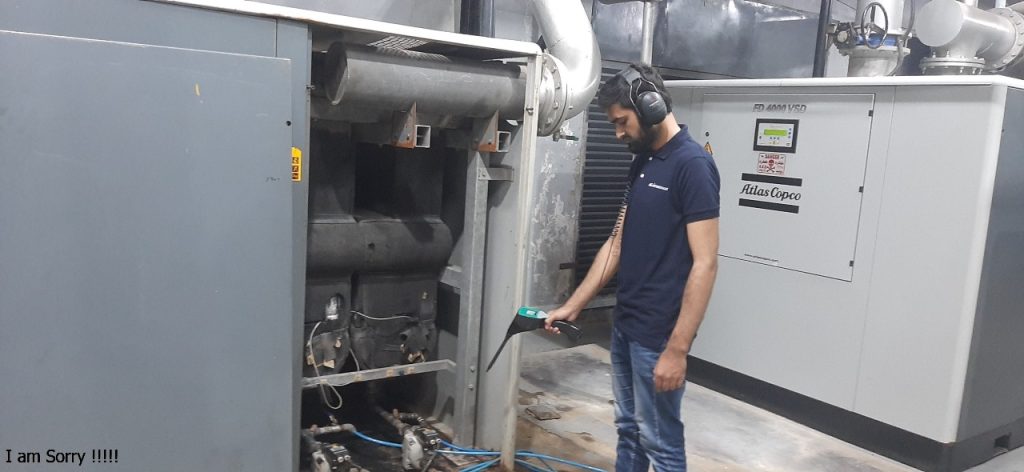
A compressed air energy audit uses ultrasonic leak detectors to identify leaks that are not visible or audible. Once repaired, companies can immediately see a reduction in compressor load and electricity consumption.
Fixing leaks is often the fastest and most cost-effective improvement after an audit.
Reducing Artificial Demand
Artificial demand happens when system pressure is set higher than required. Every 1 bar increase in pressure can increase energy consumption by around 6% to 8%.
Many plants operate at higher pressure because they believe it ensures better performance. In reality, it only increases electricity cost and stress on equipment.
An energy audit evaluates the actual pressure requirement of end-use equipment. By optimizing pressure settings, industries can reduce energy consumption without affecting production.
Improving Compressor Performance
Compressors are the heart of the system. If they are not operating efficiently, the entire plant suffers.
An audit checks:
- Compressor loading and unloading cycles
- Idle running time
- Specific power consumption
- Maintenance condition
Sometimes multiple compressors run simultaneously when only one is needed. This leads to unnecessary power usage.
With proper analysis, industries can improve compressor sequencing and control strategy. This ensures that compressors operate in the most efficient way possible.
Enhancing System Reliability
Energy efficiency is important, but reliability is equally critical. Production downtime can cause major financial losses.
A compressed air audit helps identify:
- Pressure drops in the pipeline
- Moisture issues
- Inadequate storage capacity
- Poor distribution design
By correcting these issues, industries can maintain stable pressure and consistent air quality. This reduces machine breakdowns and improves overall production stability.
Supporting Sustainability Goals
Modern industries are under pressure to reduce carbon emissions and operate sustainably. Energy efficiency plays a major role in achieving these goals.
Since compressed air systems consume a lot of electricity, improving their efficiency directly reduces carbon footprint.
Many companies now include energy audits as part of their sustainability strategy. By reducing electricity consumption, they not only save money but also contribute to environmental protection.
Financial Benefits of Energy Audits
One of the main reasons industries conduct compressed air energy audits is cost savings.
Typical benefits include:
- 10% to 30% reduction in energy cost
- Lower maintenance expenses
- Reduced equipment wear and tear
- Extended compressor life
In many cases, the payback period for implementing audit recommendations is less than one year. This makes it a highly practical and profitable investment.
Instead of buying new equipment immediately, companies can first optimize their existing system and get better performance at a lower cost.
Data-Driven Decision Making
Modern audits use advanced monitoring systems and digital tools. Real-time data helps industries understand actual consumption patterns instead of relying on assumptions.
With proper data, management can make informed decisions such as:
- Whether to replace old compressors
- Whether to install variable speed drives
- Whether to increase storage capacity
- How to plan future expansions
Data-based decisions reduce risk and improve long-term planning.
Compliance and Industry Standards
In many countries, energy efficiency regulations are becoming stricter. Industries are required to monitor and control their energy usage.
Compressed air energy audits help companies comply with energy management standards such as ISO 50001 and other national energy efficiency programs.
By conducting regular audits, industries stay prepared for inspections and regulatory requirements.
Common Mistakes Industries Make
Many industries delay audits because they believe:
- Their system is working fine.
- Energy loss is minimal.
- Audits are expensive.
But in reality, hidden inefficiencies often go unnoticed for years. By the time problems become visible, significant financial losses have already occurred.
Another mistake is conducting only a basic inspection instead of a detailed data-based audit. Without proper measurements, it is difficult to identify real improvement opportunities.
Why Modern Industries Cannot Ignore It
Today’s industries operate in a highly competitive market. Profit margins are tight, and energy prices continue to rise.
Every unnecessary unit of electricity consumed reduces overall profitability.
Compressed air energy audits provide a clear path to reduce waste, improve efficiency, and strengthen financial performance. They also improve system reliability, support sustainability goals, and ensure compliance with regulations.
Ignoring compressed air efficiency is no longer an option for modern industries.
Conclusion
Compressed air systems are essential for industrial operations, but they are also one of the largest sources of energy waste if not managed properly.
A compressed air energy audit helps industries understand how their system is performing, where energy is being lost, and how improvements can be made.
The benefits go beyond energy savings. Companies experience better reliability, lower maintenance costs, improved sustainability, and stronger financial performance.
In simple words, a compressed air energy audit is not an expense. It is a smart investment for any modern industry that wants to stay competitive, efficient, and future-ready.