Introduction
Industrial energy management is changing rapidly. Rising electricity costs, stricter environmental regulations, and growing competition are forcing industries to become more energy efficient. Among all utilities used in factories, compressed air remains one of the most expensive and inefficient systems.
In the past, companies relied on manual inspections and periodic audits. Today, the future lies in smart air audit solutions powered by digital technologies. These systems combine sensors, real-time data, analytics, and automation to transform how industries manage compressed air energy.
The Shift from Traditional to Smart Audits
Traditional air energy audits are usually conducted once every few years. Engineers collect temporary data, analyze performance, and provide a report with recommendations. While this method identifies issues, it does not provide continuous improvement.
Smart air audit solutions go beyond one-time analysis. They create a continuous monitoring environment where performance is tracked daily, not occasionally. Instead of reacting to problems, industries can prevent them.
Role of IoT in Smart Air Audits
The Internet of Things (IoT) is the backbone of modern energy management. Smart sensors installed across the compressed air system measure:
Air flow
Pressure levels
Power consumption
Temperature
Humidity
Compressor status
These sensors send data to cloud-based platforms where it is analyzed in real time.
This approach allows plant managers to see exactly how much energy is being used and where losses are occurring.
Real-Time Energy Performance Monitoring
One of the most important indicators in compressed air systems is specific energy consumption (SEC). It shows how efficiently electrical power is converted into compressed air.
When SEC increases, it means the system is becoming inefficient.
In smart audit systems, SEC is monitored continuously. If performance drops, alerts are generated automatically. This allows maintenance teams to investigate immediately instead of waiting for monthly reports.
Predictive Analytics and Artificial Intelligence
The future of industrial energy management includes artificial intelligence (AI) and machine learning.
Smart systems analyze historical data and detect patterns. For example:
Increasing temperature trends
Frequent pressure fluctuations
Abnormal power spikes
Excessive load/unload cycling
Instead of waiting for equipment failure, predictive analytics can forecast potential problems. This reduces downtime and avoids emergency repairs.
Reducing Artificial Demand Automatically
Artificial demand occurs when systems operate at higher pressure than necessary. Smart air audit platforms track pressure trends and recommend optimal set points.
Some advanced systems even adjust compressor controls automatically to maintain ideal pressure levels.
Since power consumption increases with pressure, reducing unnecessary pressure directly lowers electricity use.
This simple relationship highlights why intelligent pressure management is critical for cost reduction.
Leak Detection through Data Patterns
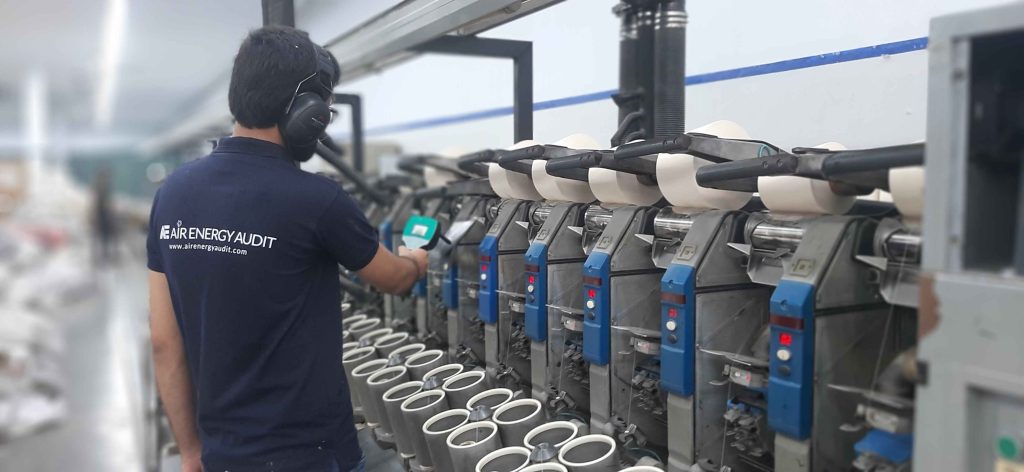
In traditional audits, leak detection is done manually using ultrasonic devices. Smart audit systems detect leaks by analyzing airflow patterns during non-production hours.
If air consumption remains high when machines are off, the system flags possible leaks.
This method allows continuous leak monitoring rather than periodic leak surveys.
Integration with Energy Management Systems
Future industrial facilities are becoming digitally connected. Smart air audit solutions integrate with broader energy management systems (EMS).
This integration allows management to:
Compare compressed air energy with other utilities
Track plant-wide energy intensity
Monitor carbon footprint
Prepare sustainability reports
Compressed air is no longer managed separately. It becomes part of a complete digital energy strategy.
Cloud-Based Dashboards and Remote Access
Modern smart audit platforms provide cloud dashboards accessible from anywhere.
Plant managers can:
View real-time system performance
Compare multiple facilities
Track energy savings
Download performance reports
This is especially useful for companies operating multiple plants in different locations.
Data-Driven Decision Making
One major advantage of smart air audits is accurate decision-making.
Instead of guessing whether to replace a compressor, increase storage, or upgrade controls, companies can use real performance data.
Data answers important questions like:
Is the compressor oversized?
Is the system running at excessive pressure?
Are leaks increasing over time?
Is storage capacity sufficient?
When decisions are based on real numbers, financial risk decreases.
Supporting Sustainability and ESG Goals
Environmental, Social, and Governance (ESG) reporting is becoming important for industries worldwide.
Smart air audit systems provide measurable proof of energy savings and emission reductions.
Lower electricity consumption means reduced carbon emissions. Companies can track improvements over time and demonstrate commitment to sustainability goals.
This transparency improves brand reputation and regulatory compliance.
Faster Return on Investment
Although smart monitoring systems require initial investment, they typically deliver fast payback. Savings come from:
Reduced electricity consumption
Lower maintenance costs
Decreased downtime
Extended equipment life
ROI is often evaluated using the following concept:
Because compressed air systems run continuously, even small efficiency improvements create significant annual savings.
Challenges in Implementation
Despite clear benefits, industries must consider certain challenges:
Initial installation cost
Cybersecurity concerns
Staff training requirements
Integration with existing systems
Successful implementation requires planning, reliable internet connectivity, and proper data management policies.
The Road Ahead
The future of industrial energy management is intelligent, connected, and automated. Smart air audit solutions are not just tools for energy savings. They are strategic systems that improve reliability, reduce risk, and enhance operational control.
In the coming years, more factories will move from periodic audits to continuous digital monitoring. Artificial intelligence, predictive maintenance, and automated optimization will become standard practice.
Conclusion
Industrial energy management is entering a new era. Traditional methods are being replaced by smart, data-driven solutions.
Smart air audit systems provide real-time monitoring, predictive analytics, pressure optimization, and integrated energy reporting. They help industries reduce electricity bills, minimize downtime, and meet sustainability goals.
For factories aiming to stay competitive in a world of rising energy costs and strict environmental regulations, adopting smart air audit solutions is not just an upgrade. It is the future of efficient and responsible industrial operations.