
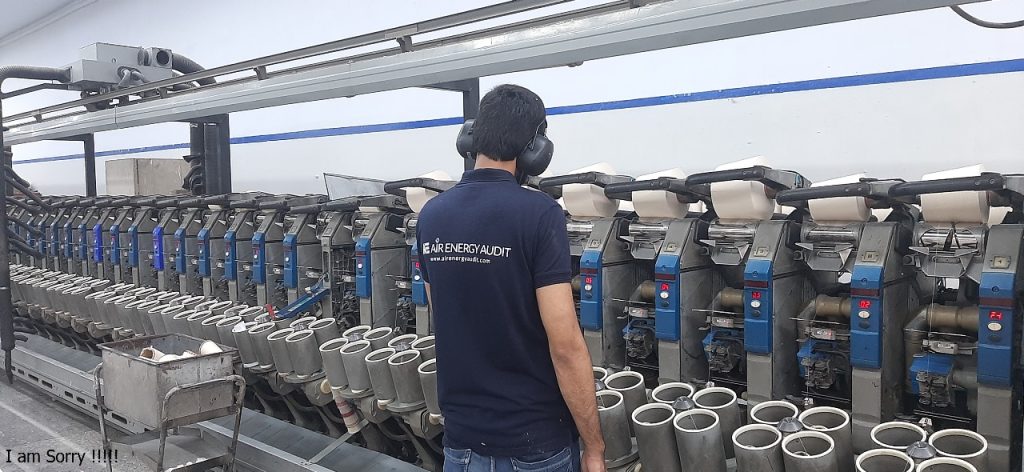
An industrial manufacturing facility significantly reduced its thermal energy consumption by integrating a heat recovery system into its existing compressed air infrastructure. By capturing waste heat generated from three 110 kW rotary screw compressors and redirecting it to preheat boiler feedwater, the plant reduced fuel consumption by 18%, improved overall system efficiency, and achieved a return on investment within 14 months.
Compressed air systems are among the most energy-intensive utilities in industrial environments, yet nearly 85–95% of the electrical energy consumed by air compressors is converted into heat. In most facilities, this heat is dissipated into the atmosphere through cooling systems, resulting in substantial energy loss. The subject facility, a mid-sized manufacturing plant operating three 110 kW compressors for approximately 6,500 hours annually, relied heavily on steam boilers for process heating. Boiler feedwater entered the system at around 30°C and required heating to 85–90°C, consuming significant volumes of natural gas. At the same time, compressor discharge temperatures ranged between 80–95°C, meaning valuable thermal energy was being rejected while additional fuel was burned elsewhere in the plant.
An engineering assessment determined that approximately 90% of the electrical input energy could be recovered as usable heat. Each compressor provided about 99 kW of recoverable heat, resulting in a total of nearly 297 kW across all three units. Annually, this equated to roughly 1,930,500 kWh of recoverable thermal energy, sufficient to significantly preheat boiler feedwater and reduce fuel demand.
To harness this opportunity, a heat recovery system was designed and integrated into the compressor oil cooling circuits. The system included plate heat exchangers, a closed-loop hot water circulation system, a thermal storage buffer tank, temperature sensors, control valves, and an automated bypass mechanism to ensure safe operation. Heat from the compressor oil loop was transferred to a secondary water circuit supplying the boiler feedwater line. Installation was carried out during a scheduled shutdown to avoid production disruption, and commissioning ensured feedwater temperatures were maintained between 55–65°C before entering the boiler economizer.
After six months of operation, the plant recorded measurable improvements. Preheating feedwater from 30°C to 60°C reduced boiler fuel demand by approximately 18%, saving an estimated 175,000 cubic meters of natural gas annually. This translated into annual cost savings of about $82,000. Boiler efficiency improved from 82% to 88%, overall plant energy intensity decreased by 6.5%, and peak winter gas demand was lowered. Carbon dioxide emissions were reduced by approximately 310 metric tons per year.
The total project investment was $95,000, resulting in a simple payback period of about 14 months and projected five-year net savings exceeding $315,000. Beyond financial gains, the plant observed improved compressor cooling stability, reduced thermal stress on boiler components, lower maintenance requirements for economizers, and enhanced sustainability reporting performance.
Some challenges were encountered during implementation. Seasonal variations in steam demand created potential overheating risks during low-load periods, which were mitigated through automated bypass controls and a thermal dump system. Initial flow rate imbalances between compressor heat output and boiler feedwater demand were resolved by installing a variable speed pump for dynamic control. Resistance from maintenance staff was addressed through technical training and the introduction of a simplified monitoring dashboard.
Overall, the project demonstrated that compressor heat recovery can transform compressed air systems from purely electrical loads into valuable thermal energy assets. By converting waste heat into useful process energy, the facility achieved substantial fuel savings, improved efficiency, reduced emissions, and secured a strong financial return with minimal operational risk.