
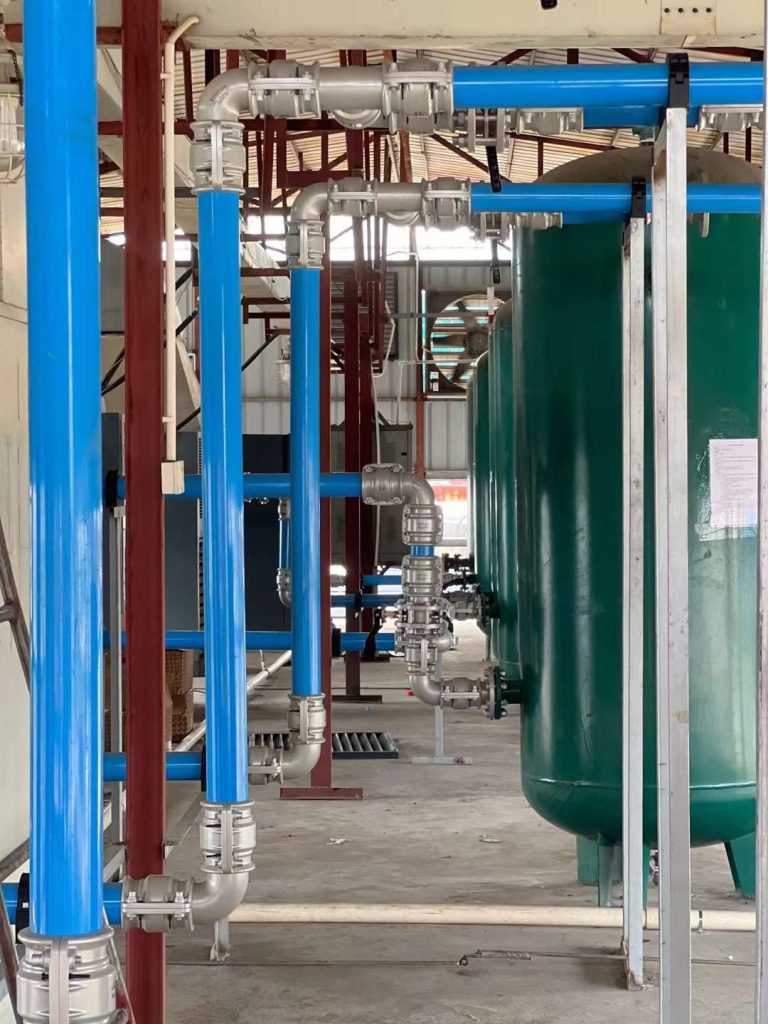
Compressed air plays a vital role in cement manufacturing processes including kiln operation support, pneumatic conveying systems, and automation control mechanisms. A large cement production facility was facing significant energy losses due to inefficient compressor utilization. Despite having multiple high-capacity compressors installed within the system, the facility struggled with rising electricity bills and inconsistent air delivery across various plant sections.
Air Audit Pvt Ltd conducted a comprehensive compressed air system audit to identify inefficiencies within the plant’s compressed air network. Monitoring equipment was installed to track pressure variations, compressor load patterns, and flow demand during operational cycles. The collected data indicated that several compressors were operating simultaneously under partial load conditions due to improper sequencing and absence of centralized control.
The audit revealed that compressors were frequently running in load-unload cycles even during low air demand periods, resulting in unnecessary power consumption. In addition, idle running hours were significantly high, which further increased the operational cost associated with compressed air generation.
Recommendations included implementation of compressor sequencing controls and load management strategies to ensure that compressors operate only when required. Demand-based compressor operation was introduced to match system supply with actual plant air consumption.
Following implementation, the plant reported improved compressor performance and approximately 30% reduction in energy consumption related to compressed air operations. The optimization also enhanced system reliability and minimized equipment wear caused by frequent cycling.