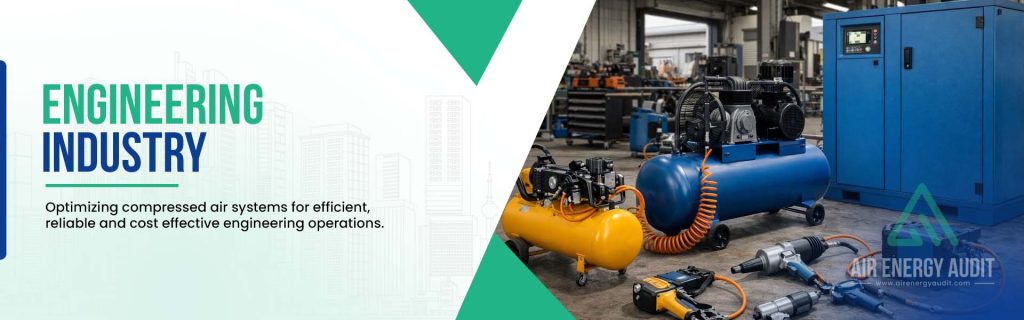
Compressed Air in the Engineering Industry
The engineering industry includes manufacturing plants, fabrication facilities, machinery production, automotive components, metal processing, industrial assembly and other engineering operations.
Compressed air is widely used across engineering facilities for machining, automation, assembly, material handling, cleaning, testing, pneumatic tools and various production processes.
Engineering production environments may operate multiple pneumatic machines and tools throughout the working day, making compressed air system performance an important part of overall plant energy efficiency.
Air Energy Audit can assess compressed air generation, distribution, pressure, leakage, demand and end-use applications to identify opportunities for improved system performance.
Why Compressed Air Matters in Engineering
Engineering facilities often depend on compressed air for production equipment, automation, pneumatic tools and material-handling systems. Poor pressure management, leakage and unnecessary air consumption can increase compressor loading and energy costs.
Where Is Compressed Air Used in the Engineering Industry?
Compressed air can be used across different engineering departments and production processes. The exact applications depend on the machinery, product, production requirements and plant operations.
Machining & CNC Operations
Compressed air can support CNC machines and machining operations through pneumatic controls, workholding, cooling, cleaning and selected process applications.
Working: Air is supplied to machine components and pneumatic devices according to the required application.
MachiningFabrication & Metalworking
Fabrication facilities may use compressed air for pneumatic tools, clamping, positioning, cleaning and automated metalworking equipment.
Working: Compressed air powers pneumatic tools, actuators and machine components used during production.
FabricationAssembly Lines
Pneumatic cylinders, screwdrivers, grippers, clamps and other devices can support repetitive assembly operations.
Working: Controlled air pressure provides repeatable movement and force for assembly equipment.
AssemblyAutomation & Control
Compressed air supports automated production through pneumatic valves, actuators, cylinders, grippers and control systems.
Working: The control system directs air to different pneumatic components according to machine operation.
AutomationAutomotive Components
Engineering facilities producing automotive components may use compressed air for assembly, machining, testing, material handling and pneumatic tooling.
Working: Air-powered equipment performs controlled movements and production functions.
AutomotivePainting & Surface Finishing
Compressed air can support selected spray painting, coating, surface preparation and finishing applications.
Working: Air is delivered to spray equipment or other pneumatic devices according to process requirements.
Surface FinishingMaterial Handling
Pneumatic cylinders, grippers, positioning systems and automated equipment can assist with material movement and machine feeding.
Working: Controlled air pressure operates pneumatic mechanisms at required machine points.
Material HandlingCleaning & Blow-Off
Compressed air may be used for cleaning machines, removing chips, dust and particles, and selected drying applications.
Working: Air passes through a nozzle or outlet to remove unwanted material from equipment or surfaces.
Plant OperationsTesting & Inspection
Pneumatic systems can support selected testing, inspection, clamping, positioning and automated quality-control processes.
Working: Air pressure operates test fixtures, actuators and pneumatic control devices.
TestingMaintenance Workshops
Engineering maintenance departments may use pneumatic tools for repair, servicing, assembly, cleaning and equipment maintenance.
Working: Compressed air powers the internal mechanism of pneumatic tools and workshop equipment.
MaintenanceCommon Compressed Air Wastage Areas
Engineering facilities can lose compressed air through leakage, excessive pressure, inefficient equipment and unnecessary end-use consumption.
Air Leakage
Leaks from hoses, fittings, valves, cylinders, pipes and connections can create continuous compressed air demand.
Excessive Pressure
Higher-than-required pressure can increase compressor energy consumption and air usage at pneumatic applications.
Open Blow-Off
Uncontrolled air blowing for cleaning, drying or removing chips can consume large quantities of compressed air.
Tool & Machine Leaks
Worn pneumatic tools, cylinders, valves, hoses and machine connections can create hidden compressed air losses.
Pressure Drop
Restricted filters, undersized piping, fittings and poor distribution can create avoidable pressure losses.
Idle Equipment
Machines and pneumatic tools left connected during downtime may continue consuming compressed air unnecessarily.
Inefficient Controls
Poor compressor sequencing or unsuitable control settings can increase unnecessary energy consumption.
Artificial Demand
Excessive system pressure and inefficient end-use devices can increase compressed air consumption.
Where Can Efficiency Improve?
A complete compressed air assessment can examine the system from the compressor room through engineering production areas and point-of-use applications.
- Review compressor operating conditions
- Identify leakage across production areas
- Check pressure and flow requirements
- Evaluate pneumatic equipment demand
- Review filters and pressure losses
- Assess blow-off applications
- Analyze production and idle periods
Compressed Air Saving Potential
The actual saving potential of an engineering facility depends on compressor performance, operating hours, leakage, pressure, air demand, equipment condition and electricity consumption.
How Saving Opportunities Are Identified
Air Energy Audit can evaluate the compressed air system using site observations, operating information and appropriate measurements.
The assessment can review compressor loading, pressure, flow, leakage, air treatment, production demand and end-use applications.
This helps identify practical opportunities to reduce unnecessary compressed air consumption and improve system efficiency.
Leakage Reduction
Reduce unnecessary compressor demand by identifying and addressing compressed air leaks.
Pressure Optimization
Review whether engineering equipment can operate effectively at a more appropriate pressure.
Compressor Control
Evaluate sequencing and operating practices to improve compressor efficiency.
Demand Management
Analyze compressed air consumption during production, maintenance, breaks and idle periods.
Tool & Blow-Off Optimization
Review pneumatic tools and blow-off applications to reduce unnecessary compressed air consumption.
Distribution Improvement
Identify avoidable pressure losses caused by restrictions, filters, fittings or piping.
11011 Certified
Expertise
Certified Under ISO 11011
Air Energy Audit is an ISO 11011-certified industrial energy audit firm in Pakistan, providing professional assessment of compressed air system energy efficiency.
Our assessment approach focuses on understanding compressed air generation, distribution, demand and end-use performance.
Certification Standard
Certified under ISO 11011, the international standard for measuring and assessing energy efficiency in compressed air systems.
Improving Compressed Air Efficiency in Engineering
Engineering facilities can contain a large number of pneumatic machines, tools, actuators and production systems operating throughout the working cycle.
A complete compressed air assessment helps establish where air is being generated, where it is distributed, how it is being consumed and where unnecessary demand may exist.
By combining measurement with system analysis, facilities can make informed decisions about leakage reduction, pressure management, compressor operation and end-use efficiency.
Engineering Audit Assessment
- Compressor operating performance
- Compressed air pressure and flow
- Air leakage assessment
- Production-line air demand
- Pneumatic equipment performance
- Pneumatic tools and blow-off applications
- Distribution piping and pressure losses
- Air treatment equipment
- Energy-saving opportunities
A Smarter Approach to Engineering Energy Efficiency
Air Energy Audit supports engineering industries in understanding compressed air system performance and identifying practical opportunities for improved energy efficiency.
Our Customers in Engineering Industry

































Air Energy Audit is reducing Energy Bills for big players in Pakistan's Engineering Industry