Compressed Air Efficiency in Pharmaceutical Manufacturing
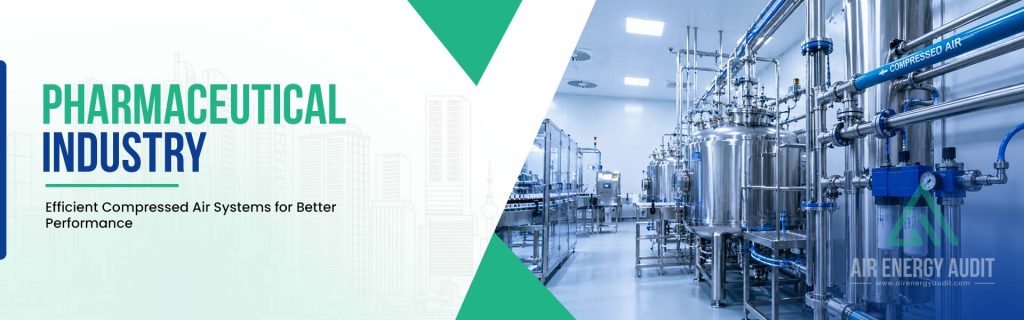
Pharmaceutical manufacturing relies on compressed air for production, packaging, automation, material handling, cleaning and instrumentation. Reliable compressed air is important for maintaining efficient and consistent plant operations.
Air Energy Audit evaluates pharmaceutical compressed air systems to identify leakage, pressure losses, inefficient operation and avoidable energy consumption.
Why Compressed Air Matters in Pharmaceutical Plants
Compressed air is used across manufacturing and packaging processes. Poor system management can increase compressor energy consumption and reduce overall system efficiency.
Where Compressed Air Is Used in Pharmaceutical Plants
Pharmaceutical facilities use compressed air across production, packaging, automation, cleaning and supporting operations.
Tablet & Capsule Production
Working: Pneumatic systems support equipment used in tablet and capsule manufacturing processes.
Stable air pressure helps production equipment operate consistently.
Production EquipmentBlister & Strip Packaging
Working: Compressed air powers pneumatic components in blister, strip and other packaging machinery.
Efficient air supply supports reliable machine operation.
PackagingBottle Filling & Capping
Working: Pneumatic actuators and controls are used in filling, capping and container-handling equipment.
Proper pressure and flow help reduce unnecessary energy consumption.
Filling LinesPneumatic Conveying
Working: Compressed air can be used for conveying materials and supporting automated material movement.
Correct system pressure is important for efficient operation.
Material HandlingProcess Automation
Working: Pneumatic valves, actuators and control devices operate automated pharmaceutical production systems.
Efficient control air management can reduce system losses.
AutomationInstrument & Control Air
Working: Compressed air supports pneumatic instrumentation and control systems throughout the plant.
Proper air quality, pressure and distribution are important for dependable operation.
InstrumentationCleaning & Blow-Off
Working: Compressed air is used for cleaning surfaces, machinery components and production areas where applicable.
Uncontrolled blow-off can create unnecessary air demand.
CleaningPackaging Machinery
Working: Pneumatic systems operate packaging, labeling and handling equipment.
Optimizing machine air consumption can improve overall system efficiency.
Packaging SystemsLaboratory & Testing Equipment
Working: Certain laboratory and testing equipment may require controlled compressed air for operation.
Appropriate pressure and air quality should be maintained for the intended application.
TestingUtilities & Maintenance
Working: Compressed air supports maintenance tools, workshops and auxiliary plant operations.
Monitoring utility air demand helps identify avoidable consumption.
Plant UtilitiesCommon Compressed Air Wastage Areas
Identifying avoidable air consumption and system losses is a key part of improving compressed air efficiency.
Air Leakage
Hidden leaks in piping, fittings, valves and equipment can continuously increase compressor demand.
Excessive Pressure
Operating at higher pressure than required can increase compressor energy consumption.
Open Blow-Off
Uncontrolled compressed air use for cleaning can create unnecessary demand.
Machine Leaks
Pneumatic equipment and connections can develop leaks that remain unnoticed during production.
Pressure Drop
Poor piping design, restrictions and undersized lines can create avoidable pressure losses.
Idle Machines
Equipment may continue consuming compressed air even when production is stopped or operating at low load.
Inefficient Controls
Poor compressor sequencing and control settings can increase unloaded or inefficient operation.
Artificial Demand
Excessive pressure and inappropriate applications can create additional compressed air demand.
Where Energy Is Often Lost
A detailed compressed air assessment can identify the sources of unnecessary energy consumption across the pharmaceutical plant.
- Compressor operating inefficiency
- Compressed air leakage
- Unnecessary pressure levels
- Excessive blow-off consumption
- Pressure losses in distribution
- Idle equipment air demand
- Inefficient compressor controls
- Unoptimized pneumatic applications
Pharmaceutical Compressed Air Saving Opportunities
System optimization can help pharmaceutical plants reduce unnecessary compressed air consumption and improve operating efficiency.
Turning Compressed Air Into Energy Savings
Air Energy Audit evaluates the complete compressed air system rather than focusing only on individual compressors.
The assessment considers generation, treatment, distribution and end-use applications to identify practical efficiency opportunities.
Leakage Reduction
Locate and reduce compressed air leaks throughout the plant.
Pressure Optimization
Identify suitable operating pressure levels for system requirements.
Compressor Control
Review compressor loading, unloading and sequencing performance.
Demand Management
Identify unnecessary consumption and optimize air demand across applications.
Blow-Off Optimization
Evaluate cleaning and blow-off applications for unnecessary compressed air use.
Distribution Improvement
Identify pressure losses and opportunities to improve compressed air distribution.
11011 Compressed Air
Assessment
ISO 11011 Certified Expertise
Air Energy Audit follows the principles of ISO 11011 for evaluating compressed air systems and identifying opportunities to improve system efficiency.
Compressed Air System Assessment
The assessment considers compressed air generation, treatment, distribution and end-use applications.
Measured operating data helps establish a practical understanding of system performance and energy use.
Improving Compressed Air Efficiency in Pharmaceutical Manufacturing
A pharmaceutical compressed air audit provides a detailed assessment of system performance, energy consumption, pressure, flow and end-use applications.
Air Energy Audit identifies practical opportunities to reduce avoidable energy losses while supporting reliable compressed air operation throughout the facility.
Pharmaceutical Audit Assessment
- Compressor operating performance
- Compressed air pressure and flow
- Air leakage assessment
- Production and packaging air demand
- Pneumatic equipment performance
- Blow-off applications
- Distribution piping and pressure losses
- Air treatment equipment
- Energy-saving opportunities
A Smarter Approach to Pharmaceutical Energy Efficiency
Evaluate your pharmaceutical compressed air system with a structured audit focused on energy performance, air losses, system efficiency and practical improvement opportunities.
Our Customers in Pharmaceutical Industry


































Air Energy Audit is reducing Energy Bills for big players in Pakistan's Pharmaceutical Industry