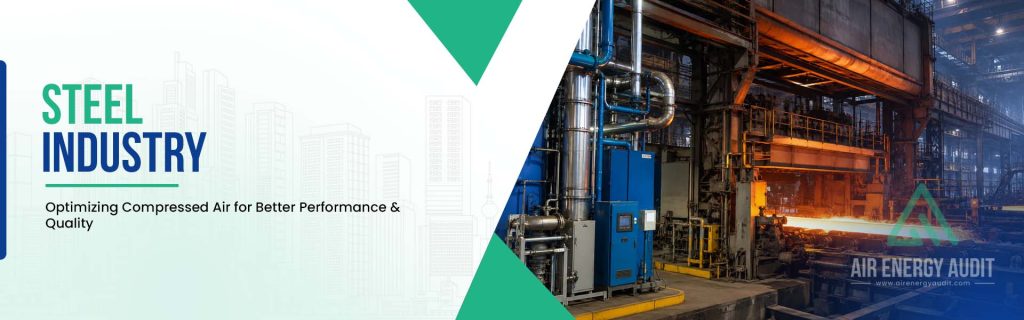
Compressed Air Efficiency in Steel Manufacturing
The steel industry includes steel mills, foundries, rolling mills, fabrication facilities, metal processing plants and finishing operations. These facilities often depend on compressed air for automation, pneumatic equipment, instrumentation, cleaning and production processes.
Efficient compressed air management can help steel manufacturers reduce unnecessary energy consumption, improve equipment performance and maintain reliable operating conditions across demanding production areas.
Compressed air is an important industrial utility in steel manufacturing. Leakage, excessive pressure, pressure drops, inefficient controls and inappropriate end-use applications can result in unnecessary energy consumption.
Steel Manufacturing & Energy
From steel melting and rolling to fabrication, automation, instrumentation and maintenance, compressed air supports many steel production operations. Air Energy Audit evaluates generation, distribution, system pressure, air demand and end-use applications to identify practical efficiency improvement opportunities.
Where Compressed Air Is Used in Steel Manufacturing
Compressed air supports a wide range of steel production, processing, automation, instrumentation and maintenance applications.
Steel Melting & Furnaces
Compressed air supports pneumatic controls, instrumentation and auxiliary equipment around steel melting operations.
Working: Pneumatic devices and control systems use compressed air for controlled industrial operations.
Steel ProcessingRolling Mills
Rolling mills use pneumatic systems and control equipment throughout metal processing and production operations.
Working: Compressed air operates selected actuators, valves and control devices used in rolling operations.
Rolling MillsFoundry Operations
Foundries use compressed air for pneumatic equipment, controls, cleaning and selected material handling applications.
Working: Air-powered equipment supports repetitive movement, controls and selected foundry processes.
FoundryAutomation & Controls
Pneumatic actuators and control systems support automated steel manufacturing and processing operations.
Working: Compressed air provides controlled movement for pneumatic cylinders, valves and automated equipment.
AutomationMetal Cutting & Fabrication
Air-powered equipment and pneumatic systems support cutting, fabrication and metalworking processes.
Working: Compressed air operates selected pneumatic tools and equipment used in fabrication activities.
FabricationSurface Finishing
Compressed air is used in selected surface preparation, finishing, drying and cleaning applications.
Working: Controlled air flow supports appropriate finishing and surface treatment applications.
Surface FinishingMaterial Handling
Pneumatic systems can assist with material movement, positioning and handling across steel production areas.
Working: Air-powered cylinders and equipment provide controlled movement in selected handling applications.
Material HandlingCleaning & Blow-Off
Compressed air is commonly used for cleaning, drying and blow-off applications around machinery and production areas.
Working: Air jets provide controlled airflow for suitable cleaning and blow-off applications.
Plant OperationsInstrumentation
Instrument air supports pneumatic control devices, valves and measurement systems in steel manufacturing facilities.
Working: Properly controlled instrument air provides reliable operation of pneumatic control equipment.
InstrumentationMaintenance Workshops
Maintenance areas use compressed air for pneumatic tools, equipment servicing and workshop operations.
Working: Air-powered tools convert compressed air into mechanical work for maintenance activities.
MaintenanceCommon Compressed Air Wastage Areas
Steel manufacturing plants can experience avoidable compressed air losses across generation, distribution and end-use applications.
Air Leakage
Leaks in piping, fittings, valves and pneumatic equipment can create continuous compressed air losses.
Excessive Pressure
Operating at unnecessarily high pressure can increase compressor energy consumption.
Open Blow-Off
Uncontrolled blow-off applications can consume significant quantities of compressed air.
Tool & Machine Leaks
Pneumatic tools, machines and connections may consume air continuously because of leaks.
Pressure Drop
Restrictions, undersized piping and poor distribution can create pressure losses across the system.
Idle Equipment
Equipment operating without production demand can create unnecessary compressed air consumption.
Inefficient Controls
Poor compressor sequencing and system controls can increase energy use during changing production demand.
Artificial Demand
Unnecessary pressure requirements and inefficient applications can increase overall system demand.
Where Energy Losses Can Occur
A steel manufacturing compressed air system should be evaluated as a complete system rather than focusing only on the compressors.
- Compressor operating efficiency
- System pressure requirements
- Compressed air leakage
- Distribution piping condition
- Production equipment demand
- Blow-off and cleaning applications
- Air treatment and end-use performance
Steel Manufacturing Compressed Air Saving Potential
Systematic measurement and analysis can identify practical opportunities to reduce compressed air energy consumption across steel manufacturing operations.
Practical Energy Improvement
Steel facilities can improve compressed air efficiency by addressing system losses, optimizing operating pressure and matching air supply with actual production demand.
Air Energy Audit evaluates generation, distribution and end-use applications to identify measurable areas for improvement.
The objective is to reduce avoidable energy consumption while supporting reliable compressed air availability for steel production operations.
Leakage Reduction
Identify and reduce compressed air leakage throughout steel manufacturing facilities.
Pressure Optimization
Establish suitable operating pressure based on actual production and equipment requirements.
Compressor Control
Improve compressor sequencing and operating controls to reduce unnecessary energy consumption.
Demand Management
Match compressed air generation with changing steel production requirements.
Tool & Blow-Off Optimization
Improve pneumatic tools, blow-off points and air-consuming applications for efficient operation.
Distribution Improvement
Identify pressure losses and improve compressed air distribution performance.
11011 Certified Expertise
Steel Compressed Air System Assessment
Air Energy Audit is an ISO 11011-certified industrial energy audit firm in Pakistan, providing professional assessment of compressed air system energy efficiency.
Our assessment approach considers compressed air generation, distribution and end-use applications to identify system losses and practical efficiency improvement opportunities.
Certification Standard
ISO 11011 provides a structured basis for assessing compressed air systems, including generation, distribution and demand-side performance.
Improving Compressed Air Efficiency in Steel Manufacturing
Steel manufacturing facilities can have a wide range of pneumatic equipment, automated production systems, rolling equipment, fabrication machinery and industrial utility applications.
A complete compressed air assessment examines generation, distribution and end-use performance to identify leakage, pressure losses, compressor inefficiencies and unnecessary air demand.
Through measurement and system analysis, Air Energy Audit helps identify practical opportunities for improving compressed air efficiency while supporting reliable steel production operations.
Steel Audit Assessment
- Compressor operating performance
- Compressed air pressure and flow
- Air leakage assessment
- Production-line air demand
- Pneumatic equipment performance
- Blow-off and cleaning applications
- Distribution piping and pressure losses
- Air treatment equipment
- Energy-saving opportunities
A Smarter Approach to Steel Energy Efficiency
Understand your compressed air system performance, identify avoidable energy losses and uncover practical opportunities for improving efficiency across steel manufacturing operations.
Our Customers in Steel Industry

































Air Energy Audit is reducing Energy Bills for big players in Pakistan's Steel Industry