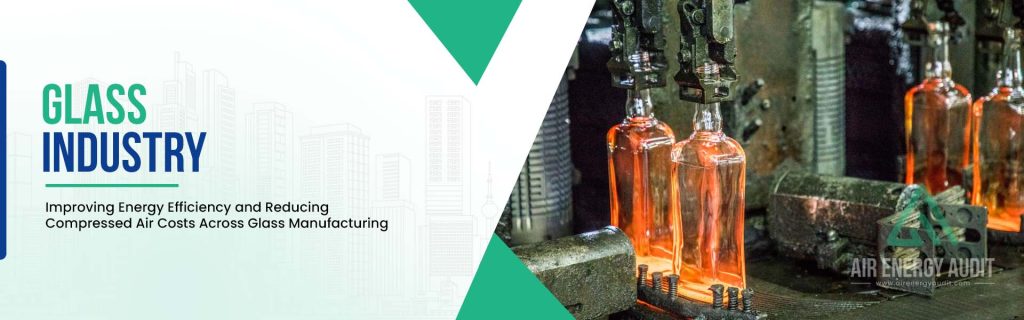
Compressed Air in the Glass Industry
The glass industry includes glass manufacturing, container production, flat glass, bottles, jars, tableware, architectural glass, automotive glass and other specialized glass products.
Compressed air is widely used in glass plants for pneumatic equipment, instrumentation, control systems, material handling, forming operations, cleaning and automated production.
Glass manufacturing can involve continuous and energy intensive production processes, making compressed air system performance an important part of overall plant efficiency.
Air Energy Audit can assess compressed air generation, distribution, pressure, leakage, demand and end use applications to identify opportunities for improved system performance.
Why Compressed Air Matters in Glass Manufacturing
Glass production often uses automated machinery and pneumatic systems across forming, handling, inspection, packaging and support operations. Leakage, excessive pressure and inefficient air use can increase compressor loading and energy costs.
Where Is Compressed Air Used in the Glass Industry?
Compressed air can be used across different glass manufacturing and processing operations. Exact applications depend on the product, machinery, production method and plant configuration.
Glass Forming
Compressed air can support pneumatic equipment and selected forming systems used during glass production.
Working: Controlled air pressure operates pneumatic components according to machine requirements.
Glass FormingContainer Production
Glass bottle and container plants may use compressed air in forming, handling, controls and automated equipment.
Working: Air is supplied to pneumatic systems at the pressure required by production equipment.
ContainersFlat Glass Processing
Flat glass production and processing equipment can use pneumatic actuators, controls and handling systems.
Working: Pneumatic devices provide controlled movement for selected production and handling functions.
Flat GlassCutting & Edge Processing
Compressed air can support cutting equipment, pneumatic actuators, positioning systems and machine controls.
Working: Air powered components perform controlled movements during glass processing.
Glass ProcessingTempering & Heat Treatment
Glass tempering and heat treatment systems may use pneumatic controls, valves and automated equipment.
Working: Pneumatic components operate machine functions according to process control requirements.
TemperingInspection & Quality Control
Compressed air may support inspection machines, pneumatic positioning systems and selected cleaning applications.
Working: Air pressure operates actuators and air nozzles used within inspection equipment.
Quality ControlCleaning & Blow Off
Compressed air may be used for selected cleaning, drying, dust removal and surface preparation applications.
Working: Air passes through suitable nozzles or outlets to provide controlled blow off.
CleaningMaterial Handling
Pneumatic equipment can assist with product positioning, lifting, pushing, gripping and automated material movement.
Working: Controlled air pressure operates cylinders, grippers and other pneumatic mechanisms.
Material HandlingPackaging & Palletizing
Glass products may use pneumatic equipment for packaging, positioning, gripping, labeling and palletizing operations.
Working: Air powered actuators provide fast, repeatable movement during automated packaging.
PackagingAutomation & Instrumentation
Compressed air supports control valves, actuators, instrumentation and automated production systems.
Working: The control system directs air to different pneumatic components according to operating demand.
AutomationCommon Compressed Air Wastage Areas
Glass plants can lose compressed air through leakage, excessive pressure, inefficient equipment, poor distribution and unnecessary end use consumption.
Air Leakage
Leaks from hoses, fittings, valves, cylinders and connections can create continuous unnecessary air demand.
Excessive Pressure
Higher than required pressure can increase compressor energy consumption and compressed air usage.
Open Blow Off
Uncontrolled air blowing for cleaning or drying can consume large quantities of compressed air.
Machine Leaks
Worn pneumatic components and damaged hoses can create hidden losses inside production machinery.
Pressure Drop
Restricted filters, undersized piping and poor distribution can create avoidable pressure losses.
Idle Equipment
Equipment left connected to the air supply during downtime may continue consuming compressed air.
Inefficient Controls
Poor compressor sequencing or unsuitable control settings can increase unnecessary energy consumption.
Artificial Demand
Excessive system pressure can increase consumption at pneumatic applications and leakage points.
Where Can Efficiency Improve?
A complete compressed air assessment can examine the system from the compressor room through glass production and processing areas to point of use applications.
- Review compressor operating conditions
- Identify leakage across production areas
- Check pressure and flow requirements
- Evaluate pneumatic equipment demand
- Review filters and pressure losses
- Assess cleaning and blow off applications
- Analyze production and idle periods
Compressed Air Saving Potential
The actual saving potential of a glass manufacturing facility depends on compressor performance, operating hours, leakage, pressure, air demand and electricity consumption.
How Saving Opportunities Are Identified
Air Energy Audit can evaluate the compressed air system using site observations, operating information and appropriate measurements.
The assessment can review compressor loading, pressure, flow, leakage, air treatment, production demand and end use applications.
This helps identify practical opportunities to reduce unnecessary compressed air consumption and improve system efficiency.
Leakage Reduction
Identify and address air leaks to reduce unnecessary compressor demand.
Pressure Optimization
Review whether glass production equipment can operate effectively at an appropriate system pressure.
Compressor Controls
Evaluate compressor sequencing and operating practices to improve system efficiency.
Production Demand
Analyze air consumption during production, shift changes, breaks and idle periods.
Blow Off Optimization
Review cleaning and blow off applications to reduce unnecessary compressed air consumption.
Distribution Improvement
Identify pressure losses caused by restrictions, filters, fittings or unsuitable piping.
11011 Certified
Expertise
Certified Under ISO 11011
Air Energy Audit is an industrial energy audit firm in Pakistan certified under ISO 11011. The company provides professional assessment of compressed air system energy efficiency.
Our assessment approach focuses on understanding compressed air generation, distribution, demand and end use performance.
Certification Standard
ISO 11011 is the international standard for measuring and assessing energy efficiency in compressed air systems.
Improving Compressed Air Efficiency in Glass Manufacturing
Glass manufacturing and processing facilities can contain multiple pneumatic components, automated systems and production processes operating across different shifts.
A complete compressed air assessment helps establish where air is being generated, where it is distributed, how it is being consumed and where unnecessary demand may exist.
By combining measurement with system analysis, glass facilities can make informed decisions about leakage reduction, pressure management, compressor operation and end use efficiency.
Glass Industry Audit Assessment
- Compressor operating performance
- Compressed air pressure and flow
- Air leakage assessment
- Production equipment air demand
- Pneumatic equipment performance
- Cleaning and blow off applications
- Distribution piping and pressure losses
- Air treatment equipment
- Energy saving opportunities
A Smarter Approach to Glass Industry Energy Efficiency
Air Energy Audit supports glass industries in understanding compressed air system performance and identifying practical opportunities for improved energy efficiency.
Our Customers in Glass Industry



































Air Energy Audit is reducing Energy Bills for big players in Pakistan's Glass Industry