Compressed Air in the Plastic Industry
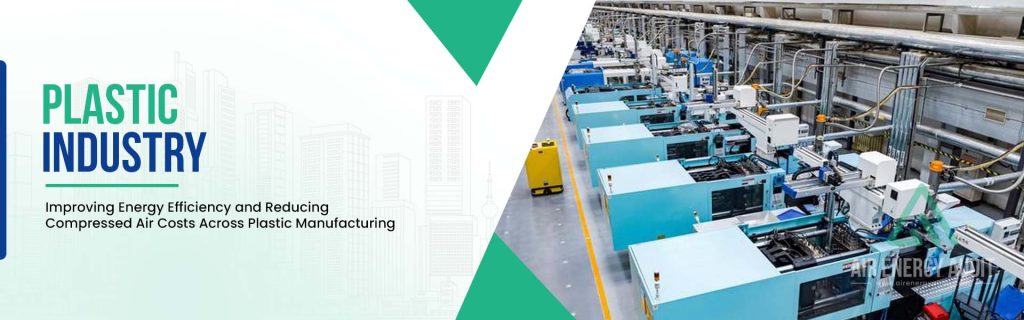
The plastic industry depends on compressed air for molding, injection, extrusion, material handling, automation, trimming, blow off and packaging operations.
Because production equipment often operates for long hours, compressed air efficiency can have a significant impact on overall energy consumption and operating costs.
Why Compressed Air Matters
Plastic manufacturing uses compressed air across production, automation and finishing processes. Poor pressure control, leakage and inefficient demand can increase compressor energy consumption without improving production.
Where Compressed Air Is Used in Plastic Manufacturing
Different stages of plastic production require reliable compressed air for process control, automation and material handling.
Injection Molding
Compressed air supports machine automation, pneumatic controls, ejector systems and auxiliary operations.
MoldingBlow Molding
High pressure air can be required for forming and shaping plastic containers and hollow products.
High PressureExtrusion Operations
Air is used for automation, cooling assistance, trimming and supporting downstream extrusion processes.
ExtrusionPlastic Packaging
Pneumatic systems support packaging machinery, actuators, controls and automated handling equipment.
PackagingPneumatic Automation
Air powered cylinders, valves and actuators help automate repetitive production movements.
AutomationMaterial Handling
Compressed air can support conveying, gripping, lifting and pneumatic handling systems.
HandlingTrimming & Finishing
Pneumatic tools and air blow off systems are used for trimming, cleaning and finishing plastic components.
FinishingCleaning & Blow Off
Air blow off is commonly used to remove dust, particles and excess material from products and machinery.
Blow OffProcess Controls
Pneumatic control systems provide reliable operation for valves, actuators and automated production equipment.
ControlsProduction Automation
Compressed air supports automated production lines where fast and repeatable machine movements are required.
ProductionCommon Compressed Air Wastage
Plastic manufacturing facilities can experience significant energy losses when compressed air systems are not properly controlled, maintained and matched to production demand.
Air Leakage
Leaks in piping, fittings, hoses and equipment increase compressor loading.
Excessive Pressure
Operating at unnecessarily high pressure increases compressor energy consumption.
Open Blow Off
Uncontrolled air nozzles can consume large volumes of compressed air.
Machine Leaks
Pneumatic equipment and machine connections may continuously lose air.
Pressure Drop
Poor piping design and restrictions can create unnecessary pressure losses.
Idle Equipment
Machines consuming air during non production periods create avoidable energy demand.
Inefficient Controls
Poor compressor sequencing can cause inefficient part load operation.
Artificial Demand
High system pressure can increase air consumption across pneumatic devices.
What an Energy Audit Can Identify
A detailed compressed air assessment can reveal where energy is being consumed unnecessarily and where system improvements can reduce operating costs.
- Compressor operating efficiency
- Compressed air leakage
- Pressure and flow requirements
- Production equipment demand
- Blow off and pneumatic applications
- Distribution pressure losses
- Compressor control performance
- Energy saving opportunities
Saving Potential in the Plastic Industry
Improve Compressed Air Efficiency
A structured compressed air audit helps identify practical opportunities to reduce energy consumption, improve system reliability and match air supply with actual production demand.
Improvements can include leakage reduction, pressure optimization, compressor controls, distribution upgrades and better pneumatic applications.
Leakage Reduction
Detect and repair compressed air leaks throughout the plant.
Pressure Optimization
Maintain pressure according to actual equipment requirements.
Compressor Controls
Improve compressor sequencing and part load operation.
Production Demand
Match compressed air generation with real production requirements.
Pneumatic Optimization
Improve air consuming tools, valves and blow off applications.
Distribution Improvement
Reduce pressure losses across piping and air distribution systems.
11011 Compressed Air
Assessment
ISO 11011 Based Compressed Air Assessment
Air Energy Audit applies the principles of ISO 11011 to evaluate compressed air systems from generation through distribution and end use.
ISO 11011 Standard
The assessment considers compressed air generation, distribution and end use performance to identify opportunities for system optimization and energy efficiency.
Optimize Your Compressed Air System
A compressed air audit provides a clear understanding of how energy is being consumed across plastic manufacturing operations.
Air Energy Audit evaluates system performance and identifies practical opportunities to improve efficiency, reliability and operating cost.
Our Audit Covers
- Compressor operating performance
- Compressed air pressure and flow
- Air leakage assessment
- Plastic production equipment air demand
- Pneumatic tools and equipment
- Blow off and cleaning applications
- Distribution piping and pressure losses
- Air treatment equipment
- Energy saving opportunities
Improve Energy Efficiency in Your Plastic Manufacturing Facility
A professional compressed air assessment can help identify hidden energy losses and practical opportunities for improving system performance.
Our Customers in Plastic Industry



































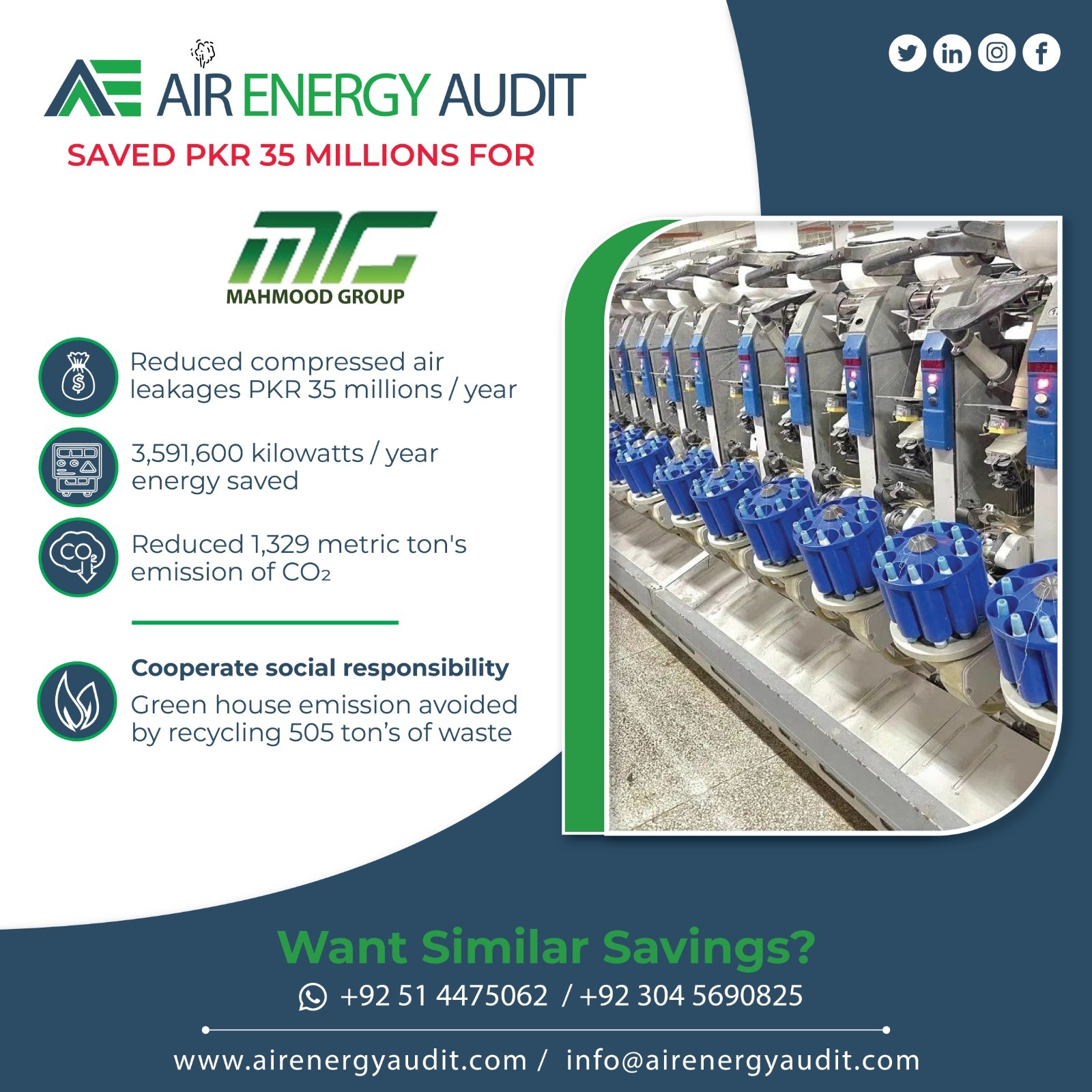
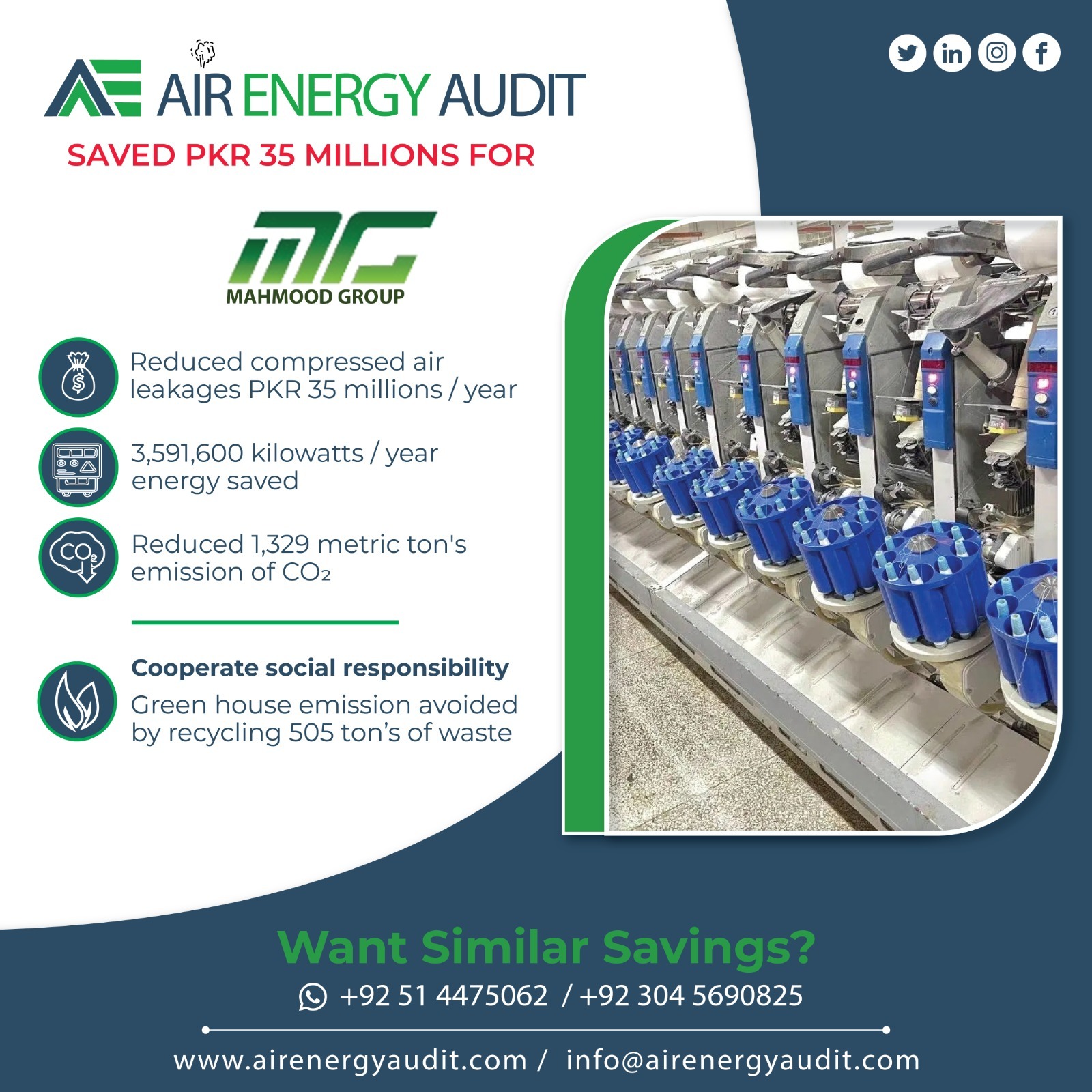
Air Energy Audit is reducing Energy Bills for big players in Pakistan's Plastic Industry