Compressed Air Efficiency in Mining Operations
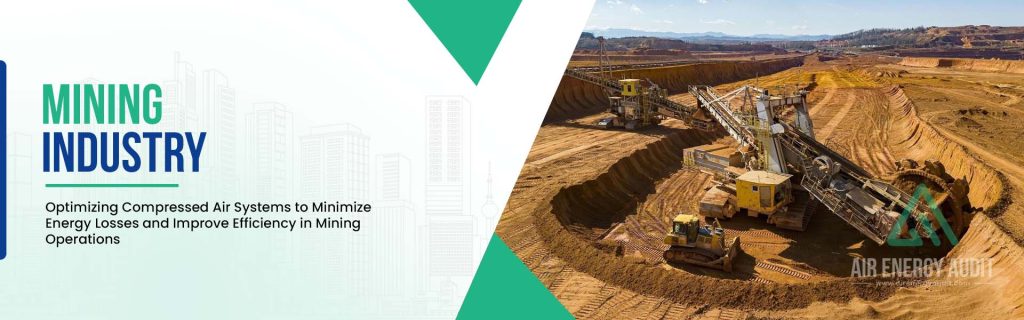
Mining operations depend on compressed air for drilling, pneumatic tools, material handling, automation, cleaning and equipment maintenance. Because mining facilities often operate continuously under demanding conditions, compressed air can represent a significant source of energy consumption.
Our compressed air audit identifies air leakage, excessive pressure, pressure losses, inefficient compressor operation and unnecessary air consumption across mining facilities.
Why Compressed Air Efficiency Matters
Improving compressed air performance can reduce energy waste, support reliable mining operations and improve the efficiency of pneumatic equipment.
Where Compressed Air Is Used in Mining
Compressed air supports a wide range of mining processes, equipment and plant operations.
Drilling Operations
Compressed air powers pneumatic drilling equipment and supports drilling activities in mining environments.
High Air DemandPneumatic Tools
Air powered tools are used for maintenance, repair, assembly and other mining support activities.
Tool ApplicationsMaterial Handling
Pneumatic systems support material movement, handling equipment and automated processes.
Material HandlingProcess Automation
Compressed air operates pneumatic actuators, valves and automated control systems across mining facilities.
AutomationConveying Systems
Pneumatic controls and air operated equipment support conveyor and material transfer systems.
Process SupportMineral Processing
Compressed air is used in process control, pneumatic equipment and selected mineral processing applications.
ProcessingCleaning & Blow-Off
Air blow-off applications are used for cleaning equipment, surfaces and production areas.
CleaningInstrumentation & Controls
Instrument air supports control valves, actuators and pneumatic instrumentation.
Control AirDust & Scale Removal
Compressed air can support cleaning and removal activities around mining and processing equipment.
Cleaning SupportMaintenance Workshops
Workshops use compressed air for pneumatic tools, cleaning, equipment servicing and maintenance operations.
MaintenanceCommon Compressed Air Wastage Areas
Mining facilities can experience avoidable compressed air losses due to system conditions, operating practices and equipment performance.
Air Leakage
Leaks in piping, hoses, fittings and equipment can create continuous air losses.
Excessive Pressure
Operating the system above required pressure can increase compressor energy consumption.
Open Blow-Off
Uncontrolled air blow-off applications can consume large quantities of compressed air.
Equipment Leaks
Pneumatic equipment and connections can develop leaks that remain unnoticed during operation.
Pressure Drop
Poor piping design, restrictions and undersized lines can create unnecessary pressure losses.
Idle Equipment
Air supplied to inactive equipment can create unnecessary compressed air demand.
Inefficient Controls
Poor compressor and system controls can reduce overall compressed air efficiency.
Artificial Demand
Unnecessary pressure and inappropriate air applications can increase system demand.
Efficiency Improvement Focus
A detailed compressed air assessment helps identify practical opportunities to reduce energy consumption and improve system performance.
- Compressor operating performance
- Plant-wide leakage detection
- Pressure and flow measurement
- Pneumatic equipment assessment
- Blow-off application review
- Compressed air distribution analysis
- Demand and control optimization
- Energy-saving opportunities
Mining Compressed Air Saving Potential
Improving system performance can help mining facilities reduce avoidable energy consumption and improve compressed air reliability.
Targeted Energy Improvements
Our audit evaluates compressor operation, distribution systems, air demand and end-use applications to identify practical efficiency improvements.
The assessment focuses on measurable system conditions and operating requirements so that improvement opportunities can be prioritized according to the facility's needs.
Leakage Reduction
Identify and reduce compressed air leakage throughout the mining facility.
Pressure Optimization
Review operating pressure and reduce unnecessary pressure requirements.
Compressor Control
Improve compressor sequencing and operating efficiency according to system demand.
Demand Management
Identify unnecessary consumption and optimize air demand across mining operations.
Blow-Off Optimization
Review cleaning and blow-off applications to reduce unnecessary compressed air use.
Distribution Improvement
Assess piping, pressure losses and distribution performance across the facility.
11011 Certified Expertise
ISO 11011 Certified Expertise
Our compressed air assessments follow the principles of ISO 11011 for evaluating compressed air systems, identifying losses and improving overall system performance.
Compressed Air System Assessment
The assessment considers supply-side performance, distribution conditions and demand-side applications to identify measurable opportunities for improvement.
Improving Compressed Air Efficiency in Mining Operations
A compressed air audit provides mining facilities with a detailed view of system performance, air consumption and energy losses.
Our assessment helps identify leakage, pressure losses, inefficient equipment operation and practical opportunities to improve compressed air efficiency.
Mining Audit Assessment
- Compressor operating performance
- Compressed air pressure and flow
- Air leakage assessment
- Mining operation air demand
- Pneumatic equipment performance
- Blow-off applications
- Distribution piping and pressure losses
- Air treatment equipment
- Energy-saving opportunities
A Smarter Approach to Mining Energy Efficiency
Identify compressed air losses, improve system performance and uncover practical energy-saving opportunities across your mining operations.
Our Customers in Mining Industry

































Air Energy Audit is reducing Energy Bills for big players in Pakistan's Mining Industry