Compressed Air Efficiency in Manufacturing
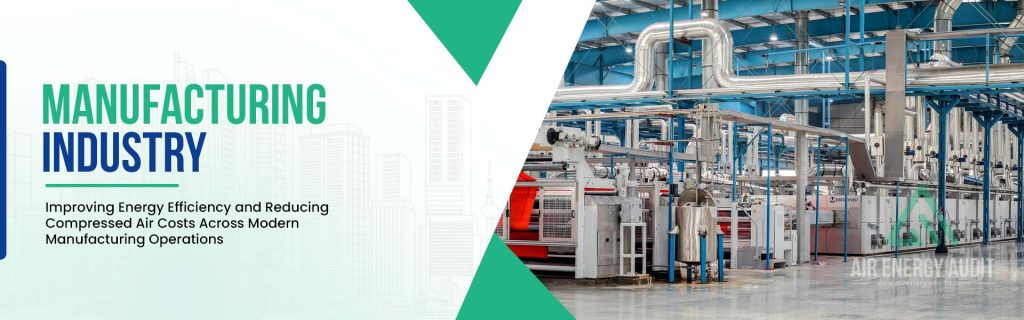
Manufacturing facilities rely on compressed air for automation, pneumatic tools, production machinery, material handling, cleaning and process support. Continuous production activities can create significant compressed air demand when systems are not properly maintained and optimized.
A professional compressed air audit identifies leakage, excessive pressure, pressure losses, inefficient compressor operation and unnecessary air consumption across manufacturing facilities.
Why Compressed Air Efficiency Matters
Efficient compressed air systems help manufacturing facilities maintain reliable production while reducing unnecessary energy consumption and operating costs.
Where Compressed Air Is Used in Manufacturing
Compressed air supports a wide range of production, automation and maintenance activities across manufacturing facilities.
Production Machinery
Compressed air supports pneumatic functions and production equipment across manufacturing processes.
ProductionPneumatic Tools
Air-powered tools are widely used for assembly, fastening, cutting, grinding and maintenance operations.
ToolsProcess Automation
Pneumatic actuators, control valves and automated systems use compressed air for repetitive production operations.
AutomationAssembly Lines
Compressed air supports automated and semi-automated assembly equipment throughout production lines.
AssemblyMaterial Handling
Pneumatic systems can assist with movement, positioning and handling of materials and manufactured products.
Material HandlingPackaging Systems
Packaging machinery uses compressed air for filling, sealing, labeling and automated product handling.
PackagingCleaning & Blow-Off
Compressed air is used for cleaning machinery, components and production areas during manufacturing operations.
CleaningQuality Testing
Air systems support selected testing, inspection and quality control equipment.
Quality ControlInstrumentation & Controls
Clean and reliable compressed air can support pneumatic instrumentation and control systems.
InstrumentationMaintenance Workshops
Compressed air supports workshop tools, equipment servicing and routine plant maintenance.
MaintenanceCommon Compressed Air Wastage Areas
Small inefficiencies across production equipment, piping and end-use applications can increase compressor runtime and energy use.
Air Leakage
Leaks in piping, fittings, hoses and equipment can continuously waste compressed air.
Excessive Pressure
Operating above the pressure required by production equipment can increase energy consumption.
Open Blow-Off
Uncontrolled blow-off applications can consume large quantities of compressed air.
Equipment Leaks
Pneumatic equipment and production machinery may develop leaks that increase air demand.
Pressure Drop
Restricted piping, filters and fittings can create unnecessary pressure losses.
Idle Equipment
Air-consuming equipment can remain connected while production areas are not operating.
Inefficient Controls
Poor compressor and demand control can increase unloaded running and unnecessary air generation.
Artificial Demand
Poorly selected nozzles and excessive pressure can create unnecessary compressed air consumption.
Efficiency Opportunities
A detailed compressed air assessment helps identify the causes of energy loss and opportunities to improve manufacturing system performance.
- Compressor operating performance
- Plant-wide leakage detection
- Pressure and flow measurement
- Pneumatic equipment assessment
- Production air application review
- Distribution piping analysis
- Demand and control optimization
- Energy-saving opportunities
Improving Manufacturing Energy Efficiency
Optimizing compressed air generation, distribution and end-use applications can improve production performance while reducing avoidable energy consumption.
Targeted Compressed Air Improvements
Our audit approach evaluates compressor performance, distribution systems, production equipment and end-use applications to identify practical improvement measures.
The assessment focuses on reducing unnecessary air consumption while maintaining the pressure and flow required for reliable manufacturing operations.
Leakage Reduction
Identify and reduce compressed air leakage across production equipment, piping and fittings.
Pressure Optimization
Match system pressure with the actual requirements of manufacturing equipment.
Compressor Control
Improve compressor operation and reduce unnecessary unloaded running.
Demand Management
Review production air demand and reduce unnecessary consumption during idle periods.
Blow-Off Optimization
Improve cleaning and drying applications with efficient air nozzles and controlled pressure.
Distribution Improvement
Reduce pressure losses through better piping, fittings and compressed air distribution.
11011 Certified Expertise
ISO 11011 Certified Compressed Air Expertise
Air Energy Audit applies a structured approach to compressed air system assessment based on ISO 11011 principles. The assessment considers air generation, distribution, storage and end-use applications.
ISO 11011 Standard
The audit evaluates compressed air system performance and identifies opportunities to improve efficiency, reliability and energy performance.
Improving Compressed Air Efficiency in Manufacturing
A professional compressed air audit provides manufacturing facilities with a clear understanding of where compressed air is being generated, distributed and consumed.
Our assessment identifies technical and operational opportunities that can help reduce energy losses, improve pneumatic equipment performance and support reliable production operations.
Manufacturing Audit Assessment
- Compressor operating performance
- Compressed air pressure and flow
- Air leakage assessment
- Manufacturing facility air demand
- Pneumatic equipment performance
- Production and blow-off applications
- Distribution piping and pressure losses
- Air treatment equipment
- Energy-saving opportunities
A Smarter Approach to Manufacturing Energy Efficiency
Identify compressed air losses, optimize system performance and improve the energy efficiency of your manufacturing operations with a professional compressed air audit.
Our Customers in Manufacturing Industry

































Air Energy Audit is reducing Energy Bills for big players in Pakistan's Manufacturing Industry