Compressed Air Efficiency in Power Generation
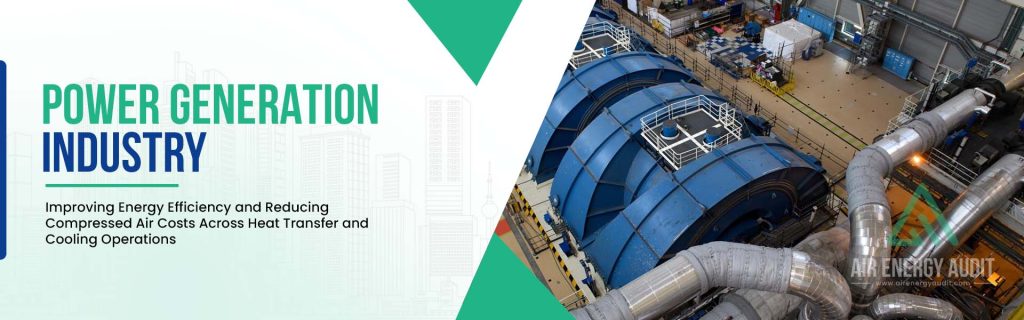
Power generation facilities rely on compressed air for instrumentation, control systems, pneumatic equipment, turbine support, cleaning and maintenance operations. Reliable compressed air is essential for continuous plant operation and process control.
Our compressed air audit identifies leakage, excessive pressure, pressure losses, inefficient compressor operation and unnecessary air consumption across power generation facilities.
Why Compressed Air Efficiency Matters
Power plants often operate continuously. Optimizing compressed air systems can reduce avoidable energy losses while supporting reliable equipment performance.
Where Compressed Air Is Used in Power Generation
Compressed air supports a wide range of control, maintenance and operational activities throughout power generation plants.
Turbine Control Systems
Compressed air supports pneumatic control systems and equipment associated with turbine operation.
Turbine SupportInstrument Air Systems
Clean and reliable compressed air is used for instruments, control devices and plant monitoring systems.
InstrumentationPneumatic Control Valves
Air-operated valves regulate process flows and support automated plant control.
Process ControlBoiler & Process Systems
Compressed air supports pneumatic equipment and control applications around boiler and process systems.
Process OperationsElectrical & Control Rooms
Air systems can support pneumatic devices and selected equipment used in plant control environments.
Plant ControlsCooling & Auxiliary Systems
Compressed air is used in selected auxiliary and cooling applications across power generation facilities.
Auxiliary SystemsCleaning & Blow-Off
Air is frequently used for cleaning equipment, panels, work areas and plant components.
CleaningMaintenance Workshops
Pneumatic tools and maintenance equipment require compressed air for servicing plant machinery.
MaintenanceMaterial Handling
Pneumatic equipment can support material handling and operational activities within power plants.
Plant SupportPlant Automation
Compressed air supports automated equipment, actuators and control applications throughout the facility.
AutomationCommon Compressed Air Wastage Areas
Air Leakage
Leaks in piping, fittings, valves and equipment can create continuous and avoidable air demand.
Excessive Pressure
Higher-than-required system pressure can increase compressor energy consumption.
Open Blow-Off
Uncontrolled compressed air use for cleaning and cooling can create unnecessary demand.
Equipment Leaks
Pneumatic equipment and control devices may consume air even when operating conditions are not optimal.
Pressure Drop
Restricted piping, filters and poor distribution can cause pressure losses across the plant.
Idle Equipment
Equipment operating without production demand can continue consuming compressed air.
Inefficient Controls
Poor compressor sequencing and control settings can increase system energy consumption.
Artificial Demand
Unnecessary air use can result from unsuitable applications and inefficient operating practices.
Efficiency Opportunities
A detailed audit can identify practical opportunities to improve compressed air performance throughout a power generation facility.
- Compressor operating performance
- Facility-wide leakage detection
- Pressure and flow measurement
- Pneumatic equipment assessment
- Control and instrument air review
- Blow-off application review
- Distribution piping analysis
- Demand and control optimization
- Energy-saving opportunities
Improve Compressed Air System Efficiency
Power generation facilities can improve compressed air performance by addressing system losses and optimizing equipment operation.
Where Energy Savings Can Be Found
Our audit evaluates the complete compressed air system, from compressor performance and distribution to end-use applications. The objective is to identify measurable opportunities for reducing unnecessary air consumption and improving overall system efficiency.
Recommendations are based on actual operating conditions, measured system performance and the specific requirements of the power generation facility.
Leakage Reduction
Identify and reduce compressed air losses from leaks.
Pressure Optimization
Maintain pressure according to actual plant requirements.
Compressor Control
Improve compressor sequencing and operating efficiency.
Demand Management
Reduce unnecessary compressed air consumption.
Blow-Off Optimization
Review cleaning and cooling applications for efficient air use.
Distribution Improvement
Reduce pressure losses through improved air distribution.
11011 Certified Expertise
ISO 11011 Certified Expertise
Our compressed air audits follow the principles of ISO 11011 for evaluating compressed air system performance, energy efficiency and opportunities for improvement.
Compressed Air System Assessment
We assess generation, distribution and end-use applications to understand system performance under actual operating conditions.
Improving Compressed Air Efficiency in Power Generation
A comprehensive compressed air audit provides power generation facilities with a clear understanding of system performance, energy losses and practical efficiency opportunities.
Our assessment covers the compressed air system from generation through distribution to end-use applications, helping identify opportunities for reliable and efficient plant operation.
Power Generation Audit Assessment
- Compressor operating performance
- Compressed air pressure and flow
- Air leakage assessment
- Power generation plant air demand
- Pneumatic equipment performance
- Control and blow-off applications
- Distribution piping and pressure losses
- Air treatment equipment
- Energy-saving opportunities
A Smarter Approach to Power Generation Energy Efficiency
Identify compressed air losses, optimize system performance and improve energy efficiency with a detailed industrial compressed air audit.
Our Customers in Power Generation Industry

































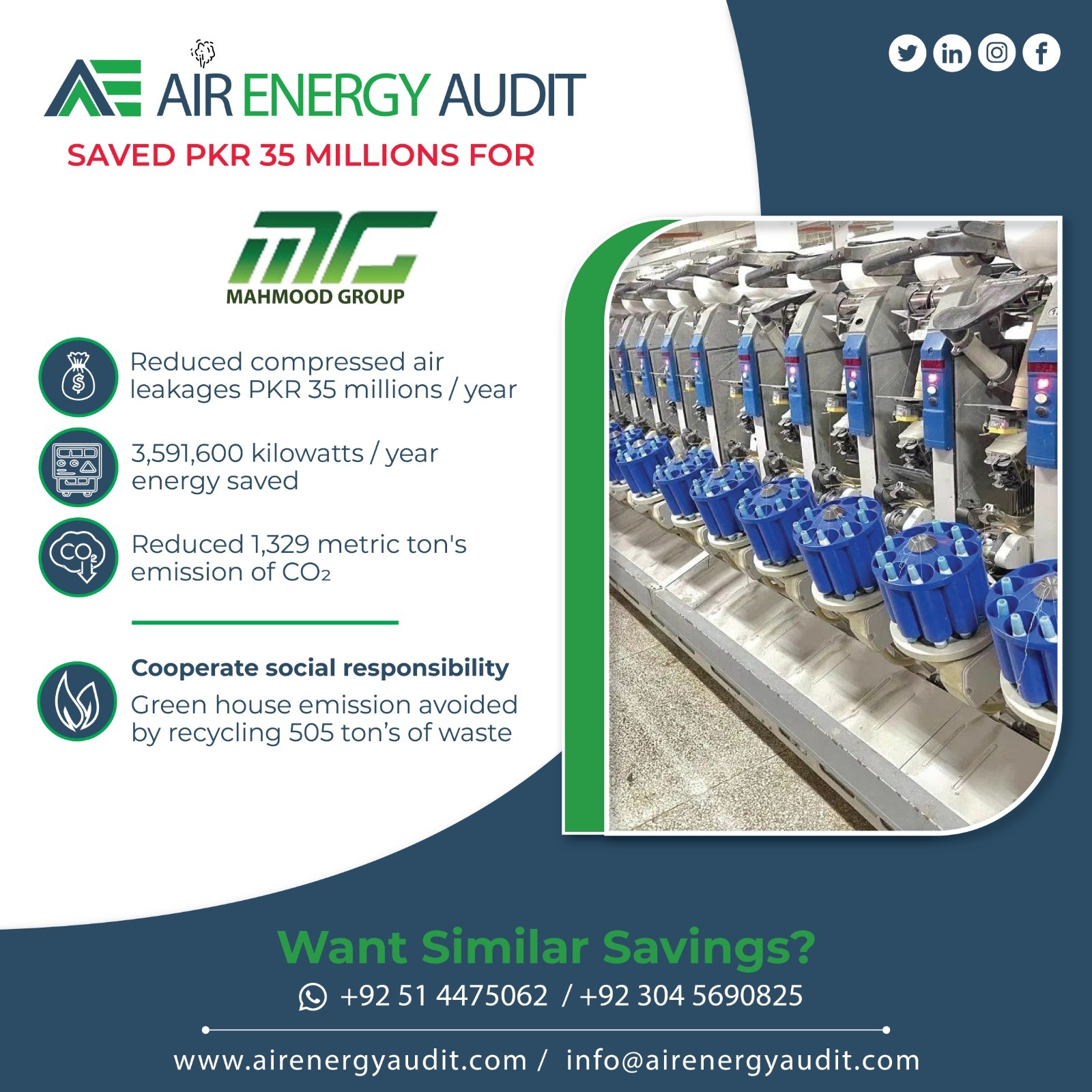
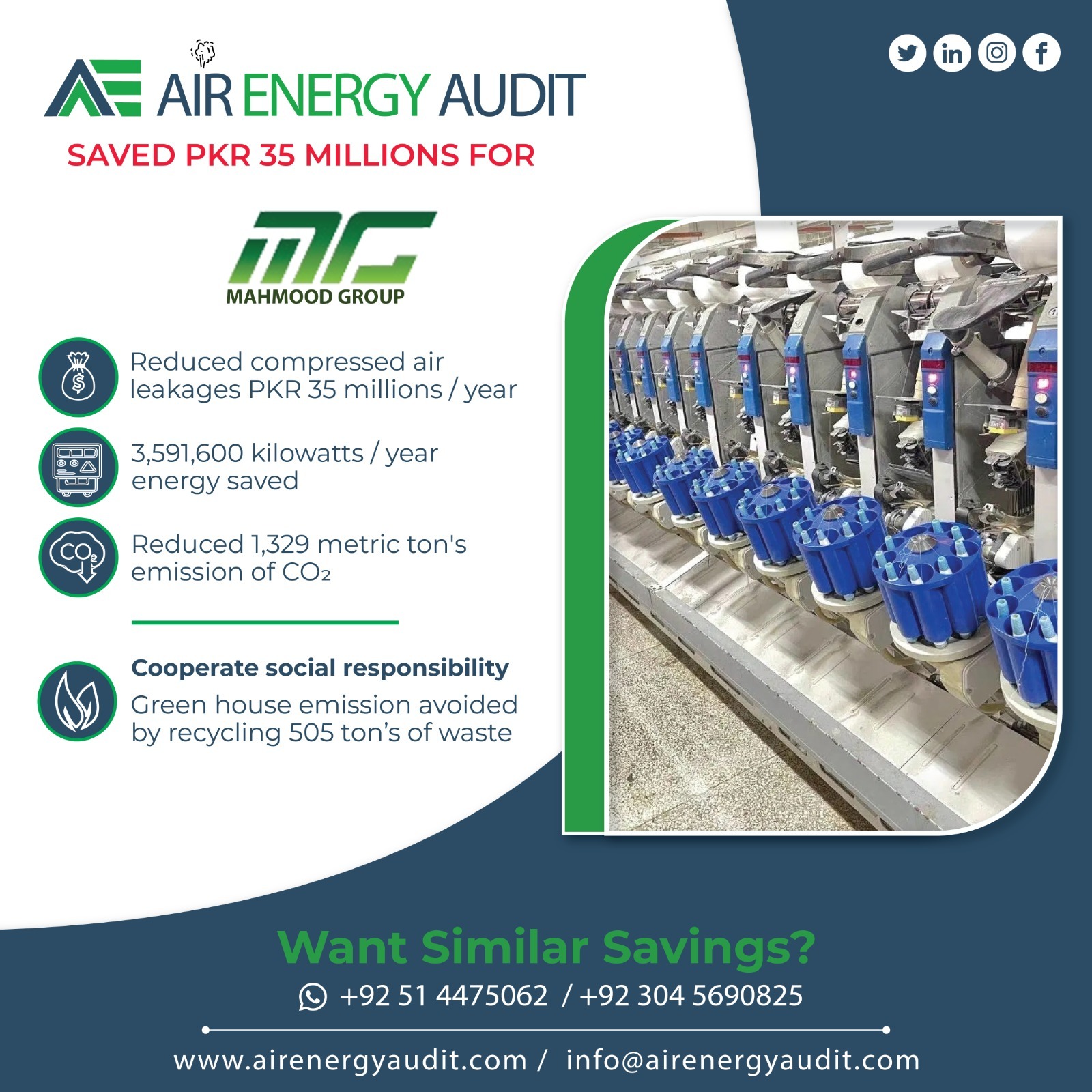
Air Energy Audit is reducing Energy Bills for big players in Pakistan's Power Generation Industry