
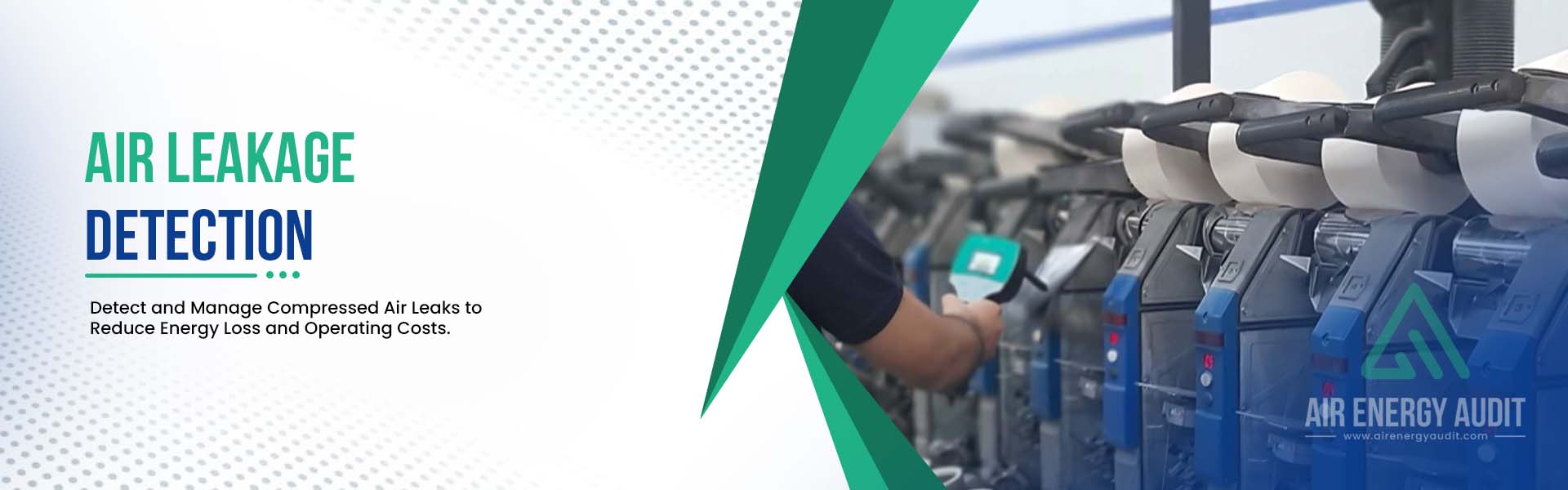
Stop Paying for Compressed Air That Never Reaches Production
An Air Audit helps industries identify compressed air losses, excessive demand, pressure problems, inefficient compressors and hidden energy costs. AirEnergyAudit measures the complete compressed air system to reveal where energy is being consumed and where savings can be achieved.
Your Compressed Air System May Be Using More Energy Than Necessary
Compressed air is one of the most widely used utilities in industrial facilities, but it is also one of the most expensive forms of energy. Inefficient compressors, air leaks, artificial demand, excessive pressure and poor system control can continuously increase operating costs.
An Air Audit provides a detailed picture of how compressed air is generated, distributed and consumed across the facility. Instead of relying on assumptions, measured operating data is used to identify actual losses and improvement opportunities.
- Identify compressed air leakage and unnecessary demand.
- Evaluate compressor loading, unloading and operating performance.
- Measure pressure, flow and pressure losses across the system.
- Calculate energy consumption and potential financial savings.
- Develop practical recommendations for system improvement.
What an Air Audit Can Improve
A properly measured compressed air system can reveal opportunities that are difficult to identify through visual inspection alone.
Reduce Energy Costs
Identify inefficient compressor operation, excessive pressure and other sources of unnecessary energy consumption.
Control Air Leakage
Locate and quantify compressed air leaks that create continuous demand even when production equipment is not operating.
Improve Pressure
Identify pressure drops and determine whether the system is operating at a higher pressure than production actually requires.
Optimize Compressors
Evaluate compressor loading patterns, sequencing and operating conditions to improve overall system efficiency.
Manage Air Demand
Identify artificial demand, inappropriate applications and unnecessary compressed air consumption.
Extend Equipment Life
Better system control can reduce unnecessary compressor cycling and operating stress, supporting reliable equipment performance.
What We Analyze During an Air Audit
Air Energy Audit examines the major elements that influence compressed air efficiency, reliability and operating cost.
Compressor Performance
Review compressor operating conditions, loading, unloading, capacity and overall performance.
Air Flow Measurement
Measure compressed air flow and compare generation with actual production demand.
Pressure Analysis
Measure system pressure and identify pressure drops across headers, filters, dryers, piping and equipment.
Leak Detection
Detect compressed air leaks and estimate their contribution to total system demand and energy cost.
Demand-Side Assessment
Evaluate points of use, inappropriate applications, open blowing and unnecessary compressed air demand.
Distribution System
Assess piping configuration, pressure losses, distribution practices and opportunities for improvement.
Control & Sequencing
Review compressor control strategy and sequencing to determine whether generation matches system demand.
Energy & Cost Analysis
Convert measured system performance into energy, operating cost and potential savings calculations.
How Air Energy Audit Performs an Air Audit
Our approach combines field measurements, system analysis and engineering evaluation to turn compressed air data into practical actions.
Measure
Collect operating data for compressors, flow, pressure, power and system demand.
Diagnose
Analyze measurements to identify leaks, pressure losses, inefficient operation and unnecessary demand.
Calculate
Quantify energy consumption, operating cost, savings potential and improvement opportunities.
Improve
Develop practical recommendations with priorities, estimated savings and implementation considerations.
Turn Compressed Air Measurements Into Action
The purpose of an Air Audit is not simply to collect data. The measurements are used to understand where compressed air energy is being consumed, what is causing the losses and which improvements can deliver measurable value.
The Value of an Efficient Compressed Air System
Improving compressed air efficiency can support both operational performance and long-term energy management.
Lower Consumption
Reduce unnecessary compressor operation and avoid generating air that is not required.
Lower Operating Cost
Reduce the financial impact of leaks, excessive pressure and inefficient system operation.
Better System Performance
A properly managed compressed air network can provide more stable and reliable air to production.
A Clear Picture of Your Compressed Air System
Following the assessment, Air Energy Audit provides a structured analysis of the findings and identifies opportunities for improving system efficiency.
Recommendations can be prioritized according to technical feasibility, energy impact, investment requirement and expected financial return.
- Measured compressed air system performance.
- Identified leakage and demand-side opportunities.
- Pressure and flow analysis.
- Energy and operating cost assessment.
- Recommended efficiency improvement measures.
- Prioritized opportunities for implementation.
Is Your Compressed Air System Working Efficiently?
Let Air Energy Audit measure your compressed air system, identify hidden losses and help you build a practical roadmap toward lower energy consumption and better system performance.
Air Audit
An Air Audit helps identify hidden energy losses caused by compressed air leaks, inefficient equipment operation, and excessive air demand. During an audit, these issues can be assessed to determine their impact on production, equipment performance, and operating costs.
Undetected compressed air inefficiencies can:
Cause system pressure drops, affecting the performance and reliability of pneumatic equipment and production processes.
Reduce the efficiency of compressors and plant equipment by forcing the system to operate harder and longer to maintain the required air pressure.
Shorten equipment lifespan due to increased compressor cycling, excessive operating hours, and unnecessary mechanical stress.
Increase maintenance requirements as compressors, dryers, filters, and distribution equipment experience additional operating stress and wear