
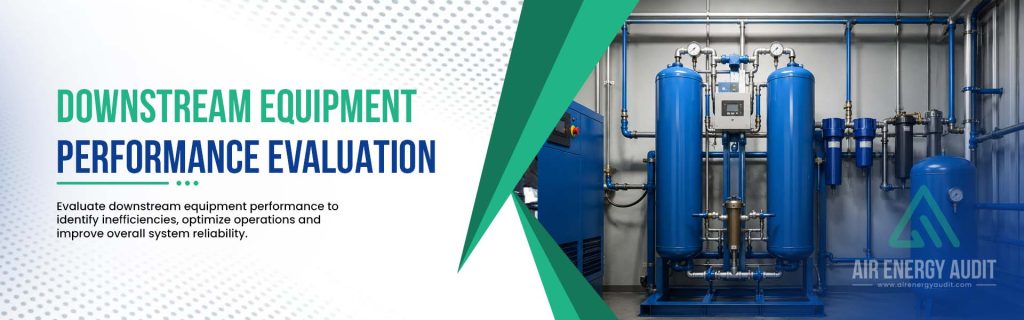
Downstream Equipment Performance Evaluation
We evaluate the performance of downstream compressed air equipment to identify pressure losses, flow restrictions, inefficient operation and opportunities to improve overall system reliability and efficiency.
Identify Restrictions That Affect Air Performance
Downstream equipment can significantly influence compressed air pressure, flow and quality at the point of use. Our evaluation examines equipment condition and operating performance to locate avoidable losses and improvement opportunities.
- Air Filters & Pressure Drop
- Air Dryers Performance
- Regulators & FRL Units
- Pressure & Flow Conditions
- Hoses & Connection Losses
- Pneumatic Equipment
- Point-of-Use Efficiency
- Air Quality Requirements
What We Evaluate
A focused evaluation helps determine whether downstream equipment is supporting efficient and reliable compressed air operation.
Filters
Check pressure drop, condition and performance of compressed air filtration equipment.
Dryers
Evaluate dryer operation, pressure loss and air treatment performance.
Regulators
Review pressure regulation and identify unnecessarily high operating pressure.
Distribution
Assess hoses, fittings, connections and point-of-use distribution losses.
Pneumatic Equipment
Review air-consuming equipment for abnormal or inefficient compressed air usage.
Improvement Opportunities
Identify practical actions to improve air delivery, efficiency and downstream system performance.
Improve Downstream Equipment Performance
Identify pressure losses, flow restrictions and inefficient air consumption with a professional downstream equipment performance evaluation from Air Energy Audit.
Compressed Air Quality & Efficiency
Pneumatic components experience wear and corrosion due to moisture, leading to increased consumption of compressed air and decreased energy efficiency.
As wear and corrosion progress, there is a need for component repair or replacement, resulting in higher operational costs. Therefore, it is essential to calculate the necessary dryer capacity and install an appropriately sized dryer.
Filters are indispensable for effectively eliminating impurities from compressed air, as it plays a vital role in numerous industrial chemical processes.