
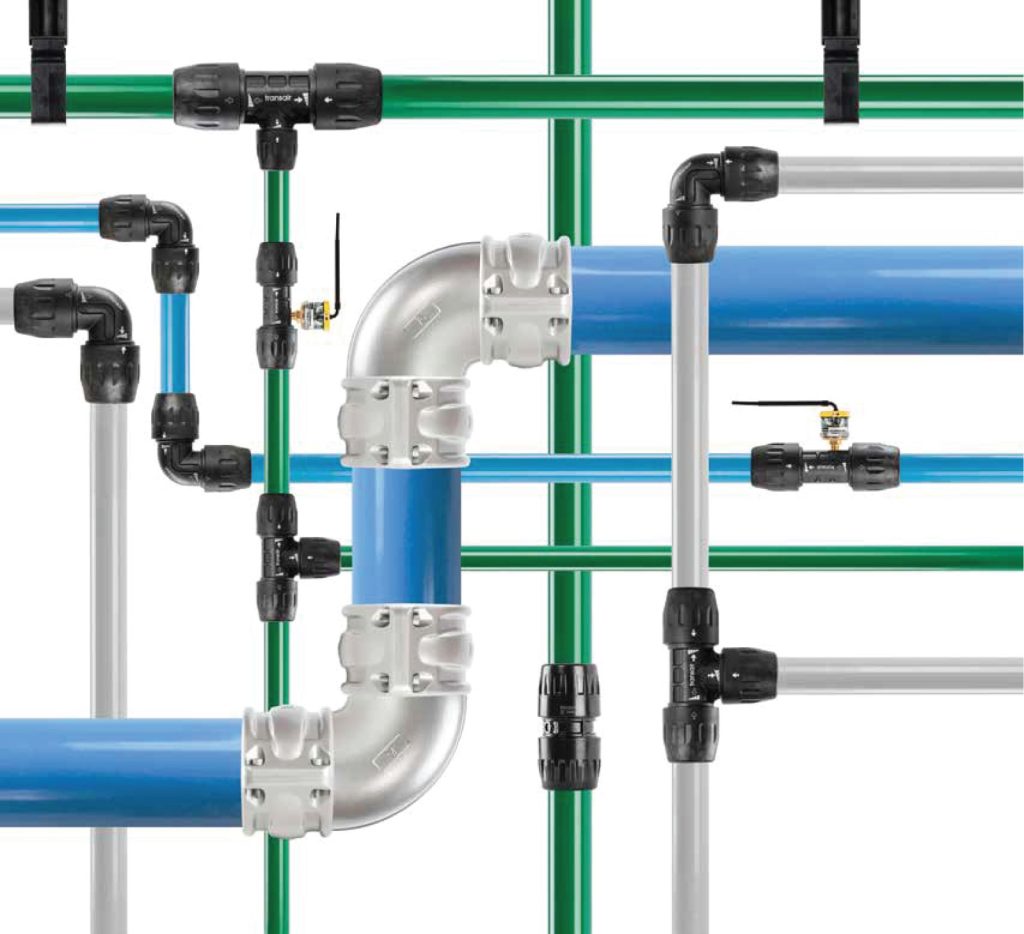
A steel fabrication facility depended on compressed air for pneumatic tools, cutting equipment, control systems, cleaning applications, and various workshop processes.
The plant had a large compressed air distribution network that had expanded as new equipment was installed.
Operators frequently complained that air pressure was satisfactory near the compressor room but noticeably lower at distant workstations.
The Problem
The facility initially assumed that the compressors were too small.
However, increasing compressor pressure had not completely solved the problem.
Higher pressure increased electricity consumption but did not provide consistent pressure at all end-use locations.
This indicated that the distribution network required closer examination.
Piping Analysis
The audit team reviewed the existing piping layout.
Pipe diameter, length, bends, valves, fittings, elevation changes, and connection points were evaluated.
Several sections had characteristics that could contribute to pressure losses.
Long pipe runs and multiple restrictions were identified in high-demand areas.
The system also lacked an optimal ring arrangement in certain sections.
Pressure Measurements
Pressure readings were taken at strategic locations.
The measurements demonstrated a noticeable difference between supply pressure and pressure available at remote workstations during peak demand.
This confirmed that the issue was partly related to distribution rather than compressor generation alone.
Recommended Improvements
The audit recommended several measures.
The first was to repair leakage points.
The second was to improve selected sections of piping.
The third was to reduce unnecessary restrictions.
Where appropriate, larger pipe sections were recommended for high-demand areas.
A looped distribution arrangement was also considered for selected production zones to improve pressure stability.
The plant was further advised to avoid unnecessarily small hoses and fittings at critical points.
Results
Following the recommended improvements, the facility could achieve better pressure stability across the plant.
An illustrative project could reduce pressure losses by approximately 15–20% in the affected sections.
This could allow the compressor system to operate at a lower pressure while still delivering the required pressure at end-use points.
Energy Savings
The energy benefit came from reducing the need to maintain excessive compressor pressure.
Operating compressors at unnecessarily high pressure can increase energy consumption.
By improving the distribution system, the plant could reduce supply pressure without sacrificing performance at the point of use.
Reliability
Improved piping also reduced the risk of production interruptions caused by pressure instability.
Pneumatic tools operated more consistently, while critical equipment received a more stable air supply.
The plant also gained a clearer understanding of the condition and configuration of its compressed air network.
Future Expansion
Another recommendation was to create an updated compressed air system drawing.
This would help engineering and maintenance teams understand the current network before adding future equipment.
Every new connection could then be evaluated according to available capacity and expected demand.
Conclusion
The steel fabrication project showed that compressed air distribution is just as important as compressor performance.
A high-capacity compressor cannot compensate efficiently for an inadequate distribution system.
By conducting piping analysis, pressure measurements, leakage detection, and system optimization, manufacturers can improve pressure stability and reduce unnecessary energy consumption.