
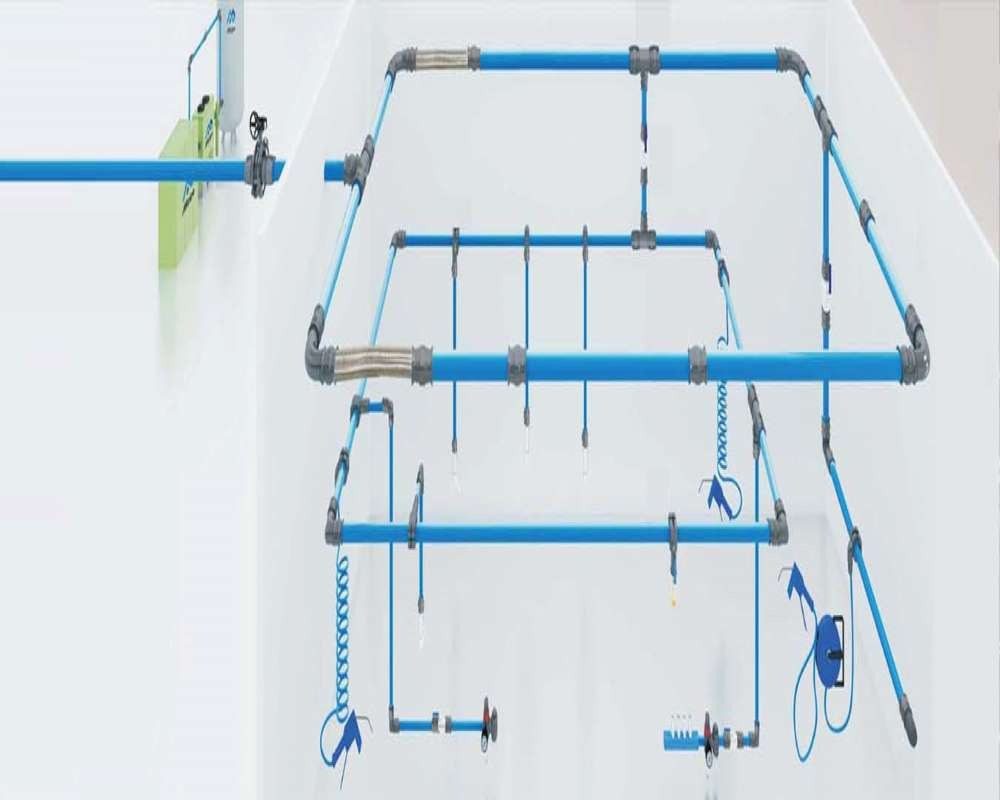
A plastic injection molding facility used compressed air throughout its production process. Pneumatic controls, actuators, material handling equipment, blow-off applications, and other machinery depended on compressed air.
The plant was experiencing unusually high compressed air consumption even though production volume had remained relatively stable.
Management wanted to understand why air demand continued to increase.
Initial Findings
The audit revealed that the issue was not primarily related to production growth.
A significant portion of compressed air was being consumed by inefficient end-use applications.
Several machines were using compressed air for cleaning and blow-off operations.
Some of these applications were operating at higher pressure and flow than necessary.
This created what is commonly referred to as artificial demand: compressed air consumption that could be reduced through better control, pressure optimization, or alternative methods.
End-Use Analysis
The audit team inspected individual compressed air applications.
For each major application, the following factors were considered:
- Required pressure
- Air-flow requirement
- Operating duration
- Frequency of use
- Control method
- Potential alternatives
- Leakage risk
The assessment showed that certain blow-off applications were consuming significant quantities of compressed air.
Operators had traditionally increased pressure because it provided faster cleaning.
However, the additional pressure did not necessarily provide proportional productivity benefits.
Recommended Solution
The facility was advised to replace inefficient open-ended blow-off arrangements with engineered nozzles designed for controlled air consumption.
Pressure regulators were also recommended for applications that did not require the full plant pressure.
Automatic shut-off controls were proposed for equipment that consumed air during idle periods.
Where practical, non-compressed-air cleaning methods were also considered.
Illustrative Results
In a representative implementation, end-use optimization could reduce compressed air consumption by approximately 10–15%.
This reduction would directly decrease compressor loading.
Because compressors consume electricity to generate compressed air, reducing unnecessary demand can result in measurable energy savings.
Operator Involvement
One of the important lessons from the project was the role of operators.
Many inefficient applications had developed gradually.
Operators were not intentionally wasting compressed air; they were using the methods that had historically been available to them.
Training helped operators understand:
- Why excessive pressure increases energy use
- How to identify abnormal air consumption
- Why leaks should be reported
- When compressed air should not be used for cleaning
- How to operate regulators correctly
Monitoring
The plant was also advised to establish baseline air consumption.
Without measurement, it can be difficult to determine whether improvement measures are delivering sustainable results.
Flow monitoring can help identify unusual consumption patterns and support production planning.
Business Impact
The project offered several potential benefits:
- Lower electricity consumption
- Reduced compressor loading
- Reduced air demand
- Better equipment control
- Lower maintenance costs
- Improved awareness among operators
- Better compressed air management
The biggest advantage was that the plant did not need major capital investment to achieve the initial improvements.
Conclusion
The plastic molding facility demonstrated the importance of looking beyond the compressor room.
A compressor can be operating efficiently while the overall system remains inefficient because of excessive demand at the point of use.
By analyzing applications individually, manufacturers can identify unnecessary consumption and reduce artificial demand.
A complete compressed air audit therefore provides value not only through equipment optimization but also through better control of how compressed air is used throughout the production process.