
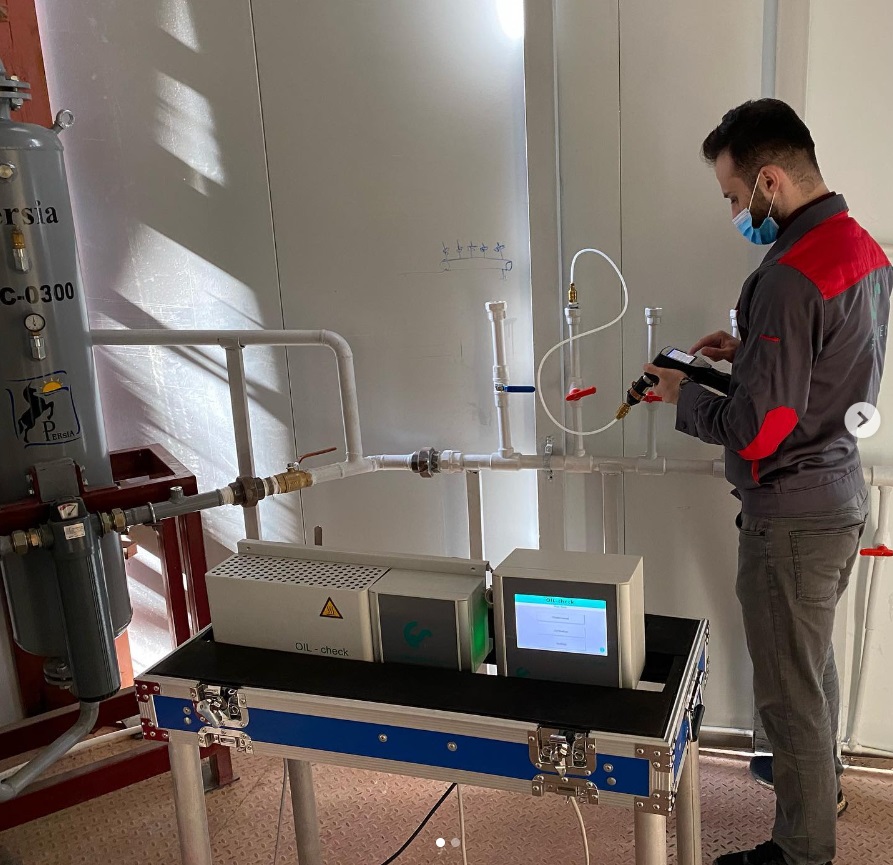
An automotive manufacturing facility used compressed air extensively for pneumatic tools, assembly equipment, automated machinery, material handling systems, and testing stations. Production depended on reliable compressed air, but operators had reported pressure drops during periods of peak production.
The facility had multiple compressors, yet production teams still experienced temporary pressure instability.
Management initially considered purchasing another compressor. Before making the investment, an engineering assessment was conducted to determine whether the existing capacity was actually insufficient.
Investigation
The audit team analyzed compressor performance and plant demand.
Instead of looking only at the compressor room, the entire compressed air network was evaluated.
Pressure measurements were taken at several points throughout the plant.
Air-flow monitoring was also conducted during different production conditions.
The assessment showed that the problem was not simply a lack of compressor capacity.
The distribution system itself was contributing to the pressure instability.
Distribution Problems
The plant had expanded gradually over several years.
New production lines had been connected to the existing piping network without a complete redesign of the distribution system.
Some sections of the network were undersized for the current demand.
There were also several long pipe runs and multiple connection points.
These conditions contributed to pressure losses during peak demand.
Leakage Assessment
The audit also identified leakage throughout the plant.
Some leaks were located around quick couplings and hoses near production equipment.
Other leaks were found in older sections of the piping system.
A leakage tagging system was recommended so maintenance teams could identify and repair each point systematically.
Solution
The recommended solution focused on three areas.
First, repair the identified leaks.
Second, improve the distribution network in high-demand areas.
Third, optimize compressor operation based on actual production demand.
Instead of purchasing additional compressor capacity immediately, the facility could first maximize the performance of its existing system.
The audit also recommended installing additional storage capacity at selected high-demand areas where short-term peak demand occurred.
Results
In an illustrative project scenario, the facility could achieve:
- Improved pressure stability
- Reduced pressure drops
- Lower leakage losses
- Better compressor utilization
- Reduced unnecessary compressor operation
- Improved pneumatic tool performance
The facility could potentially avoid or postpone a major compressor purchase by improving the existing network.
Production Benefits
The improvements did not only affect energy consumption.
More stable compressed air pressure helped pneumatic equipment operate more consistently.
This was particularly important for automated assembly equipment where inconsistent pressure could affect cycle times and tool performance.
Maintenance teams also benefited because leakage identification became more structured.
Long-Term Strategy
The facility was advised to include compressed air requirements in future production expansion planning.
Whenever a new production line is added, its compressed air demand should be evaluated against:
- Available compressor capacity
- Receiver capacity
- Pipe capacity
- Operating pressure
- Peak demand
- Distribution losses
This prevents the system from becoming progressively inefficient as production expands.
Conclusion
The automotive plant’s experience demonstrated why adding compressor capacity is not always the correct first solution.
A compressed air energy audit can reveal whether the real problem is generation, storage, distribution, leakage, or demand.
By optimizing the existing infrastructure before investing in new equipment, manufacturers can often improve reliability while controlling capital expenditure and energy costs.