
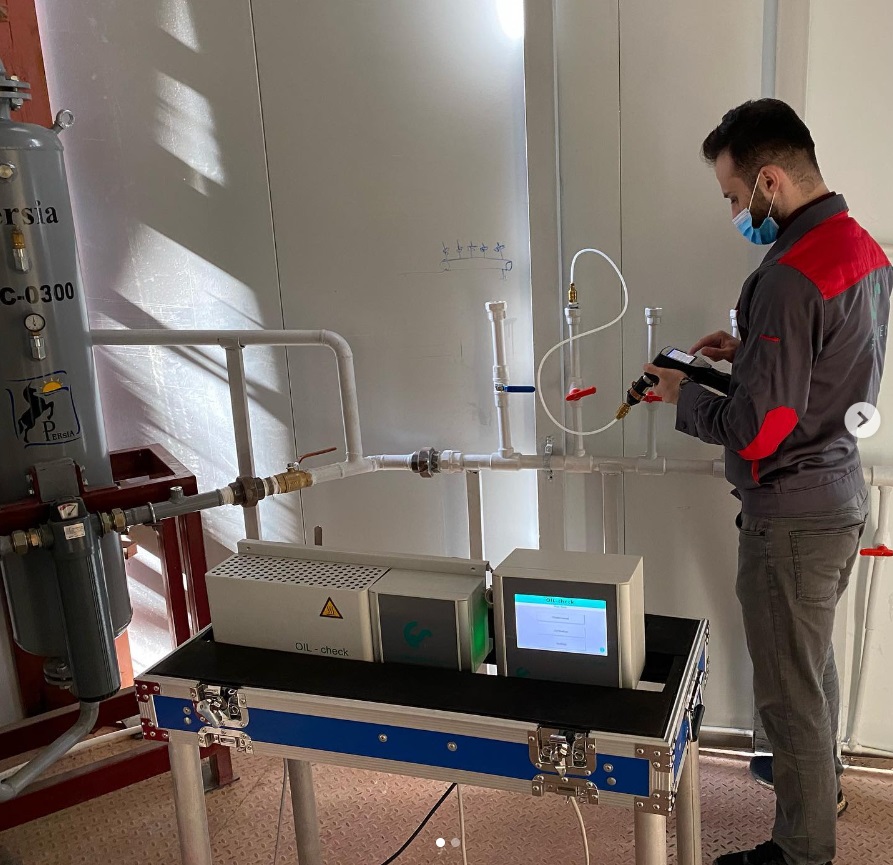
A cement manufacturing facility operated compressed air systems in a demanding industrial environment. Compressed air was used for instrumentation, control systems, pneumatic equipment, cleaning, and other applications.
The facility had high operating hours and significant compressed air demand.
Management was concerned about increasing energy consumption and wanted to identify opportunities to reduce unnecessary compressor operation.
Assessment
The audit began with an inspection of the compressor room.
Compressor performance, operating pressure, loading behavior, and maintenance conditions were evaluated.
The distribution network was then surveyed for leakage.
Because the plant operated in a dusty and harsh environment, fittings, hoses, valves, and connections were exposed to challenging operating conditions.
Leakage Findings
Several leakage points were identified.
Some were located near older fittings, while others were associated with flexible connections and pneumatic equipment.
The leakage points were categorized according to severity and estimated impact.
This allowed the maintenance department to prioritize repairs.
Compressor Efficiency
The compressors were also evaluated under different operating conditions.
The audit focused on whether the machines were operating close to their efficient operating range.
Unloaded operation was reviewed because a compressor can consume significant electricity even when it is not producing useful compressed air.
System Optimization
The recommendations included:
- Repairing high-priority leaks
- Establishing routine leakage surveys
- Reviewing compressor sequencing
- Optimizing pressure
- Improving maintenance schedules
- Monitoring compressor loading
- Reviewing end-use applications
The facility was also advised to develop a compressed air performance baseline.
Illustrative Results
A representative implementation could reduce leakage-related air losses by 15–25%.
Improved compressor operation could provide additional energy savings.
The combined effect could reduce electricity consumption while improving compressed air availability.
Reliability Improvements
Leakage reduction also helped improve system pressure stability.
Previously, compressors had to compensate for unnecessary air losses.
After repairs, more of the generated air became available for actual production requirements.
This could reduce the need to increase compressor pressure during peak demand.
Environmental Benefits
Reducing compressed air energy consumption also reduces the indirect carbon footprint associated with electricity generation.
For energy-intensive industries such as cement manufacturing, even relatively modest efficiency improvements can contribute to meaningful long-term sustainability goals.
Maintenance Program
The plant was advised to conduct periodic ultrasonic leakage surveys.
Every identified leak should be:
- Located
- Tagged
- Recorded
- Assigned to maintenance
- Repaired
- Rechecked
This process prevents the same leakage problem from repeatedly returning.
Conclusion
The cement plant demonstrated how compressor efficiency and leakage management can work together.
A compressed air system should not be evaluated only according to whether sufficient pressure is available.
The real question is how much energy is being consumed to deliver that pressure and how much compressed air is actually reaching useful applications.
A structured audit provides the information required to answer these questions and prioritize improvements.