A food and beverage manufacturing facility was operating several compressed air systems to support packaging machines, pneumatic actuators, filling equipment, control systems, and cleaning applications. Production was increasing, but electricity consumption associated with the compressed air system was also rising.
Plant management wanted to determine whether the existing compressors were being operated efficiently and whether the system pressure was appropriate for the production requirements.
The Challenge
The plant was maintaining a relatively high compressed air pressure because production operators believed that higher pressure provided better equipment performance.
However, the audit identified an important issue: not every application required the same pressure level.
Maintaining unnecessarily high pressure can increase compressor energy consumption and can also increase leakage losses throughout the distribution network.
The facility also had different production areas with different operating requirements. Some equipment required stable pressure, while other applications could operate effectively at lower pressure.
Audit Process
The assessment began with a review of compressor operating conditions and production schedules. Compressor loading and unloading behavior was examined to determine whether the machines were responding efficiently to changing demand.
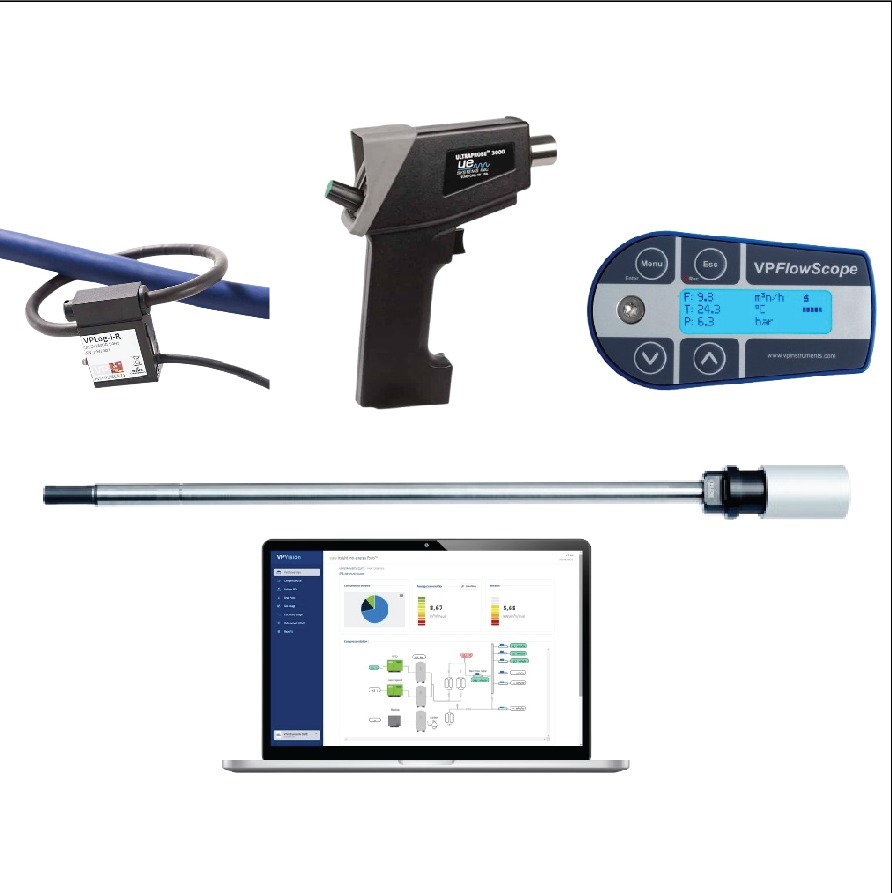
Air-flow measurements were also performed at selected points in the system. Pressure readings were taken at the compressor room and at different production areas.
The objective was to determine whether pressure losses were occurring between the compressor room and the end-use equipment.
The audit also examined air leakage and unnecessary compressed air consumption.
Several points were identified where compressed air was being used continuously even when production equipment was not actively operating.
Findings
The investigation identified four major areas for improvement.
First, the system pressure was higher than necessary for several applications.
Second, pressure losses were occurring across parts of the distribution network.
Third, several minor air leaks were contributing to unnecessary compressor demand.
Fourth, some production equipment was consuming compressed air during idle periods.
The combined effect meant that the compressors were producing more air than was actually required by the production process.
Optimization Strategy
The recommended solution focused on demand-side and supply-side optimization.
Rather than reducing pressure across the entire plant immediately, the system was divided into application groups.
Critical applications were maintained at their required operating pressure, while areas capable of operating at lower pressure were adjusted accordingly.
Pressure regulators were reviewed and optimized.
The plant was also advised to improve leakage management and repair identified leaks.
Automatic isolation of selected production areas during non-operating periods was recommended to prevent unnecessary compressed air consumption.
Illustrative Results
In an illustrative implementation, average system pressure could be reduced by approximately 0.5–1 bar while maintaining production performance.
The reduction in pressure could decrease compressor power requirements and also reduce leakage-related losses.
The facility could potentially achieve an estimated 8–12% reduction in compressed-air-related energy consumption, depending on operating conditions.
Additional benefits included:
- More stable production pressure
- Lower compressor loading
- Reduced air leakage
- Lower electricity consumption
- Reduced equipment stress
- Better control of compressed air demand
Operational Improvements
The project also changed the way the plant viewed compressed air.
Previously, compressed air had been treated as a utility that simply needed to be available whenever production was running. After the audit, the plant began treating compressed air as an energy-intensive production resource.
Operators received guidance regarding appropriate pressure settings and the consequences of unnecessary air consumption.
Maintenance personnel were also given a structured checklist covering:
- Leakage inspection
- Pressure verification
- Filter condition
- Drain operation
- Hose condition
- Regulator settings
- Compressor loading
- Production-area isolation
Long-Term Benefits
Pressure optimization is often one of the most cost-effective ways to improve compressed air efficiency because it does not necessarily require major equipment replacement.
However, pressure should never be reduced without understanding the requirements of the connected equipment. Excessive pressure reduction can negatively affect production.
For this reason, the audit approach focused on measuring actual requirements rather than making assumptions.
Conclusion
The food and beverage facility demonstrated how a detailed compressed air assessment can identify hidden energy-saving opportunities.
By optimizing pressure, reducing leaks, improving distribution, and controlling unnecessary consumption, the plant could reduce operating costs without compromising production.
The project also established a foundation for continuous compressed air management, allowing future improvements to be based on measured performance rather than assumptions.