
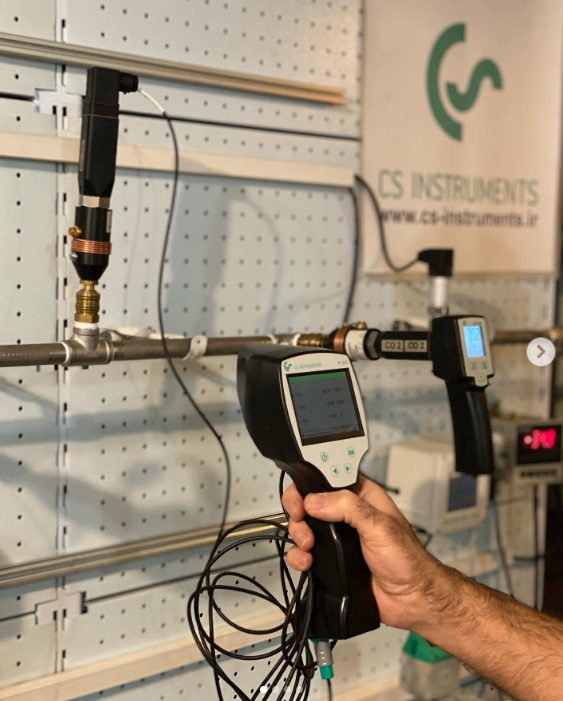
A large textile manufacturing facility was experiencing rising electricity costs, unstable compressed air pressure, and frequent complaints from production teams about insufficient air availability at different points of the plant. The facility relied heavily on compressed air for spinning, weaving, pneumatic controls, cleaning, and other production processes. Although the compressors were operating continuously, the plant management noticed that energy consumption was increasing without a corresponding increase in production.
The management initially believed that additional compressor capacity would be required to solve the problem. However, before investing in new equipment, an assessment of the existing compressed air system was recommended. The objective was to determine whether the problem was related to compressor capacity, air leakage, pressure losses, inefficient end-use applications, or poor distribution.
Initial Assessment
The audit team began by reviewing compressor specifications, operating schedules, production requirements, and historical electricity consumption. The compressor room was inspected to understand how the machines were being operated and whether multiple compressors were running unnecessarily during low-demand periods.
Attention was then shifted toward the distribution network. The plant had an extensive piping system supplying compressed air to several production areas. Over time, additional machines had been connected to the original network, resulting in a complicated distribution arrangement.
Ultrasonic leakage detection was used to identify compressed air leaks throughout the facility. Several leaks were found around pipe joints, flexible hoses, valves, quick couplings, filters, and pneumatic equipment.
Some leaks were relatively small individually, but their combined effect was significant. Because compressed air leaks continuously, even a small leak can create unnecessary compressor loading and electricity consumption.
Major Challenges Identified
The audit identified several important sources of inefficiency:
- Multiple compressed air leakage points
- Excessive system pressure in some production areas
- Poorly maintained fittings and hoses
- Pressure drops across sections of the distribution network
- Compressed air being used for applications where alternative methods were possible
- Compressors operating during periods of reduced production
- Lack of a structured leakage-management program
Another important observation was that the plant had no centralized system for recording and prioritizing leakage repairs. Maintenance teams generally repaired leaks when they became noticeable, but smaller leaks remained unattended.
Recommended Solution
A systematic leakage-management program was developed. Each detected leak was documented, tagged, and categorized according to its estimated severity.
High-priority leaks were recommended for immediate repair, while lower-priority leaks were scheduled during planned maintenance activities.
The audit also recommended reviewing system pressure requirements. Instead of maintaining unnecessarily high pressure throughout the entire plant, the supply pressure could be optimized according to actual production requirements.
The distribution network was also evaluated to identify sections where pressure losses were occurring. Recommendations included repairing damaged sections, improving connections, and reviewing pipe sizing in areas with high demand.
In addition, the plant was advised to establish a routine compressed air leak survey. Rather than treating leakage as a one-time maintenance issue, periodic inspections could help prevent the problem from returning.
Results
After implementing the recommended measures, the facility could achieve substantial improvements in compressed air performance. For an illustrative project scenario, the plant reduced estimated compressed air losses by approximately 18–22%.
Compressor loading also decreased because the machines no longer needed to compensate for the same level of leakage.
The improvement produced several benefits:
- Lower electricity consumption
- Reduced compressor operating hours
- More stable air pressure
- Improved production equipment performance
- Reduced maintenance requirements
- Better utilization of existing compressor capacity
- Lower operating costs
One of the most important benefits was that the facility was able to improve its existing system without immediately purchasing additional compressors.
Long-Term Impact
The project demonstrated that compressed air efficiency is not simply about purchasing high-efficiency compressors. The entire system—from generation to distribution and final application—must be evaluated.
For textile manufacturers, where compressed air is used continuously across multiple production areas, leakage can become a hidden source of energy waste. A structured audit helps identify these losses and provides plant management with practical priorities for improvement.
The facility also established a recommended maintenance procedure in which leakage surveys, pressure checks, and compressor performance reviews became part of the ongoing energy-management program.
Conclusion
The compressed air audit showed that significant efficiency improvements could be achieved through relatively practical measures. By identifying leaks, optimizing pressure, improving distribution, and introducing regular monitoring, the textile facility could reduce energy waste while improving the reliability of its compressed air system.
The project highlights the importance of auditing the complete compressed air network before investing in additional generation capacity. A properly optimized system can deliver reliable compressed air while reducing unnecessary energy consumption and operating costs.