
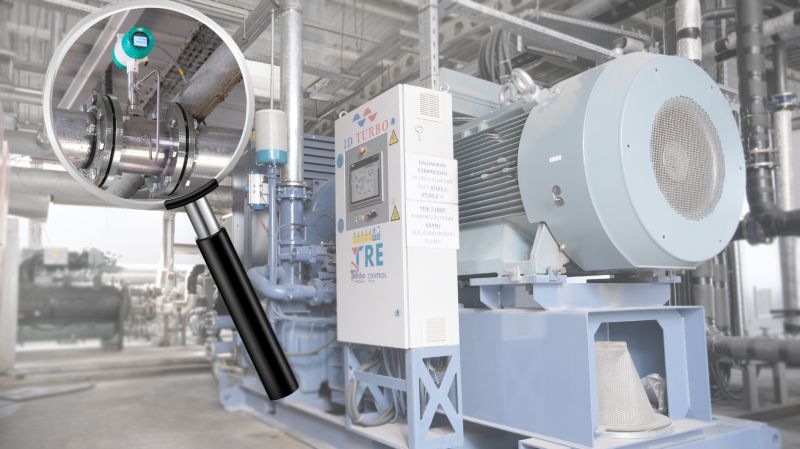
Reciprocating air compressors are widely used in industrial facilities where reliable compressed air is essential for production. Like any mechanical equipment, these compressors can develop problems over time due to wear, imbalance, misalignment, loose components, or operating conditions.
Vibration monitoring is one of the most useful techniques for identifying these problems before they result in major equipment failure. By measuring and analyzing vibration, maintenance teams can detect changes in compressor condition, investigate unusual behavior, and plan corrective maintenance before an unexpected shutdown occurs.
What Is Vibration Analysis?
Vibration analysis is a condition-monitoring technique used to evaluate the mechanical health of rotating and reciprocating equipment.
Every compressor produces some level of vibration during normal operation. The important factor is identifying when vibration changes from its normal operating pattern.
Engineers can use vibration measurements to determine the location, severity, and possible cause of mechanical problems. Regular measurements also make it possible to establish a baseline and compare future readings against normal operating conditions.
Why Reciprocating Compressors Need Vibration Monitoring
Reciprocating compressors contain several moving components, including pistons, connecting rods, crankshafts, bearings, valves, and other mechanical parts.
The repeated movement of these components naturally creates dynamic forces. If one component becomes worn, loose, damaged, or improperly aligned, the vibration pattern may change.
Ignoring abnormal vibration can eventually lead to:
- Bearing damage
- Mechanical wear
- Crankshaft problems
- Loose mounting
- Increased noise
- Seal or valve failures
- Unplanned downtime
Early detection gives maintenance teams an opportunity to investigate the problem before it becomes a major failure.
Common Sources of Compressor Vibration
Several mechanical and operational conditions can cause excessive vibration in reciprocating compressors.
Mechanical Imbalance
An imbalance in rotating components can generate increased vibration. Problems with rotating assemblies should be investigated if vibration levels increase unexpectedly.
Misalignment
Misalignment between connected components can place additional loads on bearings and other mechanical parts. It can also create abnormal vibration and accelerate component wear.
Loose Components
Loose bolts, mounting structures, piping connections, or mechanical components can produce unusual vibration. These issues should be checked whenever vibration levels change significantly.
Bearing Wear
Bearings are critical components in reciprocating compressors. Wear or damage can produce characteristic vibration patterns that can help engineers identify the problem.
Valve Problems
Compressor valves can become damaged, worn, restricted, or improperly seated. Because valves directly affect the compression cycle, problems may produce changes in both machine performance and vibration behavior.
Measuring Compressor Vibration
Vibration measurements are commonly collected using sensors such as accelerometers.
Measurements may be taken at several locations around the compressor, including bearing housings, crankcase areas, motor connections, and other critical points.
The measurement method should remain consistent so that readings can be compared over time.
Common vibration measurements include acceleration, velocity, and displacement. The most appropriate measurement depends on the machine, operating speed, and type of analysis being performed.
Time Waveform and Frequency Analysis
Two important approaches used in vibration monitoring are time waveform analysis and frequency analysis.
A time waveform shows how vibration changes over a period of time. It can help identify impacts, irregular movement, and other abnormal events.
Frequency analysis breaks the vibration signal into different frequency components. This can help engineers associate specific vibration patterns with potential mechanical problems.
For example, certain frequencies may correspond to rotational speed, harmonics, bearing-related activity, or other mechanical sources.
Using both approaches can provide a more complete understanding of compressor condition.
Piping and Foundation Considerations
Vibration problems are not always caused by the compressor itself.
Connected piping can transmit vibration throughout the system. Poorly supported piping may amplify mechanical movement or place additional loads on compressor connections.
The compressor foundation and mounting arrangement should also be inspected. A weak or improperly designed foundation can contribute to excessive vibration.
Therefore, vibration investigations should consider the entire installation rather than focusing only on the compressor body.
Establish a Normal Baseline
One of the most effective ways to use vibration monitoring is to establish a baseline when the compressor is operating normally.
Initial measurements can be recorded at selected monitoring points under known operating conditions.
Future measurements can then be compared against this baseline.
A gradual increase in vibration may indicate developing wear, while a sudden change may require immediate investigation.
Trend monitoring is particularly valuable because a single vibration measurement does not always provide enough information to determine equipment condition.
Vibration Analysis and Predictive Maintenance
Vibration monitoring becomes even more valuable when integrated into a predictive maintenance program.
Instead of waiting for a compressor to fail, maintenance teams can monitor equipment condition and schedule inspections based on actual machine behavior.
For example, if vibration trends show a gradual increase near a bearing location, technicians can inspect the bearing during planned maintenance rather than waiting for a catastrophic failure.
This approach can reduce emergency repairs, improve maintenance planning, and help minimize production interruptions.
Best Practices for Vibration Monitoring
To obtain useful results, facilities should follow a consistent monitoring procedure.
Important practices include:
- Measure the same locations regularly.
- Record operating conditions with every measurement.
- Establish baseline vibration levels.
- Monitor trends rather than isolated readings.
- Investigate sudden changes promptly.
- Combine vibration data with temperature and pressure information.
- Inspect mechanical components when abnormal patterns appear.
- Keep accurate maintenance records.
The interpretation of vibration data should also be performed by qualified personnel who understand the specific compressor design and operating conditions.
Conclusion
Vibration analysis provides valuable insight into the mechanical condition of reciprocating air compressors. By monitoring vibration patterns and tracking changes over time, industrial facilities can identify developing problems before they result in serious equipment damage or unexpected downtime.
Mechanical imbalance, misalignment, loose components, bearing wear, valve problems, piping issues, and foundation conditions can all influence compressor vibration.
A well-planned vibration monitoring program, combined with regular maintenance and other condition-monitoring techniques, can improve compressor reliability and support more effective predictive maintenance.
For facilities that depend on continuous compressed air, monitoring machine condition is not simply a maintenance task—it is an important part of protecting production reliability and long-term equipment performance.