
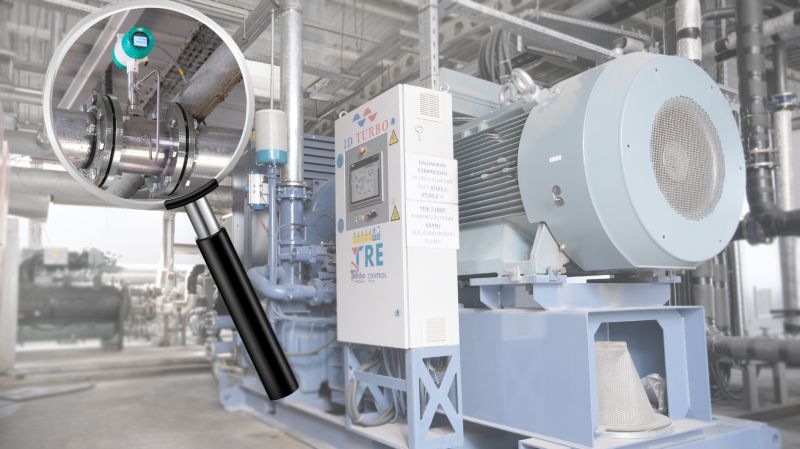
A pharmaceutical manufacturing facility depended on compressed air for automated production equipment, pneumatic controls, packaging systems, instrumentation, and process applications. Because product quality and process reliability were critical, the compressed air system required a high level of cleanliness, dryness, and consistency.
The plant management had noticed occasional pressure fluctuations and concerns related to moisture in certain parts of the compressed air network. Although production was not experiencing major interruptions, the management wanted to identify the underlying causes before they developed into larger problems.
Audit Objectives
The primary objectives were:
- Evaluate compressed air quality.
- Identify moisture-related problems.
- Assess pressure stability.
- Review filtration and drying performance.
- Identify potential leakage.
- Evaluate compressor and distribution efficiency.
System Inspection
The audit began in the compressor room.
The compressor operating conditions were reviewed, followed by an inspection of air treatment equipment. Filters, dryers, drains, receivers, and associated components were examined.
The distribution network was then inspected.
Particular attention was given to low points in the piping system because moisture can accumulate in poorly designed or improperly drained sections.
Air quality measurements were taken at selected locations according to the facility’s requirements.
Problems Identified
The assessment indicated that the plant could improve its compressed air treatment and drainage arrangements.
Some filters required maintenance, while certain condensate drains needed closer monitoring.
The audit also identified several leakage points in the distribution network.
Although individual leaks appeared minor, the combined leakage increased compressor demand.
Another issue was pressure variation between the compressor room and some production areas.
This was linked partly to distribution conditions and partly to changing demand during production cycles.
Recommended Improvements
The first recommendation was to establish a preventive maintenance schedule for filters, dryers, drains, and other air-treatment components.
The second recommendation involved reviewing the piping arrangement to improve condensate management.
The third recommendation was to implement a formal compressed air leakage detection program.
Pressure monitoring points were also recommended at critical production locations.
Rather than relying exclusively on the compressor-room pressure gauge, the plant could monitor pressure at important end-use locations.
Results
Following implementation of the recommendations, an illustrative project could achieve:
- Improved compressed air cleanliness
- Better moisture control
- More stable pressure
- Lower leakage losses
- Reduced compressor loading
- Improved reliability of pneumatic equipment
- Lower maintenance requirements
The most important result was improved system consistency.
In pharmaceutical production, compressed air reliability can be directly connected to production quality and equipment performance. Even when energy savings are not the only objective, optimizing the compressed air system can reduce operational risk.
Energy Efficiency
Air treatment itself also affects energy consumption.
Dirty filters and excessive pressure drops can force compressors to work harder to maintain the required pressure.
Therefore, maintaining filters and monitoring pressure differential can contribute to overall energy efficiency.
The facility was advised to monitor pressure drops across filters and replace or service them according to actual operating conditions.
Preventive Maintenance Strategy
The facility developed a compressed air maintenance plan covering:
- Compressor inspection
- Dryer inspection
- Filter monitoring
- Condensate drain testing
- Leak detection
- Pressure monitoring
- Air quality testing
- Piping inspection
This shifted the facility from reactive maintenance toward preventive compressed air management.
Conclusion
The pharmaceutical facility demonstrated that compressed air optimization is not limited to reducing electricity consumption.
Air quality, moisture control, pressure stability, and equipment reliability are equally important.
A professional audit provides plant management with a complete picture of the system and identifies practical measures that can improve both energy efficiency and production reliability.
By combining air quality testing, leakage detection, pressure monitoring, and preventive maintenance, pharmaceutical facilities can maintain a cleaner, more reliable compressed air supply while controlling energy costs.